Connect with us

Cannabis News

GOP Congressman Says His Hemp Regulation Bill Faces Opposition From Alcohol, Marijuana And Prohibitionist Groups

Published

on

A congressional Republican who plans to immediately introduce legislation to federally regulate hemp-derived products instead of a ban that would take effect this year says the plan is opposed by a coalition of odd bedfellows that includes the alcohol industry, marijuana companies and opponents of cannabis legalization.

Rep. Andy Barr (R-KY) said during a Zoom meeting Thursday with members of the Hemp Industry & Farmers of America (HIFA) that his bill would create a “regulatory and tax framework” that would “provide a lifeline and … a permanent legal pathway to this market,” according to a transcript obtained by Marijuana Moment.

Hemp derivatives containing less than 0.3 percent delta-9 THC by dry weight were made federally legal under the 2018 Farm Bill signed by President Donald Trump in his first term. But late last year, Trump signed new legislation containing provisions that will redefine hemp so that only products with a total of 0.4 milligrams of THC per container will be legal starting Nov. 12.

Barr said the recriminalization of THC hemp products would “jeopardize the crop that’s being stored right now” after farmers grow it and thwart “future opportunities to grow this crop.”

“That’s why we need this legislation to establish a regulatory framework and create parity with other similar products, especially in the beverage category,” he said, according to a transcript of the meeting. “We want to create a level playing field with other adult beverages so that farmers have the confidence to be able to sell in a mature market with protections that achieve what we want to achieve (for safety, targeting age consumers, but also supporting our farmers all the way).

But the effort faces opposition not only from prohibitionist forces, but also from segments of the alcohol industry and marijuana businesses that sell cannabis products under limited state-based licensing systems, according to congress.

Distilled spirits producers have “understandable concerns about competition” from hemp-derived THC drinks, Barr said. He added that companies at the wholesale level of the alcohol industry could be an ally because they “want to distribute” cannabis drinks.

“I think the wholesaler wants a three-tiered system, so we’ve worked to try to get that, again, with a one-to-one, where there would be direct-to-consumer exemptions, where it would make sense to be on a state-by-state basis,” he said.

“We recognize that the spirits and other adult beverage groups don’t want competition. That’s natural. But what we want is regulation and taxation… We want a level playing field. Competition and choice is something I believe in. And giving consumers choices. Competition is good… You’re looking at one of the bourbon industry’s staunchest advocates for choice, I think he might be pro-hemp and pro-Kentucky bourbon.

“Then you have prohibitions,” said the congressman. “And they are there, and they may not be convincing, but they exist.”

“And finally, there’s another category, and that’s the marijuana industry that also sees it as competition,” Barr said, according to a transcript of the meeting. “They’re going to want to push the industry into specialized dispensaries. My view is that it’s not the same. Maybe that’s right for the marijuana industry, but I don’t think that’s right for this hemp-derived products industry.”

Barr’s next bill, called the “Hemp Protection Act” in drafts seen by Marihuana Moment, would impose age-restricted labeling requirements on hemp products, subject to Food and Drug Administration (FDA) oversight. There would also be taxes on hemp products administered by the Treasury Department’s Alcohol and Tobacco Tax and Trade Bureau (TTB).

Meanwhile, White House officials recently briefed Barr’s office on pending legislation to create a regulatory framework for hemp..

Last month, Vince Haley, director of the White House Domestic Policy Council, and James Braid, assistant to the president for legislative affairs, sent hemp policy suggestions to the congressman’s office.

“We appreciate your work to advance policy,” the executive order Trump signed in December, which included provisions to protect Americans’ access to CBD products, the staff wrote in a letter to Congress.

“We are submitting draft legislation and comments to your account to address the final statutory definition of hemp-derived cannabinoid products to ensure that Americans have access to adequate full-spectrum CBD products while maintaining Congress’ intent to limit the sale of products that pose serious health risks,” White House officials said, according to a social media screencast. “We are ready for further discussion and technical assistance.”

The annex to the administration’s proposed legislative text has not been released publicly, and the White House and Barr’s office did not respond to Marihuana Moment’s requests for more details.

During a meeting with representatives of hemp companies on Thursday, the congressman said there is a “tremendous opportunity” in agriculture, farming and this industry in general, according to the transcript.

“I’m from central Kentucky. All four of my grandparents were born and raised in central Kentucky. I grew up in central Kentucky. And at one time, that was the burley tobacco capital of the world. Since tobacco production has declined, our farmers have been looking for alternatives. And industrial hemp and hemp-derived products have created a tremendous opportunity and this market has created a tremendous opportunity. I look forward to consumers working with the industry to provide stability and certainty to the industry. for this to be properly seen as a mature industry, for the law to have some permanence and to reduce the uncertainty that exists today, so that this market can thrive.

Barr also said that cannabis products could provide a safer alternative to prescription drugs, especially for military veterans.

“To the extent that we can promote opioid alternatives or opioid avoidance and help veterans with anxiety or sleep deprivation or insomnia or post-traumatic stress disorder, that’s what we want to do, create those opportunities for our veterans to care for them,” he said. “We think this is a great opportunity for our veteran community.”

HIFA officials on the call said they expect Barr’s bill to be introduced next week, although the proposed deadline for the legislation has already been pushed back several times in recent weeks as Barr has engaged with stakeholders, tweaked draft provisions and sought initial sponsors to introduce the proposal.

The House of Representatives recently a Farm Bill with provisions to support producers of industrial hemp—but without any language delaying or changing the federal recriminalization of THC hemp products that takes effect in November.

Trump last month It inspired lawmakers in Congress to take action to change the currently planned hemp banwhich suggested that full-spectrum CBD products threaten to be federally recriminalized.

“I’m calling on Congress to update the Act so Americans can continue to have access to the full-spectrum CBD products they trust and support, while maintaining Congress’ intent to restrict the sale of products that pose health risks,” the president said in a Truth Social message Thursday, the same day his administration announced it is moving forward to re-regulate marijuana.

“We need to do this RIGHT and FAST, especially for those who have found CBD to help them,” he said. “Also, I’m told it will help our BIG FARMERS that we love and will always be around.”

The main retailer Target, meanwhile, recently moved to expand sales of hemp THC drinks to more states.

The Wine & Spirits Wholesalers of America (WSWA), for its part, according to the House Failure to include provisions to delay or modify the ban on THC hemp products was a “missed opportunity.”

“A ban will not take these products off the market, it will push consumers into unregulated online channels without age verification, product standards or accountability,” said Dawson Hobbs, WSWA executive vice president of government affairs.

Marijuana Moment is made possible with the help of readers. If you rely on our pro-cannabis journalism to stay informed, consider a monthly Patreon pledge.

Continue Reading
Click to comment

Leave a Reply

Your email address will not be published. Required fields are marked *

Cannabis News

Rethinking “sustainable growing media” in greenhouse production

Published

on

By

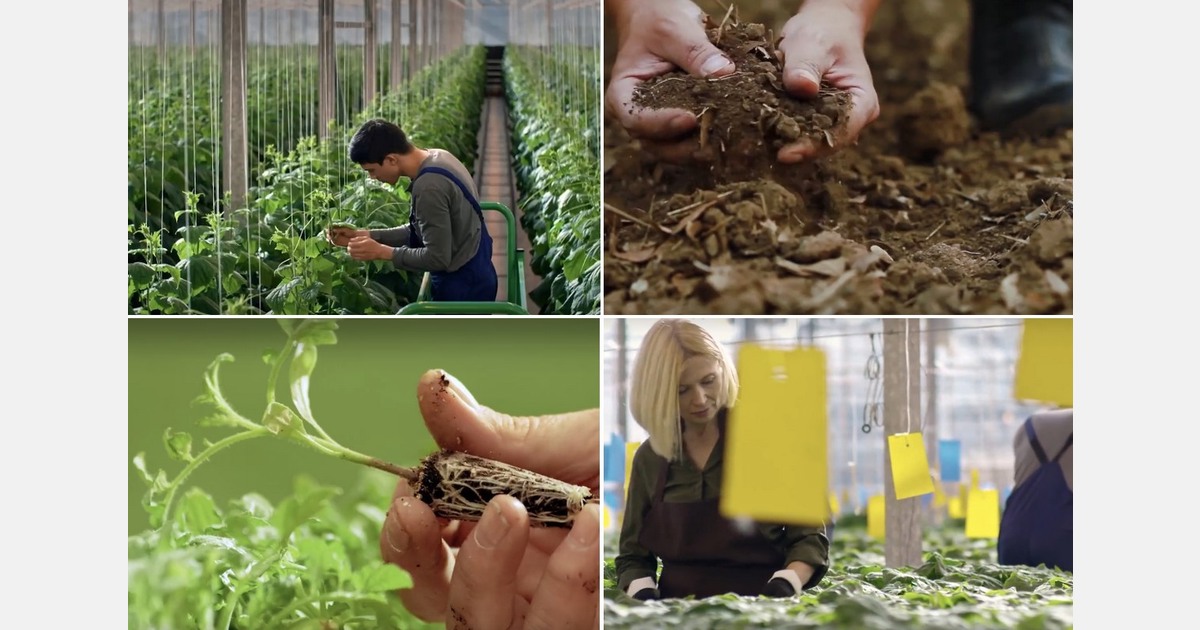
A perspective paper to be published in Frontiers in Horticulture addresses the widespread but inconsistent use of the term “sustainable growing media” in the horticultural and greenhouse sectors. The publication, written by an international team of researchers and industry experts including Dr Alexander Sentinella of Growing Media Europe, examines how the term has been diluted and proposes a more rigorous evidence-based approach.

“The term is used to mean almost anything and everything,” said Dr. Sentinella. “Along with terms like ‘green’ or ‘climate friendly’, they start to lose their helpful meaning.” The authors argue that this lack of precision undermines research comparability and decision-making in commercial production.

Misconceptions and oversimplification
The article highlights the common tendency to equate sustainability with a single characteristic, such as renewable, circular or peat-free. “People conflate sustainability with individual concepts like climate footprint or renewables, but these are not interchangeable,” he explains. Labels such as “non-toxic” are identified as particularly problematic, as they are often interpreted as an indication of environmental benefit without support.

“‘Peat-free’ means there’s no peat in the mix. It doesn’t show a lower environmental impact or better sustainability unless that’s actually measured.” The authors warn that these assumptions risk misleading growers and managers.

A multi-dimensional and system-dependent concept
Central to the article is the recognition that the sustainability of growing media encompasses three interrelated pillars: environmental, economic, and social. Environmental impacts include not only the climate footprint, but also land and water use. Economic sustainability includes cost, availability and consistency, while social sustainability covers working conditions, health and safety.

“A product may work well environmentally, but not economically or socially. These trade-offs are unavoidable and must be accepted.” The paper emphasizes that sustainability cannot be attributed to individual materials in isolation, but must be assessed within the entire production system.

“Growing media are part of a larger horticultural system. A substrate with a smaller product footprint that reduces yield can lead to a worse overall outcome when the impacts on total production are considered.”

© Growing Media Europe

From hypotheses to measurement
To improve clarity, the authors advocate measurable system-based assessments. Life cycle methodologies are identified as critical tools, including environmental Life Cycle Assessment (LCA), Life Cycle Costing (LCC) and Social Life Cycle Assessment (S-LCA). The latter follows the framework developed by the United Nations Environment Program and SETAC, which allows for the assessment of impacts between workers, communities and supply chains.

“Most conversations focus on reducing footprints, but we really need to measure them. The results may not match expectations, which is why measurement is necessary.”

The paper also notes that social impact continues to be emphasized in today’s evaluations, despite the availability of methodologies that consider factors such as labor rights, occupational health and community effects along the value chain.

Guidelines for the responsible use of the term
Rather than proposing a universal definition, the authors outline minimum requirements for the responsible use of the term “sustainable growing medium”. These include explicitly defining the scope of claims, identifying which sustainability pillars are addressed and supporting statements with verifiable data. Absolute claims are abandoned in favor of comparative and context-specific language.

“The best step forward is to use more precise terminology,” advises Dr. Sentinella. “If you mean lower environmental impact, say so and measure it.”

Implications for industry and policy
The findings have practical implications for producers, suppliers and policy makers. The paper cautions against relying solely on proxy indicators such as peat reduction as a measure of sustainability. “If policies focus on a single attribute, there is a risk of neglecting wider impacts. We must base decisions on results measured in environmental, economic and social dimensions.”

The authors conclude that progress in sustainable growth media will depend less on redefining the term and more on improving how evidence is generated and communicated. “It is better to say ‘more sustainable’ and explain why. Clear definitions and measurable indicators are essential for progress in the greenhouse sector.”

Be careful last published paper.

For more information:
Growing Media Europe
Dr. Alexander Sentinella, co-author
(email protected)
www.growing-media.eu
Continue Reading

Cannabis News

Third cannabis business approved by Jefferson Town Council

Published

on

By


The Jefferson City Council unanimously approved “Green Leevs” as the city’s first cannabis micro-farm at its May 6 meeting. This is the third cannabis business approved by the municipality in order to bring income to the municipality. Retail dispensaries “Greenlight Apothecary” and “Gas and Grass” were previously approved.

Green Leevs are owned by Bill Comeford, Elliot McClendon and Josh Moskowitz. All three are from the local area, Comeford grew up in Jefferson. In New Jersey, a micro-enterprise is a facility with 2,500 square feet of growing space. A micro-farm relies on the craftsmanship of cannabis rather than mass production.

“We have more control, we have more hands, the smaller grow rooms make it easier to inspect each plant,” Comeford said. “If you’re careful, it makes for a better product at the end of the day.”

Green Leeves understands that there are mixed feelings about the Council’s approval of the cannabis industry and hopes that this will ease over time.

Read more at Press Jefferson


Continue Reading

Cannabis News

Virginia Governor Signs Marijuana Resentencing Bill After Lawmakers Rejected Her Amendments
Published

on

By

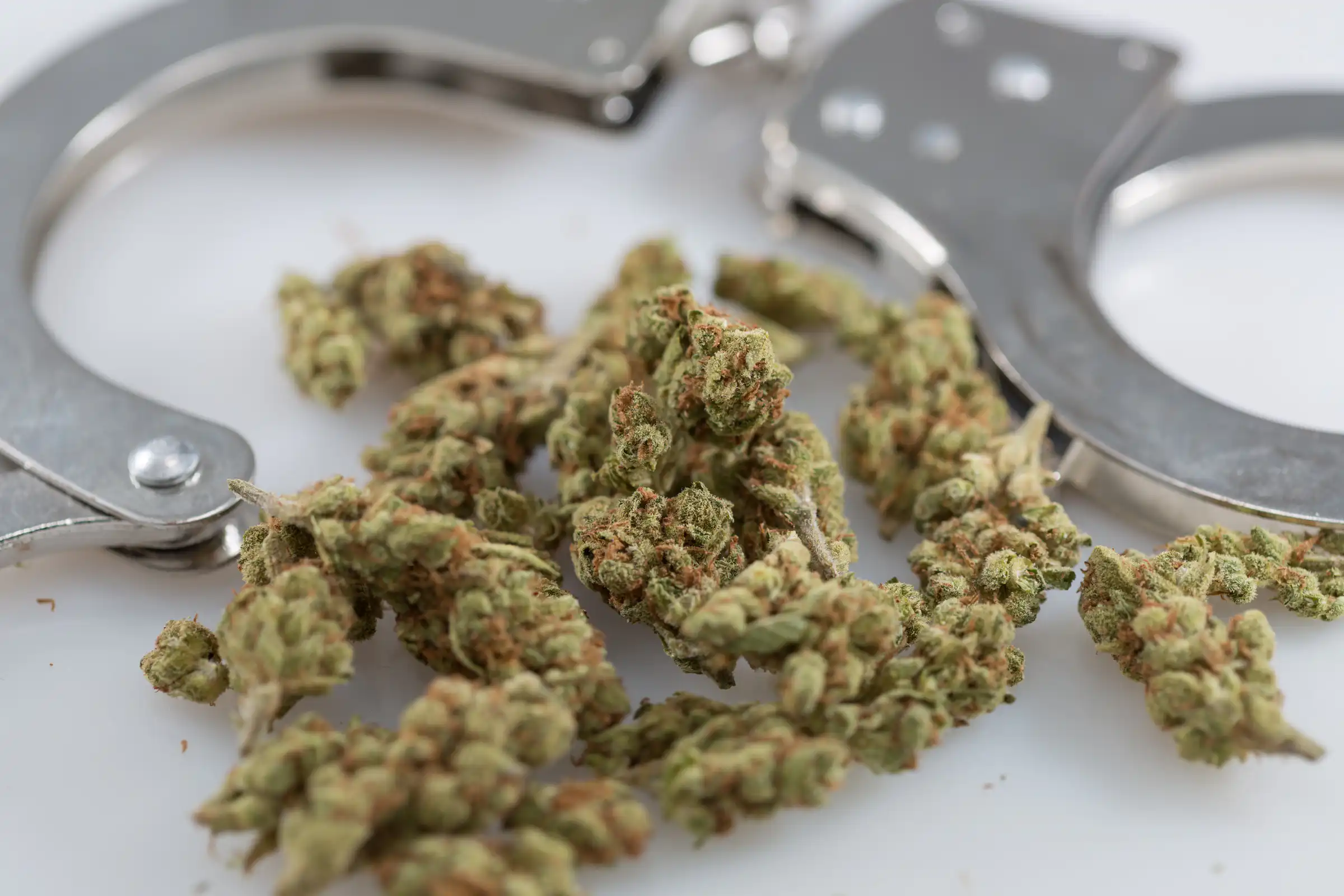
Virginia’s governor has signed legislation to grant sentence relief to people with past marijuana convictions, even as lawmakers have refused to accept proposed amendments to the legislation that would significantly narrow the scope of reform.

Gov. Abigail Spanberger (D) gave final approval to the bills, Rozia Henson Jr.’s HB 26 (D) and Senate President Pro Tem Louise Lucas’ SB 62 (D), on Thursday.

Separately, lawmakers and advocates are waiting the governor’s action on separate legislation to legalize the sale of recreational marijuana after amendments to his proposal were similarly rejected by the House and Senate last month. The changes suggested in that legislation included delaying the start of sales by six months, increasing taxes and introducing new criminal penalties for cannabis users.

Retrial reform, on the other hand, creates a process by which people incarcerated or on community custody for certain crimes involving the possession, manufacture, sale or distribution of marijuana will consider changing their sentences to receive an automatic trial.

Spanberger sent proposed amendments to lawmakers last month They had to proactively submit requests for assistance to affected people instead of the courts proceeding automatically. The Senate and House of Representatives, however, rejected the proposal, effectively rejecting it and sending the original legislation to Spanberger’s desk.

Henson, the sponsor of the House version of the bill, said it was ready to accept the governor’s changes, even if he is concerned this would mean that some people with cannabis convictions would fall through the cracks because they “didn’t have a lawyer or didn’t know how to ask.”

The whole parliament did not agree with the change, however, and now HB 26 and SB 62 The laws that were originally approved have been implemented.

The relief will apply to people with convictions or convictions for conduct that occurred before July 1, 2021, when a state law that legalized personal possession and home cultivation of marijuana went into effect. State and local corrections officials should identify and notify eligible individuals of their rights to provide notice of relief and then work with courts to automatically schedule hearings.

Henson said last month that the resentencing legislation was “built for people who are still paying the price for something that Virginia has made legal.”

“If the commonwealth were to change the law, it still has the duty to review the consequences of the people punished according to the old one,” he said.

The governor’s office said in a press release when he proposed his amendments that they “clarify that there will be no tolerance for violent crimes in Virginia, from armed robbery to possession of firearms to distribute fentanyl, heroin and other dangerous drugs.”

But Henson said he shares the “governor’s commitment” to making sure violent offenders are not eligible for this relief; and that commitment is reflected in the bill itself, which excluded people convicted of violent acts under Virginia law.

Spanberger’s release last month made no mention of the actual major changes to the bill, which was the removal of automatic leniency provisions for people with cannabis convictions.

The governor’s amendment also proposed removing the deadline for court filings on the retrial.

In the previous session, members of parliament approved similar legislation, but the then government vetoed it. Glenn Young (R).

Separately, Spanberger signed several other reform bills last month, including measures protecting the parental rights of marijuana users and giving patients access to medical cannabis in hospitals.

Cannabis policy reform organizations, on the other hand, sent a letter earlier this month asking the governor to enact the adult-use marijuana sales bill.

Marijuana Moment is made possible with the help of readers. If you rely on our pro-cannabis journalism to stay informed, consider a monthly Patreon pledge.

Continue Reading
Advertisement

Trending

Copyright © 2021 The Art of MaryJane Media