
Cannabis News
Missouri Hemp THC Product Ban Challenged With Federal Lawsuit Filed By Industry



Standard Wellness has entered into an agreement with License in the Flats, LLC to enter into definitive agreements to acquire a dispensary license in the Flats following the required regulatory review period. At the end of that period, the company and License in the Flats intend to execute those agreements and then continue to develop the dispensary into a retail location branded The Forest Cleveland.
Following regulatory approval of the change of ownership by the Ohio Division of Cannabis Control, the new dispensary will become the Company’s first retail location in the city of Cleveland, where the Company is headquartered.
Additionally, the Company announced the divestiture of The Forest Sandusky and The Forest Springfield, its Ohio dispensaries, to Greenlight, again subject to pending regulatory approvals.
“We are excited to expand our presence in the city of Cleveland and serve guests in our hometown,” said Kate Ols, Vice President of Retail for Standard Wellness. “As our business continues to grow, we are focused on building a retail network that will best position us to serve our communities for the long term. At the same time, we are proud of the role our Sandusky and Springfield dispensaries have played in Ohio’s cannabis history, and we are confident that those communities will continue to grow under Greenlight’s leadership.”
Standard Wellness and Greenlight are working closely together to support a smooth transition for staff and guests throughout the transfer process. As established operators in Ohio and Missouri, the companies share a commitment to strengthening the regulated cannabis industry and serving the communities in which they operate.
The new dispensary is expected to serve both local residents and visitors while completing the Company’s Northeast Ohio footprint.
Under Ohio law, a cannabis operator cannot hold more than eight dispensary licenses statewide. The acquisition of the Cleveland license and divestiture of The Forest Sandusky and The Forest Springfield allows Standard Wellness to continue to meet Ohio’s property limits while strategically repositioning its Ohio retail footprint and focusing investments in key markets.
Forest Sandusky and Forest Springfield have played significant roles in the evolution of Ohio’s cannabis industry. Sandusky was the site of the state’s first legal cannabis sale in January 2019, and Springfield became the first part of Ohio’s cannabis industry merger and acquisition transaction when Standard Wellness purchased Pure Ohio Wellness’ dispensary.
For more information:
Standard Wellness Holdings
standardwellness.com/
Cannabis News
Most cannabis flower on the European market would fail a human-consumption standard, Fundación CANNA finds
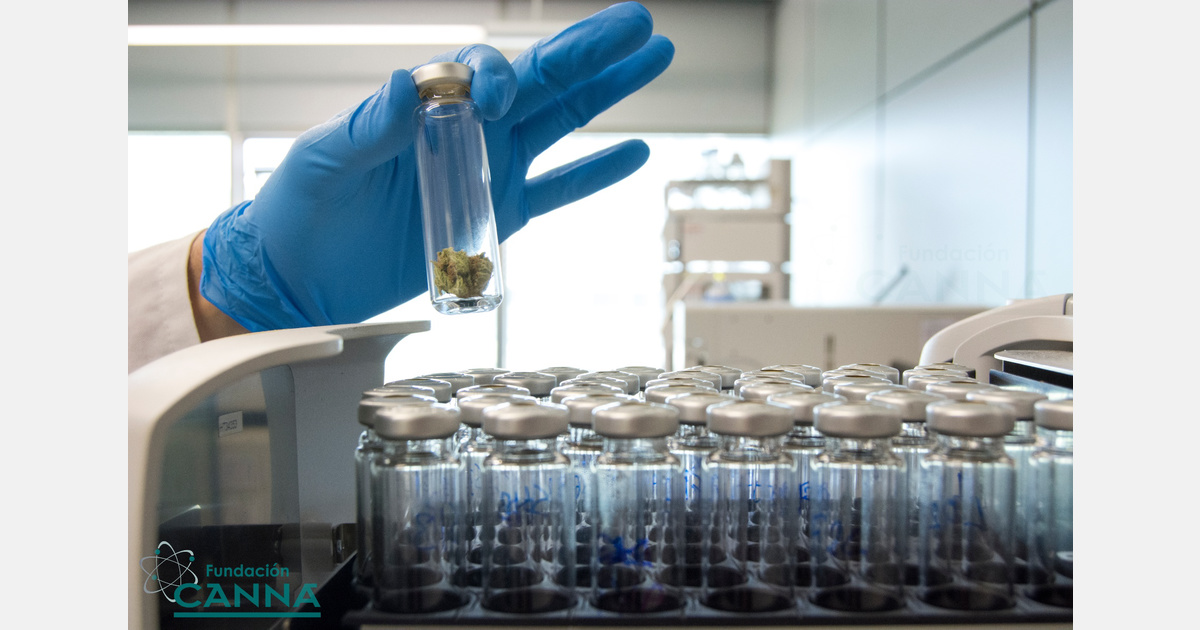
Cannabis extracts and isolates carry pesticides and heavy metals more often than raw flower, which means that the purification step that the industry sees as a path to a cleaner product is concentrating the contamination it’s supposed to remove. These are the findings of Fundacion CANNA, a non-profit initiative that studies the cannabis plant and its active ingredients.
 © Canna Foundation
Iñaki García, agricultural engineer and biotechnologist at the CANNA Foundation, has analyzed samples in research from 2018 to 2023. “An important finding is that the CBD purification processes do not always clean the product from contaminants. The data show that the presence of pesticides is more evident in the extracts and isolates than in the raw materials. The presence of lead in all the matrices analyzed, from flowers to purified oils and crystals, is significant, also the presence of mercury is highlighted, certain solvents used in the purification may be contaminated or may have selectivity for this metal”, says Inaki. A buyer reads “isolate” as “cleaner,” and the analysis reads the other way because everything the plant carries travels with the compound and is reduced to a smaller volume, so the concentration goes up instead of down.
The same sample body continues its increasing strength at the top of the market. “A significant change in the concentration of THC has been observed in THC-dominant flowers, reaching the highest peak in 2023 (17.95%). Technical improvement has also been noticed in Broad Spectrum oils and extracts, and over time they have significantly increased their CBD concentration. This is probably because the other THCs that are more efficient extraction processes are kept more efficiently. It reduces the efficiency in both directions. Learned to extract THC and retain CBD it is the same process that transfers the pesticides to the final product, so improvements in cannabinoid selectivity do not necessarily translate into improvements in contaminant control.
 © Canna Foundation
Purification concentrates what it needs to remove
Fundación CANNA analyzes microbial, metal and chemical contamination in all types of products it receives. “Regarding microbiological contaminants, plant materials consistently have high microbial loads. Among the most dangerous are fungi of the genus Aspergillus, which can cause aspergillosis in immunocompromised people, and their aflatoxins are carcinogenic. Lead is widespread in most types of samples. It should be noted that cannabis is potent. 60% of plant materials and extracts are cross-contamination in the cultivation or surrounding areas. One of the most striking findings is the sale in Europe It was the detection of vitamin E acetate in e-liquids, a substance associated with serious lung injuries.
The bioaccumulation point explains why lead appears downstream. A plant grown in contaminated soil leaches the metal directly from the soil and into the tissues, so all oils and crystals made from that plant inherit it. The finding of vitamin E acetate indicates something added to the formulation rather than being absorbed from the field, which means the European vape supply chain may be carrying a substance linked to serious lung injury.
The stage at which this contamination enters is usually the one that growers pay the least attention to. “Growers often underestimate the importance of the final stages of cultivation and processing. For example, the use of contaminated tools or improperly composted manure at the end of the cycle facilitates the emergence of pathogens such as E. coli. The duration of systemic pesticides that remain on the plant after application is also often underestimated,” said Inaki.
The systemic pesticide problem is the more difficult of the two to design because a compound that moves inside the plant cannot be washed off the surface during harvest, and a grower who applied it early in the cycle is still in flower months later.
The industry has already arranged tools for a pathogen. “The problems caused by HLVd in crops are already well known, as the viroid is now widespread. In this case, the industry has reacted with testing services now available to growers to determine whether a plant is infected, along with in vitro cultivation protocols to repair infected plants,” says Inaki. This is the case where hidden hop viroids came to a detection and fix, an exception to the contaminant that Inaki works with the model.
 © Canna Foundation
Tags and content match
The CANNA Foundation also tests finished consumer products against the numbers printed on them. “Based on our research, only one-third of CBD oil products met the label specifications. E-liquids also showed a lack of rigor in terms of label specifications. A major problem with cosmetic creams is that less than half of manufacturers specify the alleged CBD content, and only a minority of them met their negative deviations.” he says A negative deviation of 99.9% describes a product sold as having almost no CBD, which puts it in a position to charge for an active ingredient that does not provide a share of the cosmetic market.
The same decline occurs in the entire movement of processed goods. “Moving from calabash flower to oils, cosmetics or evaporative liquids should, theoretically, guarantee greater quality control. However, research shows that in this transition quality decreases and the consumer is left without protection. When moving from flower to processed product, the industry often gains commercial appeal and ease of use, but loses significantly in transparency and chemical product, in regulatory safety, which consumers often do not pay for. Inaki stated. The processed format is the one that gives a consumer the most finished and controlled, and the analysis finds the least correspondence between the claim and the content.
Operators bring their questions to the lab. “Customers often ask how to interpret the terpene profile. They also have great doubts when a contaminant appears in the product, trying to understand if its presence is harmful or within the recommended limits,” says Inaki. The second question reveals where the gap grows the hardest, because an operator with a positive result has no authority anywhere to verify that the level clears a threshold, because in a large part of the market the threshold does not formally exist.
 © Canna Foundation
Lack of regulation leaves consumers without protection
The market still classifies cannabis as Indica and Sativa. “Terpene data is fundamental and much more accurate for classifying varieties than commercial labels. Principal component analysis (PCA) of the terpene profile allows the grouping of plants according to their true aromatic profiles. For example, it has been found that what the market labels as Indica usually has myrcene, and then perfume, a little more, research and alpha-pine mainly myrcene, and a little more correlates with the profile. Rather than pure THC potency, it is the subjective experience for the consumer that determines pleasantness,” said Inaki. The commercial consequence is that the number of producers competing, the THC percentage, is not the number that predicts whether a consumer will enjoy the product, leaving the industry to optimize for a figure that is not supported by aroma data as a driver of experience.
The CANNA Foundation’s testing addresses a basis that the European market does not currently have. “The lack of specific legislation for the recreational market and commercial CBD leaves consumers without protection. Most flowers have a level of contamination that would be unsuitable for human consumption. There is an urgent need to ban dangerous pathogens, such as Aspergillus fungi or E. coli bacteria, which are caused by poor cultivation hygiene. Lead appears in almost all samples, and companies believe that isolation processing removes mercury, analyzes show that even more that it is concentrated in the manufacture of isolates Reality must reflect the terpene profiles, which define the aroma Research shows that aroma is a good indicator of quality and effect, but the industry maintains trade names that do not match the actual chemical composition.
Every item on that list follows the same starting point, which is that a market without a mandatory test floor allows each of these failures to reach a shelf, and isolation step operators stoop to solve the metals problem, a step that Inaki’s mercury data worsens.
Instruments already find more than research can explain. “The main challenge is to clean the flower without degrading its composition. It is urgent to develop microbiological cleaning methods that replace irradiation and do not destroy terpenes or aromas, since these compounds define the quality and effect of the product. Moreover, although laboratories already identify small cannabinoids such as THCV, CBGV, CBC or CBDV, clinical studies suspect that they do not benefit from true clinical studies. it is not in isolated compounds, in the interaction and synergy between them all rather”, concludes Inaki.
For more information:
CANNA Foundation
(email protected)
fundacion-canna.es
Cannabis News
Pharma Company And Drug Testing Industry Claim Trump’s Rescheduling Move Will ‘Increase Marijuana Abuse’

Industry Reaction to DEA Decision Recommending Schedule 3 – Special Report from Weed Talk News

Part 2 TAKING A KNEE | NATE BOYER

Standard Wellness expands into Cleveland with dispensary acquisition

Repayments And Bans: The Episode Wall Street Should Watch

Missouri Hemp THC Product Ban Challenged With Federal Lawsuit Filed By Industry

Arkansas Medical Cannabis Sales Total $140M During First Six Months of 2026, Down Slightly From 2025

Rescheduling Cannabis: Coast to Coast, a Weed Talk News special report with PCM Founder Jimmy Young

ENTERTAINMENT & CANNABIS | JEFF WELSH

Marijuana Retail Report

Most cannabis flower on the European market would fail a human-consumption standard, Fundación CANNA finds

“Our system can manage equipment across 10,000+ m² using just a few wires”

Mazar-i-Sharif Hash Wednesday

Florida Workshop to Discuss What Constitutes a ‘Cartoon’ in Hemp Packaging

Afghan Black Hash Wednesday

From Finance to Wellness: Brad Zerman’s Impactful Pivot

Weak Michigan Cannabis Sales Again in July – New Cannabis Ventures

Re-release of the full show of Cannabis Coast to Coast news. Republican Texas DA Fires Up vs. laws;

DEA’s Cole Reverses His “priorities” ; Prohibitionists Dig In; Dead & Co Celebrates 60 years in SF

Texas DA Fires Up for Change! Mass. Sheriff arrested on Extortion charges; GOP vs Industry in state

Your Cannabis Business: Consistent Filings Are Critical
-
 Cannabis News11 months ago
“Our system can manage equipment across 10,000+ m² using just a few wires”
-
 Video10 months ago
Mazar-i-Sharif Hash Wednesday
-
 Florida11 months ago
Florida Workshop to Discuss What Constitutes a ‘Cartoon’ in Hemp Packaging
-
 Video9 months ago
Afghan Black Hash Wednesday
-
 Video11 months ago
From Finance to Wellness: Brad Zerman’s Impactful Pivot
-
 aawh11 months ago
Weak Michigan Cannabis Sales Again in July – New Cannabis Ventures
-
 Video11 months ago
Re-release of the full show of Cannabis Coast to Coast news. Republican Texas DA Fires Up vs. laws;
-
 Video11 months ago
DEA’s Cole Reverses His “priorities” ; Prohibitionists Dig In; Dead & Co Celebrates 60 years in SF