Connect with us

Cannabis News

No need to remove fully compostable sachets during crop rotation

Published

on

Biobest has developed a new home grow bag for predatory mites designed to reduce greenhouse labor requirements while addressing the growing challenge of single-use plastic waste in crop protection systems.

According to Ines De Craecker, Director of Product Management at Biobest, the project arose out of discussions with growers, rather than regulatory pressure.

“People might think it started from a regulatory perspective, but we started from a conversation,” he shares. “The growers were really conflicted. The labor is expensive, and they had to choose between removing the bags from the harvest or leaving behind non-recyclable waste.”

Mite predator bags are widely used in IPM programs and have become a standard biological control tool in greenhouse production. Most bags on the market today are made of single-use plastic.

“At the end of the season, growers have to decide whether to remove all the growth bags from the crop by hand, which is labor-intensive, or leave them in place. It becomes a choice between yield and sustainability.”

© Arlette Sijmonsma | MMJDaily.com
Ines De Craecker and Hanne Steel from Biobest at this year’s Greentech Amsterdam

Maintaining performance while improving sustainability
Biobest estimates that more than 350 million grow bags are used each year, generating more than 1,400 tons of non-recyclable waste. In addition, more than 20 hours of skilled labor per hectare may be required to remove the sachets.

“For large growers working several hectares, this can mean extra work at the end of the week to remove the bags at the end of the season,” says Ines.

Developing a sustainable alternative presented significant technical challenges. The company aimed to create a fully compostable portfolio without compromising biological performance.

“It sounds simple, but it’s really complicated to develop a grow bag in sustainable materials without compromising the product’s performance. You still want to deliver the quality and performance that customers expect.”

The development process involved collaboration between Biobest’s R&D, packaging and production teams, as well as external material suppliers and commercial teams. Field validation was also essential to confirm that mite performance and pest control effectiveness remained unchanged.

“If you compare it to a regular single-use grow bag, it looks exactly the same. The mite performance and the actual control in the crop is unchanged.”

© Arlette Sijmonsma | MMJDaily.com
Biodegradable bags shown at Greentech Amsterdam

Home compostability at room temperature
A key feature of the new bag is its ability to biodegrade under home composting conditions. Ines says that in order to obtain a certificate of home compostability, the materials must fully biodegrade within 180 days, at an ambient temperature of 20°C to 30°C, under specified humidity conditions.

“Our bag has been designed with the minimum amount of polymer that can be composted at home, and it is mainly made of paper-based fibers. These fibers not only support biodegradation, but also improve the quality of the compost, helping to regulate the moisture level, making the bag well suited for both home composting and local composting.”

This is a significant advantage over industrial compostable materials, which require specialized composting facilities operating at temperatures between 70°C and 80°C.

“One of the challenges with industrially compostable solutions is that many growers do not have access to industrial composting facilities. This means that waste cannot be composted as intended or must be transported off-site for processing,” he added.

In practice, many industrial compostable materials are not even accepted by commercial composters. They are usually screened early in the process because they break down more slowly than the composting cycle, are too coarse or stiff to be shredded effectively, or are considered a visual pollutant in the final compost.

According to Ines, they have designed their bag to overcome these challenges. Its paper fiber construction makes it easy to shred, helping to reduce moisture levels during composting. The ultra-thin layer of home compostable polymer breaks down even faster under industrial composting conditions, eliminating concerns about inconsistent composting deadlines.

“We wanted to develop a bag that doesn’t put any restrictions on a grower’s waste stream. It can stay with the crop waste and follow its existing end-of-life path, whether it’s a backyard compost pile, a farm composting system, or industrial composting.”

At the end of the crop cycle, the bags can be removed along with the plant material and composted, eliminating the need for separate collection, sorting and disposal.

A gradual rollout is planned
The compostable home portfolio is now a concept and was nominated for the GreenTech Concept Award. According to Ines, the technology is suitable for all predatory mites that are currently supplied in grow bags.

“In the future it is our intention to change all our products to a home compostable format.” Biobest plans to initially introduce the pouches to select European markets, before gradually expanding production and availability globally.

For more information:

Biobest Group NV

Telephone: +32 14 25 79 80

Continue Reading
Click to comment

Leave a Reply

Your email address will not be published. Required fields are marked *

Cannabis News

North Carolina Senate Passes Bill To Restrict Hemp THC And Kratom Products

Published

on

By

“If there are people who want to legalize marijuana, they can introduce that bill, we’ll talk about it.”

By Brandon Kingdollar, NC Newsline

On the last day before going home for nearly a month, North Carolina senators voted to ban most cannabis products sold in the state.

The version of House Bill 328 that passed the Senate would have banned all intoxicating hemp products in North Carolina. Intoxicating hemp products are defined as any with a total THC content of more than 0.4 milligrams. THC is the compound responsible for the psychoactive effects of cannabis. Hemp business owners say the ban will ban almost all products from the market.

The bill would also ban the sale of hemp consumables to anyone under the age of 21, and ban xylazine and synthetic kratom, two other substances that have raised health concerns. Sales of natural kratom would also be restricted to people over the age of 21.

It’s the latest in a back-and-forth between the state House and Senate over what regulatory framework should be put in place for substances that have been widely used in recent years. Kratom and potent hemp derivatives can be found on the shelves of almost any gas station in the state.

The Chamber was already in session when the senators voted to approve the bill. But Senate President Phil Berger (R-Rockingham) said the crisis caused by these substances was too serious to wait until lawmakers return at the end of July.

“The personal loss that has occurred in the state of North Carolina as a result of these products cannot and must not be delayed any longer,” Berger told members of the media after Thursday’s session. “We have reached a point where doing nothing was not an option.”

The lack of regulation surrounding hemp derivatives, which hit the market en masse after federal regulations allowed them to be sold in 2018, has sparked bipartisan concern, reflected in the Senate’s 43-6 vote to pass the bill.

Sen. Paul Lowe (D-Forsyth) said he supports the bill because of the dire need for regulation of the hemp industry.

“Some of these products sold in these stores, which come from other countries, cannot even be sold in the country they come from,” Lowe said. “I have absolutely no problem voting for this bill because I don’t think this thing is safe.”

The state’s child mortality task force reported in 2025 that since 2019, emergency room visits have increased 600% for cannabis-related minors. Rep. Jimmy Dixon (R-Duplin) cited the case of a 14-year-old hospitalized after purchasing an intoxicating hemp product. The House debated its own version of the bill last month.

Senate Democratic Leader Sydney Batch (D-Wake) said she supported the bill primarily because of restrictions on “gas station drugs that really hurt our constituents,” such as kratom, which has led to an increase in health emergencies. He was more skeptical about his approach to hemp, raising concerns that non-intoxicating products with legitimate medical uses would be hijacked.

“What I’m hoping we can do, as far as the next month we’re not here, is sit down, give our ideas, see if they can put it into a conference call that goes to the many farmers in North Carolina who are growing hemp, so they don’t go bankrupt,” Batch said.

The invoice It follows a federal ban on intoxicating hemp products that was enacted last year as part of the Farm Bill, but has yet to take effect. Hemp industry lobbyists have rallied to overturn the ban before it takes effect in November.

Those efforts appear to be paying off, according to a letter to Congress last month The Trump administration asked Congress to reverse itself and keep these hemp products legal.

Berger said passing the ban at the state level ensures North Carolinians will be protected regardless of what the federal government does.

“What we’ve put in place, or what we’re trying to put in place, hopefully the House will pass the conference report, is a ban on intoxicating hemp products,” he said. “And if the feds decide they don’t want to do that as we go forward, North Carolina would still ban intoxicants.”

It left the door open to relaxing some restrictions in the future.

“If there are people who want to legalize marijuana, they can introduce that bill, we’ll talk about it,” Berger said. “If there are people who want a specific regulatory scheme on some of these things that would allow people over the age of 21 to buy, let’s introduce a bill and let’s see.”

The Senate version of the bill goes further than the House version, which would have imposed a 21-year age limit on hemp-derived consumables but would have otherwise left the market undisturbed, banning a wide range of hemp-derived products currently being sold. The Senate also requires consumers to be 21 for products that remain legal.

Advocates for loosening marijuana restrictions also supported the bill. Sen. Bill Rabon (R-Brunswick), the architect of the bill that almost succeeded in legalizing medical marijuana in North Carolina, issued a fiery rebuke Friday to hemp products being sold across the state.

“The big players and the people who want to make money can’t make the money they want to make, they can’t catch the people they want to catch, in a regulated product,” Rabon said. “So if that’s the case, we have to get rid of everything. There’s no other option.”

The House will have a chance to take up the Senate’s version of the bill when they return to session on July 27. It is not clear whether they will agree to this or not.

This story was first published by NC Newsline.

Marijuana Moment is made possible with the help of readers. If you rely on our pro-cannabis journalism to stay informed, consider a monthly Patreon pledge.

Continue Reading

Cannabis News

Maximizing cannabis yields with intercanopy and subcanopy lighting

Published

on

By


Continue Reading

Cannabis News

Transportation Groups Warn Feds Of Marijuana Rescheduling’s ‘Consequences’ For Drug Testing Of Truck Drivers And Pilots
Published

on

By

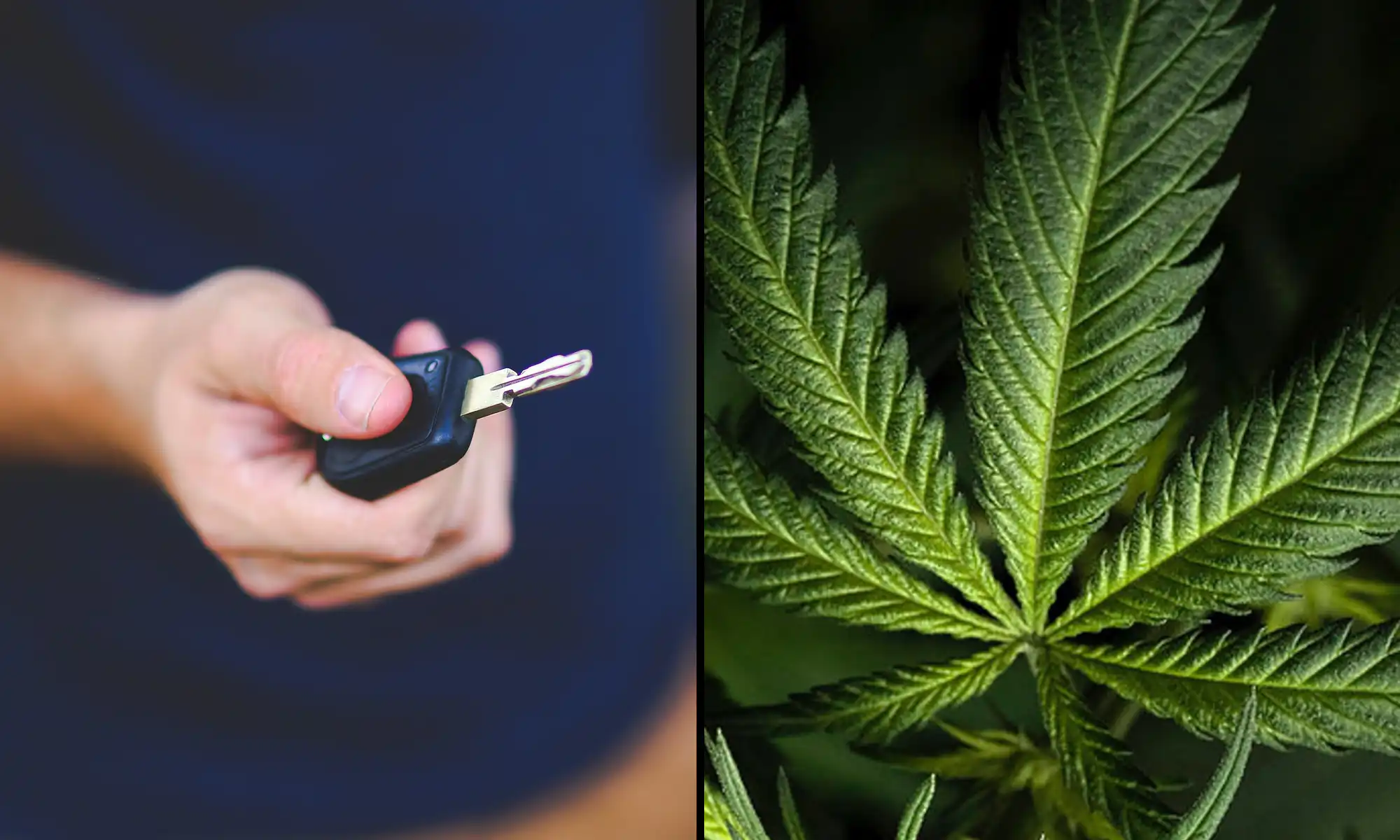
A coalition of transportation and safety organizations said they have “serious safety concerns” about the Trump administration’s move to federally regulate marijuana.

Led by the American Trucking Association, the groups sent a letter to federal officials Monday asking them to take steps to ensure truck drivers, pilots, transit operators and other safety-sensitive workers continue to be tested for cannabis.

“If employers do not take the necessary steps to preserve the ability of security-sensitive transportation workers to test for marijuana, this change could have significant consequences for the safety of passengers and the entire transportation industry,” wrote Acting Attorney General Todd Blanche, Drug Enforcement Administration (DEA) Administrator Terrance Cole, Health and Human Services Secretary Robert F. Kennedy, and Transportation Secretary J.

The organizations said they understand that federal officials are being “urgently” reorganized under an executive order from President Donald Trump, that they are “deeply concerned that the current process does not adequately take into account agencies responsible for transportation safety or protecting the traveling public” and that they want the agencies to “work together.” ongoing cannabis redistricting hearings and rulemaking process to address these concerns.

In May, the Department of Transportation (DOT) issued new guidelines saying just that Truck drivers, airline pilots and other safety-sensitive workers still cannot use medical marijuana without penalty despite the Trump administration’s move to reschedule.

“Marijuana use is incompatible with safety-sensitive functions,” the department said.

Medical review officers (MROs) who receive drug test results indicating cannabis use cannot rule them out as negative for illegal substance use, even if an employee claims it was a result of state-licensed medical marijuana.

“Currently, there is no way for an MRO to verify that a laboratory-confirmed marijuana drug test result is positive when an employee claims the positive was caused by a state-licensed marijuana product,” the DOT said, explaining that after the reprogramming, medical marijuana dispensed under state law “does not” constitute a drug approved by the Food and Drug Administration (FDA).

The transportation groups said in the new letter that the DOT’s drug-testing program “is in accordance with the Department of Health and Human Services’ (HHS) Mandatory Guidelines for Federal Workplace Drug Testing Programs and HHS-certified laboratories.”

“While DOT has expressed its intention to continue testing marijuana, a commitment we greatly appreciate, it is unclear whether DOT will retain its ability to rely on HHS procedures and certifications after the rescheduling,” they wrote. “Without this alignment, DOT may retain the authority to conduct testing, but lack the scientific and procedural infrastructure to do so.”

“Practically, this would mean that truck and bus drivers, pilots, flight attendants, air traffic controllers, air mechanics, railroad workers, dispatchers and signal workers, transit operators and pipeline workers could continue to perform high-risk safety roles without a reliable means of verifying that they are not actively using marijuana. It relies on controlled substance testing to identify end use and prevent potentially impaired individuals from fulfilling their safety-related obligations. While the planning could create legal or regulatory loopholes, the regulated employer-based drug testing agency warned that the final rules should not jeopardize marijuana testing for safety-sensitive transportation workers.”

“Regardless of the broader policy goals of the review, the federal government should not move forward to preserve transportation drug testing programs and mitigate the risks of increased and unchecked deterioration of our roads, railroads, public transportation systems, pipelines, airspace, and maritime corridors,” the letter says.

The organizations specifically ask federal officials to:

  • Support long-term marijuana testing for all safety-sensitive transportation workers;
  • Confirm the authority of DOT-regulated employers to perform such tests;
  • Ensure HHS laboratory certification and testing guidelines remain available and aligned with DOT’s safety mission; and
  • Establish a coordinated federal strategy to address the transportation security implications of rescheduling.

“The public and the workers who keep our transportation system running safely deserve a process that ensures these safeguards are firmly in place before any final action is taken,” he said. the letter he says

Earlier this month, the House Appropriations Committee approved a provision to allow federal officials to continue requiring government employees and security-sensitive employees, such as truck drivers and airline pilots must be drug tested for marijuana, “regardless of any future change in legal status or schedule.”

This was followed by a press conference organized by prohibitionist groups and a drug-testing industry association, where both Republican lawmakers joined the proclamation. “Cut” to marijuana rescheduling by asserting that safety-sensitive transportation workers can still be punished for testing positive for THC.

Legislators and abolitionist activists argued that moving marijuana to Schedule III would lead to a 1986 executive order signed by President Ronald Reagan defining illegal drugs under the Controlled Substances Act (CSA) in relation to the use of cannabis by truck drivers and other airline employees.

Last October, Transportation Secretary Sean Duffy suggested that President Donald Trump was “putting pressure” on rescheduling cannabis.arguing that marijuana is “truly addictive” and that policy reform on the issue sends a “dangerous” message.

“At a time when the culture is encouraging and celebrating the use of marijuana, we’re not talking about risk,” Duffy said.

Marijuana Moment is made possible with the help of readers. If you rely on our pro-cannabis journalism to stay informed, consider a monthly Patreon pledge.

Continue Reading
Advertisement

Trending

Copyright © 2021 The Art of MaryJane Media