Connect with us

Cannabis News

Ohio Senate Expected To Vote On Bill Recriminalizing Some Marijuana Activity That Voters Legalized

Published

on

“You can be charged with a felony for having legal weed in a package other than what you bought it from. You can be charged with a felony for buying legal weed in Michigan.”

By Jake Zuckerman, Signal Cleveland

It was this story originally posted By Signal Cleveland. Sign up for their free newsletter at SignalCleveland.org/subscribe.

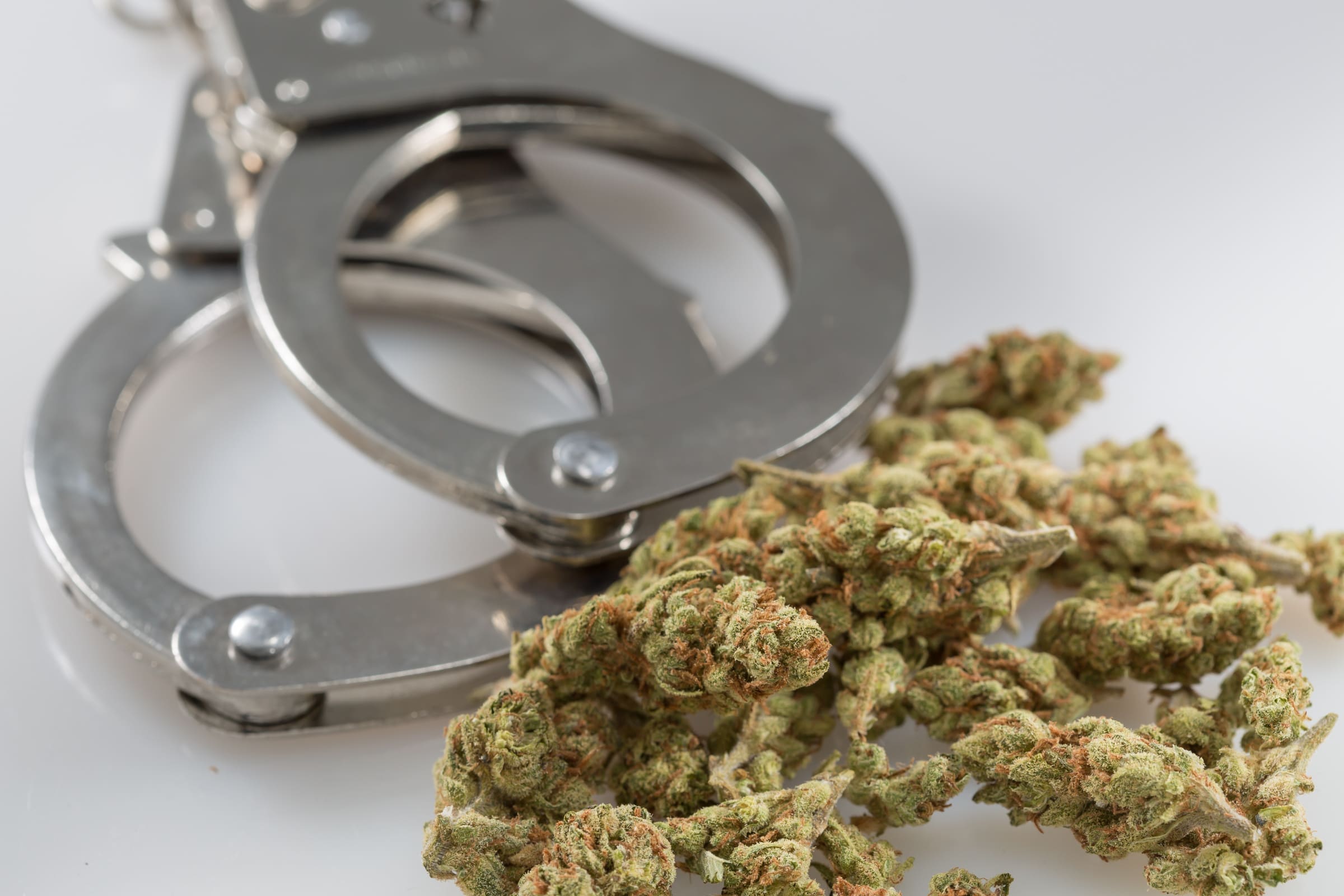
A new law to be passed in the Statehouse next week would establish a series of juveniles Criminal penalties for persons illegally transporting or possessing marijuana in Ohiowhile withdrawing legal protections for users, such as child custody or professional license disputes.

That’s why NORML, the oldest marijuana advocacy organization in the US, is leading a quixotic effort to urge the Ohio Senate to reject Senate Bill 56 before a final vote next week.

With Senate approval, the bill would go to Gov. Mike DeWine (R) for his signature or veto.

The marijuana changes are part of a larger package that also establishes a new, comprehensive regulatory system for the intoxicant hemp, a product functionally similar to legal marijuana, but sold without age restrictions, taxes or quality controls. DeWine, a Republican who opposed relaxing Ohio’s marijuana laws, has been making public the issue of hemp more than a year ago.

But perhaps due to a political compromise, marijuana users have been caught up in the crackdown on hemp, according to Morgan Fox, NORML’s political director.

“A lot of this stuff is completely nonsensical,” he said in an interview. “This is recriminalizing a lot of behavior that is relatively innocent and has been legal for a long time.”

House and Senate lawmakers negotiated the final version of the legislation in a conference committee, which means the bill cannot be changed. The House passed it last month by a 52-34 vote last night, with a handful of Republicans joining Democrats in opposition.

Committee members described the final version as a compromise between mixed blocs of voters: Democrats who don’t want new criminal penalties for regular users, Republicans who support the right to grow marijuana, religious conservatives who oppose the expansion of legal use of the intoxicant, local governments who want their money to ruin a gas station. retailers, and both the hemp and marijuana industries seeking market advantages. (In all, 153 lobbyists signed up to work on the bill in August, state records show.)

In 2023, Ohio voters passed Issue 2 by 57 percent to 43 percent, allowing adults to legally use, buy, sell and possess cannabis. Those rights remain intact under the bill.

However, SB 56 imposes legal penalties for not having marijuana in its original container or buying legal marijuana in Michigan, where it is usually much cheaper.

Below is a closer look at some of these rules.

Out-of-state marijuana

SB 56 reclassifies what counts as the “legalization scope” of marijuana. And under its rules, marijuana that isn’t grown at home or purchased at a state dispensary is illegal. Prices are much lower in Michigan’s more mature cannabis market, and SB 56 would make it illegal to bring the substance back into Ohio.

Violators can be charged with a misdemeanor, which carries a maximum fine of $150, but no jail time.

Fox, the state lobbyist for NORML, said he is not aware of any adult-use states that outlaw the simple possession of cannabis produced in another state.

Driving with marijuana in the car

Under the bill, drivers could legally transport marijuana. However, it must be stored in the trunk or, in cars without a trunk, behind the last upright seat of the car. Marijuana and any paraphernalia must also be stored in its “original, unopened container.”

Likewise, edibles must be kept in their original packaging to complete the bill.

Offenses are minor fouls.

“You can be charged with a felony for having legal weed in a package other than the one you bought it from,” Bride Rose Sweeney, one of the top Democratic negotiators in the House, said at the conference. “You can be charged with a felony for buying legal Michigan weed.”

Loss of legal protections

In addition to legalizing marijuana, the voter-approved 2023 law created legal protections for adults who use marijuana in many civil and administrative contexts.

For example, state licensing boards cannot penalize licensees solely for using marijuana. A judge cannot deprive a parent of parenting time or responsibilities based solely on marijuana use and absent clear and convincing evidence of the child’s lack of safety.

Similar protections exist in relation to access to medical care, such as organ donation, in relation to denying a person as a tenant or disqualifying them from public benefits.

The bill removes almost all of these protections, although users can access public benefits (except unemployment compensation).

Marijuana Moment is made possible with the help of readers. If you rely on our pro-cannabis journalism to stay informed, consider a monthly Patreon pledge.

Continue Reading

Cannabis News

Nascent medical cannabis industry aims for growth

Published

on

By


The medicinal cannabis sector is struggling to take root, and another specialist processing plant is set to close. But with current regulations and a new collective industry in mind, New Zealanders are promising to reduce their reliance on imported medicinals.

There was great excitement when medicinal cannabis was legalized and then regulated in 2020, with the hope of growing the domestic sector and serving patients here and abroad. However, since then, several companies have closed their doors, including Greenfern Industries, Cannasouth and, most recently, Helius Therapeutics.

The latter plans to close the East Tāmaki plant, affecting 65 workers. It is one of the few medicinal cannabis factories in the entire nation that has a specialized processing certificate called “Good Manufacturing Practice” (GMP).

Medical Cannabis Council executive director Sally King said that under current rules, most growers did not have such certification, and could only sell raw ingredients, not processed products such as more profitable cannabis capsules.

Read more at the town


Continue Reading

Cannabis News

Medical Marijuana Helps People Stop Using Opioids, Sleeping Aids And Other Prescription Drugs, Study Shows

Published

on

By

Using medical marijuana appears to help reduce the use of other medications, including opioids, sleep aids and antidepressants, according to a new study of more than 3,500 patients. They experience far fewer negative side effects after switching from prescription drugs to cannabis.

The survey results show that across all medication categories, patients were able to reduce their use of other prescription drugs by an average of 84.5 percent after starting to use medical cannabis.

More than half of the patients (58.9 percent) completely stopped using other prescription drugs.

The study, conducted and published by medical cannabis and telehealth company Bloomwell, conducted an online survey of 3,528 patients in Germany last month.

“Through the use of medical cannabis, patients were able to reduce their use of other prescription medications by an average of 84.5% across all categories.”

93.4 percent of patients taking sleeping pills were able to cut their use in half after starting medical marijuana, and 75.5 percent were able to get off the medication completely.

For methylphenidate, an ADHD drug sold under the name Ritalin, 77.3 percent of medical marijuana patients stopped completely.

61 percent of patients who were previously dependent on opioids were able to stop completely with the help of medical marijuana.

Stopping the use of prescription drugs led to a significant reduction in drug-related side effects, with 60.7 percent reporting no longer experiencing them.

“These patient reports demonstrate that in many cases, in addition to the treatment of the actual symptoms, one of the key reasons for an individual therapeutic trial with medical cannabis is the absence or reduction of medication-related side effects,” the study concluded.

“60.7% of patients reported no longer experiencing medication-related side effects from using medical cannabis.”

There were positive side effects, however, with 67.8 percent saying medical cannabis helped them concentrate better, 61.9 percent said it helped them foster more social relationships, and 53.9 percent experienced fewer sick days from work.

“The primary reason for prescribing medicinal cannabis, in addition to treating symptoms, is to reduce or avoid the side effects of other medications,” Julian Wichmann, Bloomwell’s founder and CEO, said in a press release. “For example, anyone who can completely stop opioids using medical cannabis has a good chance of going about their daily lives and working without side effects.”

“So we shouldn’t demand restrictions on access to medical cannabis, but rather make sure doctors are willing to do an individual therapeutic trial with medical cannabis, or at least recommend it and refer patients to their colleagues,” he said. “At the same time, our survey shows that we should finally discuss the great benefits of medical cannabis more openly, instead of only warning about the empirically unproven risks and discrediting the flower.”

This is not the first study to position medical cannabis as a safer alternative to opioids and other prescription drugs.

About One in three Americans who use CBD say they take it as an alternative or supplement to at least one medication—especially painful ones—according to a federally funded study published in February.

Also, a recent federally funded study, published by the American Medical Association (AMA), added further evidence Marijuana can be an effective substitute for opioids in the treatment of chronic pain.

Other studies published by the AMA have found legalizing marijuana for medical or recreational purposes “Significantly associated with reduced opioid use among patients diagnosed with cancer.”

A separate paper published in October also found that Legalizing medical marijuana “is associated with a significant reduction in opioid prescriptions.”

In August, however, Australian researchers published a study that shows this Marijuana can be an effective substitute for opioids in pain management treatment.

Another study published last year in the journal Drug and Alcohol Review found that daily drug users with chronic pain cannabis use was associated with greater likelihood of opioid cessation-Especially among men.

Other studies also found this legalizing medical cannabis appears to have significantly reduced payments to doctors from opioid manufacturers who specialize in pain, the authors found that “this reduction is a consequence of the availability of medical marijuana as a substitute” for prescription analgesics.

Other recent studies also showed a decline in fatal opioid overdoses in jurisdictions where marijuana was legalized for adults. That research found a ‘consistent negative relationship’ between legalization and fatal overdoses, effects more pronounced in states that legalized cannabis earlier in the opioid crisis. The authors estimated that legalizing recreational marijuana “is associated with a decrease of 3.5 deaths per 100,000 people.”

“Our findings suggest that expanding access to recreational marijuana could help combat the opioid epidemic,” the report said. “Prior studies overwhelmingly indicate that marijuana (especially for medical use) can reduce opioid prescriptions, and we see it successfully reducing overdose deaths as well.”

Another recently published report on prescription opioid use in Utah follows the state legalizing medical marijuana found that the availability of legal cannabis reduced opioid use among chronic pain patients and helped reduce prescription drug overdose deaths across the state. Overall, the study’s results indicated that “cannabis plays a significant role in pain management and reducing opioid use,” he said.

President Donald Trump said in December that marijuana can “make people feel a lot better.” and serves as a “substitute for addictive and potentially deadly opioid painkillers.” issued an executive order to federally regulate cannabis and promote access to CBD for therapeutic purposes. He clarified, however, that he personally has no interest in using marijuana himself.

Marijuana Moment is made possible with the help of readers. If you rely on our pro-cannabis journalism to stay informed, consider a monthly Patreon pledge.

Become a patron on Patreon!

Continue Reading

Cannabis News

More employees mobilize with UFCW

Published

on

By

United Food and Commercial Workers (UFCW) Local 360 has announced that more cannabis workers in New Jersey are joining its union family. Workers at Hamilton, New Jersey-based cannabis product manufacturer Sun Extractions chose to unionize with Local 360 for the better wages, benefits and benefits that come with a union contract.

Their decision adds to the growing momentum of UFCW Local 360’s Cannabis Workers Rising campaign, which has helped shape statewide labor standards and increase worker, consumer and community safety in New Jersey’s fledgling legal marijuana industry.

“New Jersey’s cannabis industry is stronger today thanks to this vote by Sun Extractions workers,” said Hugh Giordano, UFCW Local 360 Organizing Director. “Sustainable success for companies, workers and communities starts with fair treatment, strong standards and shared commitments. This is how jobs in the cannabis industry become long-term careers, and the future these workers work for.”

“It’s great that this vote is being announced before 4/20,” Giordano added. “4/20 used to be about the plant, but it has become a holiday that celebrates the entire cannabis community and recognizes the workers who grow, cut, pack, package, advise and distribute our cannabis products. Their hard work is why New Jersey’s medical and adult markets are safe and growing, and why sales are on target to exceed $2 billion this year.”

UFCW Local 360 President Sam Ferraino, Jr. emphasized that the Sun Extractions vote is part of a growing push to improve worker protections and benefits in the legal marijuana industry.

“We have more reasons than ever to celebrate 4/20 this year. We welcome the employees of Sun Extractions to the Local 360 family, seeing the hard work of our members move an entire industry forward, and speaking to other states, looking to New Jersey as a model of how to do it,” said Ferraino. “It’s further proof of what we always say: stronger unions mean stronger industries and communities. And that’s worth celebrating.”

For more than a decade, UFCW Local 360 has been at the forefront of efforts to ensure that New Jersey’s cannabis industry offers fair wages, strong job protections and real advancement opportunities. Thousands of cannabis workers, from cultivation to retail, have joined the union since the Cannabis Workers Rising campaign began.

From seed to sale, UFCW is the national leader in organizing workers in the cannabis industry and is the official cannabis union of the AFL-CIO. In the US, UFCW works with workers and business owners to achieve the shared goal of a regulated cannabis industry that provides family-supporting jobs and promotes social equity.

For more information:
UFCW
www.ufcw.org

Continue Reading
Advertisement

Trending

Copyright © 2021 The Art of MaryJane Media