
Cannabis News
Smart root zone monitoring in stone wool cultivation

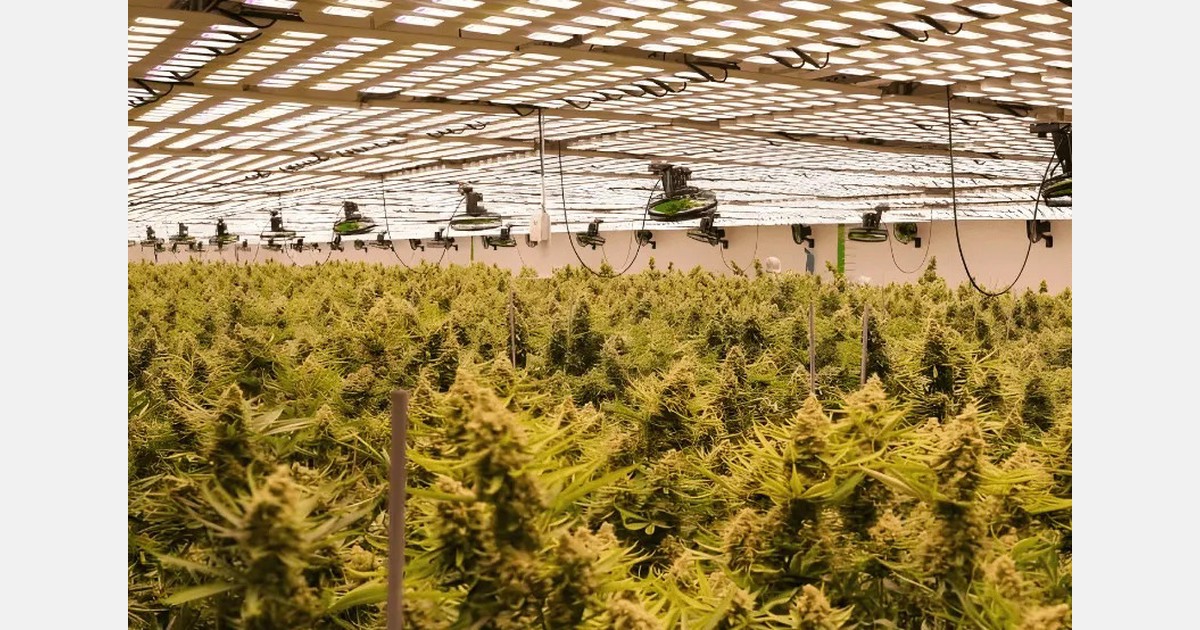
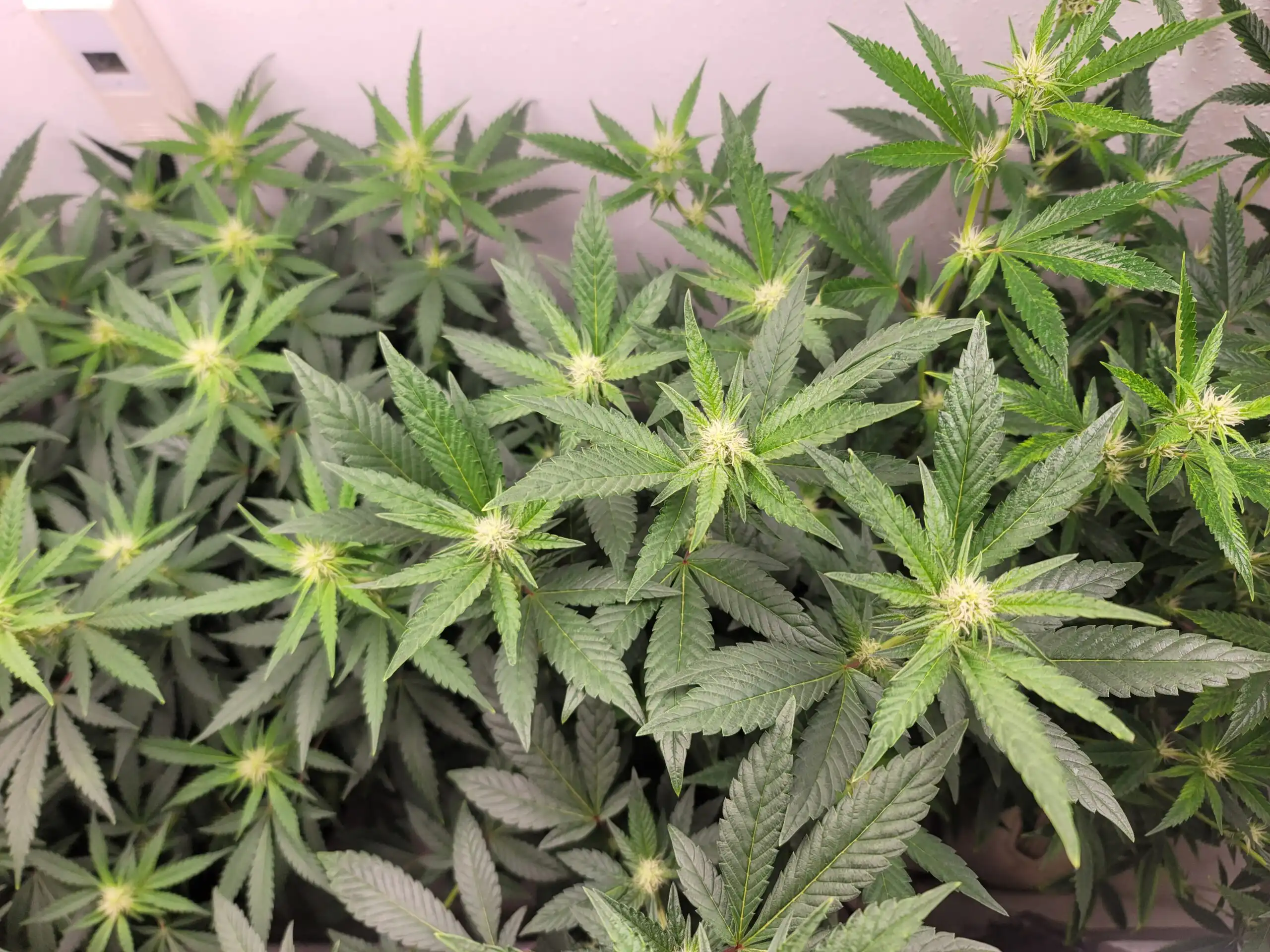
In modern professional horticulture, medicinal crops such as cannabis and high-yielding vegetable production, root zone management is the cornerstone of consistent quality and yield. Rockwool substrates offer a very stable and correctable root environment, but this advantage is fully exploited when decisions are supported by reliable and well-interpreted data. Sensors in the root zone provide continuous information on water content, EC and temperature. Used correctly, they allow growers to anticipate plant needs rather than reacting to stress signals. Used incorrectly, they introduce noise, false confidence, and misdirection. The difference is in strategy, location and interpretation. Remember that sensors are just another tool and should not replace traditional monitoring methods.
Why Root Zone Monitoring Becomes Essential at Scale
Every grower evaluates the root zone, consciously or not. In smaller installations, this is often done visually and by touch: lifting blocks, assessing the color of rockwool, or observing the attitude of plants. These methods are valuable, but subjective and difficult to standardize.
As operations grow and the number of plants increases, manual assessment quickly reaches its limits. Weighing slabs or blocks on a scale adds objectivity, but at discrete moments and with significant manual labor. In larger facilities, the manpower required to continuously monitor root conditions throughout the crop is simply not available.
Root zone sensors address this reality. They provide continuous data streams that show trends, dynamics and responses to irrigation and climate change over time. In scaled cultivation, sensors are therefore not only a precision tool, but a practical necessity. Importantly, they do not replace experience; they formalize, making intuition measurable and repeatable.
 © CULTIWOOL SA
Location, representation and care of sensors
A sensor does not measure the crop; measures the exact micro-environment in which it is installed. Correct positioning is therefore essential.
Sensors should be installed in the active root zone of a healthy, representative plant, at a depth where the roots remain active throughout the crop cycle. They should never be placed directly next to a drip, as this results in high moisture readings that do not reflect average root conditions. Therefore, consistent dripper placement is essential not only for block performance, but also for consistent sensor data.
The wider greenhouse context matters just as much. Sensors should not be placed in corners, edges, near walkways or in areas subject to shadows, drafts or uneven watering. Border plants and atypical sites experience conditions different from the majority of the crop and will yield data that are not representative of the compartment.
Once installed, the sensors must remain in place for the duration of the crop cycle. Repeated removal and reinsertion disturbs the structure of the rockwool, alters the local water distribution, and compromises the consistency of the data. If a sensor needs to be removed, it should never be put back in the same place. Previously used insertion points contain moisture and residual pockets that can affect EC readings. In such cases, the sensor must be installed in a new, unobstructed location.
Consistency in positioning is what allows producers to confidently recognize trends, responses and deviations.
How many sensors are enough?
A single sensor can never represent an entire greenhouse, and in most cases, not even an entire compartment. Changes in light distribution, uniformity of irrigation, air flow and plant development inevitably create them within the crop.
At the same time, the deployment of sensors must be economically rational. The goal is not maximum sensor density, but reliable representation. In practice, this means installing multiple sensors per compartment in areas with comparable growing conditions.
Instead of focusing on individual readings, the most robust approach is to work with average data. Each sensor reflects the conditions of its specific location; by combining their readings, growers create a stable reference that reduces the risk of overreaction to local changes and supports safer and more consistent decision-making. Again, a sensor is just one tool to consider.
Interpreting root zone data in rockwool
Rockwool allows precise control of the air-water ratio in the root zone. Sensors should therefore be used to observe dynamics rather than isolated values.
Meaningful interpretation is based on the behavior of the back-dry between irrigation events, wetting rate, EC stability and how these parameters respond to climatic conditions. Sudden spikes or drops often indicate improper watering, uneven distribution, or location effects rather than actual plant demand.
Root zone data gain real value when cross-referenced with climate parameters such as temperature, humidity and VPD, as well as visual observations of crops. Integrated platforms and multiple data sources, such as those enabled by solutions like SenseNL, help validate trends and clarify cause-and-effect relationships.
Selecting the right sensor for the right substrate
Not all sensors in the root zone are interchangeable. Sensor technology must be matched with the physical properties of the substrate to generate accurate and meaningful data. They must also be properly maintained and stored to ensure accuracy.
Different substrates, such as rockwool and cocopeat, have fundamentally different structures, water retention characteristics and EC dynamics. Sensors designed for cocopeat will not give reliable readings on rockwool, and vice versa.
Also in rockwool cultivation, the selection of sensors is important. Blocks and slabs differ in volume, water distribution and root development patterns. Sensors designed for stone wool blocks are therefore not always suitable for slabs, and vice versa. Matching the sensor to the substrate material and its form factor is critical to obtaining reliable root-site data.
Driving for uniformity and stability
In both medicinal and vegetable cultivation, success is defined by uniformity and repeatability. Correctly installed and correctly interpreted root zone sensors help to identify variability early, reduce differences between plants and support stable establishment or vegetation strategies.
Combined with high-quality stone wool substrates, the sensors become a powerful ally in precision farming, improving consistency without replacing the grower’s experience.
From data points to confident decisions
Root zone sensors aren’t about collecting more numbers; they are about creating clarity. When sensors are strategically placed, deployed in sufficient numbers, and handled consistently, they make rockwool farming a predictable and correctable system.
By averaging data from multiple representative locations, producers reduce risk, avoid overcorrection, and drive with confidence. In professional horticulture, where uniformity, stability and scale define success, reliable root zone data becomes the basis rather than an experiment, cycle after cycle.
For more information:
Cultiwool
(email protected)
www.cultiwool-substrate.com









Dalgety Ltd has entered into a partnership with Curaleaf Laboratories to supply pharmaceutical grade cannabis medicines to the UK cannabis market. The arrangement combines Dalgety’s cultivation operations, which are certified to EU-GMP standards, with Curaleaf Laboratories’ pharmaceutical manufacturing and distribution capabilities. According to the companies, this creates a UK-based supply route that does not rely on imported cannabis flowers, as Dalgety cultivates its product in-house. Dalgety claims it was the first company in the UK to grow, manufacture and supply EU-GMP medical cannabis from a single site.
 © Curaleaf Laboratories
The growing facility, which is more than 30,000 square feet, is located indoors and uses hydroponic growing methods along with automated lighting, irrigation, humidity and temperature control systems. The company reports that it uses AI-assisted environmental monitoring, which extends the traceability of batches to the final product and compares them to operating standards for air filtration systems. Post-harvest processing is said to follow EU-GMP protocols, including microbial and cannabinoid testing.
The stated goal of this approach is to reduce between-harvest variation in terms of THC and CBD content, terpene profiles, and microbial safety. Dalgety says his cultivation is overseen by staff with experience in horticulture and biochemistry, some of whom have worked on cannabis cultivation projects internationally.
Through a partnership with Curaleaf Laboratories, Dalgety’s UK-grown cannabis is processed and distributed through a UK-based supply chain, rather than imported from overseas. Companies suggest that this arrangement can shorten the time it takes to get products to market compared to importing, and reduce the likelihood of supply disruptions. Because Dalgety and Curaleaf Laboratories are involved in cultivation, manufacturing and distribution, the companies say this oversees the product at every stage, making it clearer for prescribers to see where and how the product was made.
 © Curaleaf Laboratories
Dalgety operates to EU-GMP standards and has been subject to regulatory review by the MHRA and the Home Office. Its operations include environmental monitoring, microbial testing, stability testing, controlled drying and curing procedures and quality assurance processes, along with controlled and secure facilities.
The company describes its work as controlled environment farming, hydroponic systems, environmental control technology, and efforts to stabilize cannabis genetics and phenotypes for batch-to-batch consistency.
 © Curaleaf Laboratories
Dalgety has also opened its cultivation facilities for visits to healthcare professionals, clinicians, pharmacists, researchers and other industry stakeholders. The company says this is in response to the fact that much of the cannabis historically supplied to UK patients has been grown overseas, which has limited opportunities for UK clinicians to see first-hand the cultivation and quality control processes. These tours aim to provide visitors with information on cultivation standards, EU-GMP compliance procedures, environmental control systems, testing processes and the regulatory framework governing cannabis manufacturing in the UK.
Dalgety and Curaleaf Laboratories describe their partnership as expanding access to UK-grown medical cannabis, improving supply chain reliability and helping to meet sector regulations, placing it in the wider context of growing demand for cannabis-based treatments from UK patients.
For more information:
Curaleaf Laboratories
Email: (email protected)
https://curaleaflaboratories.co.uk/
Cannabis News
Arkansas GOP Governor And Democratic Challenger Agree On Opposing Marijuana Legalization
Cannabis News
Will the top World Cup expert in the fruit, vegetable, and horticulture sector come from Canada, the U.S. or Belgium?

FreshPublishers 2026 World Cup Group Stage
The World Cup is coming to an end, with the third-place play-off between France and England on Saturday, and the final between Spain and Argentina the following day. It won’t be long until the grand winner of FreshPublishers’ first World Cup pool is revealed.
 © Fresh Publishers
As previously reported, Slim Kooli from Courchesne Laros is the favorite to win the €1,000 prize. He has secured a comfortable lead over Nol Batist of North American Interstate Greenhouse Company, while buyer Bjorn Van Ryckeghem of Deprez Construct is currently in third place.
| 1 | Sim School | Spain | 1–0 | 2–1 | 737 | 9716 | |
| 2 | Nol Batist | France | 2–1 | 1–1 | 674 | 9433 | |
| 3 | Bjorn Van Ryckeghem | France | 2–2 | 3–1 | 674 | 9264 | |
| 4 | Christian Anton Smedshaug | England | 1–2 | 1–2 | 659 | 9134 | |
| 5 | Perry Springintveld | Spain | 1–1 | 2–1 | 647 | 9105 | |
| 6 | Willem Tijssen | Spain | 2–0 | 2–1 | 710 | 9098 | |
| 7 | Hans Borsboom | Spain | 2–1 | 2–1 | 528 | 9058 | |
| 8 | Bart Triemstra | Spain | 2–1 | 2–1 | 737 | 9052 | |
| 9 | Youness Bensaid | Spain | 2–1 | 1–1 | 722 | 8954 | |
| 10 | Vijay Dijkstra | Portugal | 2–0 | 2–1 | 382 | 8953 |
However, there have been some surprises during the tournament, and bonus points must be added, so we will keep the suspense a little longer. On Monday we will find out who is the main World Cup announcer in the international fruit, vegetable and horticulture sector…

Maine Governor Collins Seals Records – Weed Talk News with Alaina Pinto The B Block

Montel talks about taking a knee

BREAKING NEWS DEA RESCHEDULES CANNABIS TO SCHEDULE 3!

ASK ME ANYTHING | MONTEL

Marijuana Retail Report

Redefining the standards of UK cannabis

Arkansas GOP Governor And Democratic Challenger Agree On Opposing Marijuana Legalization

Michigan Cannabis Brand Forced to Close After Investigation Finds Inventory Discrepancies, Out-of-State Transport

The C Block…more 420 recaps on Weed Talk News …recorded 4_29_24

PART 1 TAKING A KNEE | NATE BOYER

“Our system can manage equipment across 10,000+ m² using just a few wires”

Mazar-i-Sharif Hash Wednesday

Florida Workshop to Discuss What Constitutes a ‘Cartoon’ in Hemp Packaging

Afghan Black Hash Wednesday

Weak Michigan Cannabis Sales Again in July – New Cannabis Ventures

From Finance to Wellness: Brad Zerman’s Impactful Pivot

Re-release of the full show of Cannabis Coast to Coast news. Republican Texas DA Fires Up vs. laws;

DEA’s Cole Reverses His “priorities” ; Prohibitionists Dig In; Dead & Co Celebrates 60 years in SF

Texas DA Fires Up for Change! Mass. Sheriff arrested on Extortion charges; GOP vs Industry in state

Your Cannabis Business: Consistent Filings Are Critical
-
 Cannabis News11 months ago
“Our system can manage equipment across 10,000+ m² using just a few wires”
-
 Video10 months ago
Mazar-i-Sharif Hash Wednesday
-
 Florida11 months ago
Florida Workshop to Discuss What Constitutes a ‘Cartoon’ in Hemp Packaging
-
 Video10 months ago
Afghan Black Hash Wednesday
-
 aawh11 months ago
Weak Michigan Cannabis Sales Again in July – New Cannabis Ventures
-
 Video11 months ago
From Finance to Wellness: Brad Zerman’s Impactful Pivot
-
 Video11 months ago
Re-release of the full show of Cannabis Coast to Coast news. Republican Texas DA Fires Up vs. laws;
-
 Video11 months ago
DEA’s Cole Reverses His “priorities” ; Prohibitionists Dig In; Dead & Co Celebrates 60 years in SF