
Cannabis News
Tilray advances UK healthcare platform while prepares for U.S. rescheduling

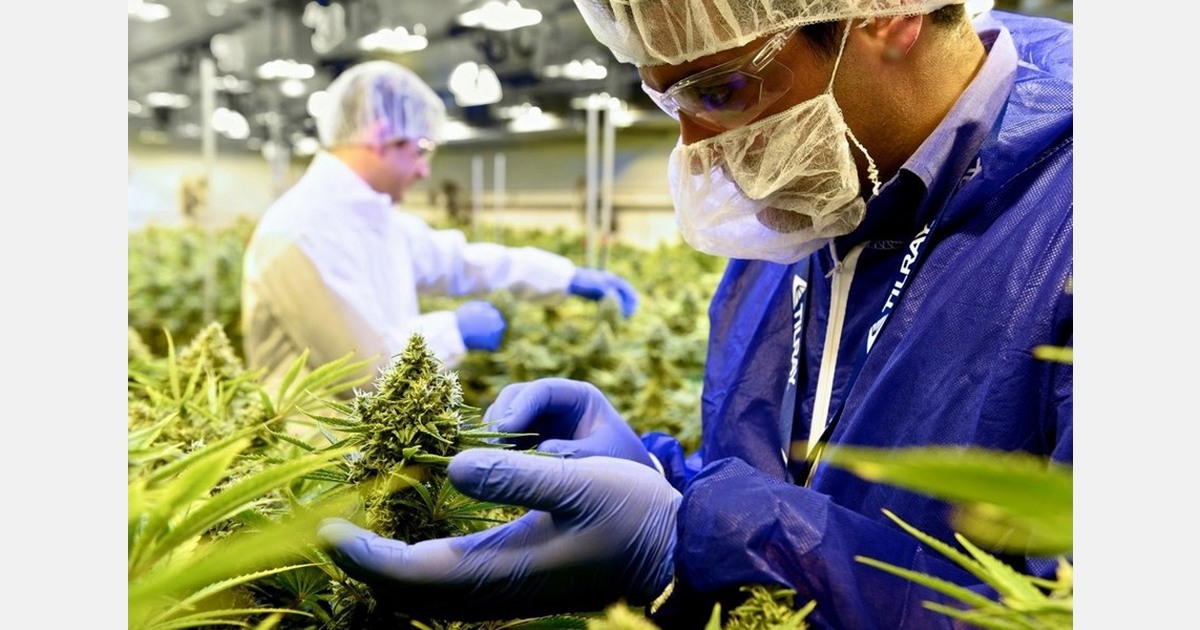
Tilray has announced a number of strategic initiatives to mark the next phase of its global growth, expanding across healthcare, cannabis and beverages, strengthening its ability to expand internationally and capture emerging market opportunities.
Irwin D. Simon, President and CEO of Tilray Brands, stated: “Tilray Brands is setting the pace for global innovation in healthcare, cannabis and craft beverages – each a distinct growth engine on our platform. This is a crucial time as we enter the next phase of global growth. We are executing carefully against our strategic plan by expanding our international brand growth icon position and Brewver’s international medical icon position. At the same time, our brands, We maintain the financial flexibility to invest behind infrastructure and capabilities.Together, these actions position Tilray as a broad and diversified global platform with multiple near- and long-term growth drivers, and one of the most dynamic and exciting consumer companies today.
 © Tilray Marks
Tilray expands UK Medical Platform with acquisition of Lyphe
Tilray acquired Lyphe Group, a leading UK-based medical cannabis clinic and digital pharmacy platform, with Lyphe Dispensary dispensing around 150,000 units and Lyphe Clinic treating over 16,000 patients to date, anchoring and expanding Tilray Medical’s footprint in one of Europe’s largest and most dynamic healthcare markets. The addition of Lyphe strengthens Tilray’s vertically integrated medical ecosystem, combining clinical services, patient access and pharmaceutical distribution. Through Lyphe’s online clinic and pharmacy platform, Tilray will improve access to medical cannabis while accelerating its traditional prescription drug delivery capabilities, creating a seamless digital patient experience.
Most importantly, with the addition of the Lyphe Group, Tilray Medical is establishing its first fully vertically integrated medical platform, which combines the cultivation and production of pharmaceutical-grade medical cannabis with clinical care, distribution services and pharmaceutical distribution. The integration of Lyphe’s highly skilled patient care team further differentiates this model, enabling a more personalized, unified and comprehensive approach to patient care and outcomes. Tilray will also leverage CC Pharma’s established scale, supply capabilities and purchasing power to supply medicines more efficiently through the Lyphe platform, supporting the wider needs of UK patients and further strengthening Tilray’s European pharmaceutical distribution network.
Rajnish Ohri, International President, Tilray Brands, said: “I am proud to welcome the Lyphe team to Tilray, bringing deep clinical experience and a strong patient-first approach, which immediately strengthens our capabilities. This acquisition marks an important step in Tilray Medical’s continued expansion as a global healthcare platform. We look forward to enhancing our capabilities, our ability to serve UK patients, and the international medical ecosystem in 2027. to build a fully connected, consistent, high-quality care while expanding access to cannabis and traditional therapies.
BrewDog and the beverage platform: Accelerate growth, scale globally and invest in expansion
Six weeks after Tilray acquired BrewDog, the company has moved with speed and discipline to stabilize and strengthen the platform, positioning the brand for its next phase of growth. Tilray has stabilized beer volumes, maintained service levels across channels to ensure consistent stock availability and has begun onboarding new distribution and strategic partners to support expansion.
Mr Simon added: “Our priorities are clear: to strengthen BrewDog, accelerate innovation and scale our global beverage platform. We are already taking decisive steps to reinvest in the BrewDog brand, the innovation pipeline and the brewpub experience, and we see a clear path to rebuilding BrewDog. In the US, we are leveraging our infrastructure and distribution network for our broader beverage portfolio in key growth markets, including the Middle East and India. to scale and support the growth of our American craft brands and global partners like Carlsberg across the US.
Tilray expects the BrewDog business to be cash flow positive by 2027 and is investing in the brand and to revitalize and modernize the existing brewpub estate – areas that have seen limited investment in recent years. This provides a strong foundation for improving performance through targeted operational improvements and focused brand building. These efforts are focused on reimagining the brewpub experience to better connect with today’s consumers to ensure long-term brand relevance. As part of enhancing the venue experience with modern activations, strengthening brand engagement and aligning with evolving consumer preferences, Tilray will invest in a “brewpub of the future” at one of its existing locations, allowing it to analyze, evaluate and recommend future changes to its brewpub network. Tilray BrewDog is building a more compelling platform for the future.
Tilray is seeing strong and growing demand for its American craft portfolio in the UK, creating near-term opportunities to expand distribution and build brand presence in the market. Building on this momentum, the Company plans to launch Hi*Ball Energy in the UK in May, further expanding the beverage offering and increasing consumer demand in the growing functional drink category.
Positioned for US reprogramming and medical cannabis options
In the United States, we are closely following medical cannabis rescheduling and actively engaging with legislators and regulators as they evaluate and work on this important drug policy development. We are also evaluating our participation in the Center for Medicare and Medicaid Innovation pilot program, an opportunity to partner with Healthcare Organizations and oncology practices to provide hemp-derived medical cannabis to underserved and vulnerable patients, provide safe and therapeutic access to medical cannabinoids, and collect data on patient outcomes.
Denise Faltisch, Director of Strategy and Head of M&A, Tilray Brands, stated: “In retrospect, Tilray Medical is strategically positioned to participate in the US medical cannabis market, given our proven track record of operating at scale in highly regulated medical cannabis markets globally, our pharmaceutical quality systems and scientific research, backed by scientific education and scientific research. It will happen in the near term and when it does, we are well positioned to seize the opportunity.”
Through our global Tilray Medical platform, Tilray Medical offers extensive experience in pharmaceutical-grade cultivation, manufacturing and distribution, clinical research and regulatory expertise based in more than 20 markets worldwide. Tilray Medical has helped hundreds of thousands of patients worldwide and offers an extensive portfolio of medical cannabis products, including CBD and THC: beverages, edibles and topicals.
Tilray Introduces ATM Program to Accelerate Global Beverage Expansion
To support this next phase of growth, Tilray has also announced that it will introduce a market equity program (the “ATM program”) of up to $180 million to improve financial flexibility and invest behind its global beverage platform. The ATM program will be managed by Jefferies LLC, TD Securities (USA) LLC and Roth Capital Partners LLC.
For more information:
Tilray
www.tilray.com













Even the best growers need a dark cycle. MMJDaily is shutting down for the annual two-week summer break. There will be no newsletter in your inbox or new articles on the website for the next two weeks, but we will be back on August 10th. Thank you, as always, for following and supporting our work. Rest…

A new study has found that adding hemp oil or a hemp seed byproduct to dog food can improve digestive health without negatively affecting the overall microbial system.
Research published in the journal Veterinary Sciences suggests that some types of hemp derivatives can be safely included as ingredients in dog food. However, the effects appear to depend in part on whether the cannabis is added as an oil or fiber supplement.
For the study, researchers at Kasetsart University in Thailand divided 24 mixed-breed dogs into three groups: one fed food with an 11 percent concentration of a high-fiber hemp seed byproduct, one received food containing 2 percent hemp seeds, and a third received a control diet without hemp.
The dogs were fed the diets for 90 days. The researchers compared the stool samples before the experiment and after 30 and 90 days. Genetic sequencing was used to track changes in gut bacterial composition and diversity.
Dogs fed hemp seed oil-infused food experienced a greater increase in microbial species richness.
“Hemp seeds modulate the canine microbiome without disrupting the ecological stability of the specific formulation, contributing to beneficial health effects in canine nutrition.”
The diet was also associated with increased levels of “beneficial” bacteria from the Lactobacillaceae family, and the fiber-rich hemp seed byproduct Actinobacteriota.
“Hemp seed derivatives altered the microbial composition by promoting beneficial bacteria that promoted gut health in dogs in a formulation-dependent manner,” the authors wrote, and the results “provide evidence for their inclusion as a functional ingredient in dog food.”
Despite the differences between the diets, 19 key bacterial collections were present throughout to analyze. And by day 90, the microbial composition also seemed to stabilize, indicating that the dietary supplements did not significantly disrupt the dogs’ intestinal systems.
Overall, the findings suggest that hemp seed ingredients can be safely incorporated into dog food while protecting gut health by promoting beneficial bacteria, the study authors said.
This is one of the latest studies on cannabis and its effects on dogs.
—
It’s Marijuana Time tracking hundreds of cannabis, psychedelic and drug policy bills in state legislatures and Congress this year. Patreon supporters by pledging at least $25/month, you’ll get access to our interactive maps, charts, and audio calendars so you never miss a development.
Learn more about our marijuana bill tracking and become a Patreon supporter to gain access
—
For example, a systematic review of the scientific literature determined that studies “consistently show” this CBD is a potential “anti-cancer agent” in various types of cancer—and this effect applies to both dogs and humans.
The National Animal Supplement Council (NASC) sponsored a study in 2024 said that CBD is “safe for long-term use” in dogs—This is a significant finding given the emerging research that cannabis can effectively treat anxiety and certain skin conditions in dogs.
Another 2024 case study found this Cannabis appears to be a “viable alternative” treatment option for dogs suffer from a common skin disease, especially if they suffer from the adverse side effects of conventional steroid therapies.
Meanwhile, previous research suggests that Giving dogs a dose of CBD can help reverse the ill effects of accidental THC consumptionaccording to a study by the authors titled “First report of treatment of THC toxicosis in dogs with administration of CBD.”
Another study published in 2024 found that Dogs receiving daily doses of CBD see “significant reductions” in stress and anxiety related to car trips.
Other studies have demonstrated the benefits of CBD, such as the frequency of seizures among dogs receiving the cannabinoid is reduced. Moreover, a study published in 2018 found this dogs with arthritis see improvements with CBD treatment.
As for other animals, it was discovered by the US Department of Agriculture (USDA) in 2013 Cows fed hempseed cake maintain very low concentrations of THC and CBD in their bodies, indicating that meat products from hemp-fed cows are safe for human consumption.
Another federally funded study published in 2022 found this Feeding hemp to cows reduces stress.
It has also been studied by researchers How CBD affects stress and pain in horses.
Marijuana Moment is made possible with the help of readers. If you rely on our pro-cannabis journalism to stay informed, consider a monthly Patreon pledge.


Ora Pharm has confirmed that New Zealand patients, prescribers and pharmacies continue to have uninterrupted access to Helius Therapeutics products following the successful acquisition of the business and its key assets, directly challenging the misinformation being circulated to patients and prescribers by cannabis importer MW Pharma Limited (trading as NUBU).
Industry monitoring was highlighted on Monday, July 20th, when Helius Therapeutics announced that NZ Grow Co. As he inaugurated Growers Day. The event demonstrated the full operational strength, advanced capabilities and integrated supply chain now fully operational under Ora Pharm’s leadership to support the growth of the NZ sector.
At the event, CEO Zoë Reece addressed concerns stemming from a July 9 industry bulletin distributed by NUBU, which stated that “Helius Therapeutics has ceased production and all products are now discontinued.”
 © Ora Pharm
Ora Pharm said the statement was incorrect and had the potential to create unnecessary uncertainty in a highly regulated healthcare sector.
“Inaccurate information about the availability of medicines can cause unnecessary worry for patients, prescribers and pharmacies, interfere with treatment decisions and undermine confidence in the New Zealand cannabis industry.”
Ora Pharm completed the business and acquisition of key assets of Helius Therapeutics on June 18, 2026, resuming manufacturing, packaging and nationwide distribution the following day. All Helius brand formulated products and locally grown products remain approved and available for patient supply.
CEO Zoë Reece said the company’s focus is on ensuring continuity of care while strengthening New Zealand’s medicinal cannabis industry.
“The Helius facility gives New Zealand growers direct access to world-class pharmaceutical drying, extraction and manufacturing capabilities. Combined with NZ Grow Co., we are creating a secure and integrated pathway from cultivation to finished products and international markets. Our focus is on clinical continuity, quality assurance and confidence in patients and prescribing physicians every day.”
 © Ora Pharm
The integration of the GMP-certified Auckland manufacturing facility with NZ Grow Co.’s cultivation network creates New Zealand’s largest medicinal cannabis supply chain. This unified network insulates domestic patients from volatile international import dependencies while providing independent local growers with a transparent, high-standard route to export markets.
Ora Pharm remains committed to working collaboratively across the sector to support patient access, strengthen confidence in the New Zealand cannabis industry and continue to invest in New Zealand’s pharmaceutical manufacturing capacity.
For more information:
Ora Pharm
(email protected)
www.orapharm.co.nz

Legalization? Decriminalization? Is the Green Rush over? The Full Weed Talk News with Alaina Pinto

CANNABIS NEWS | JJ MCKAY

Marijuana Retail Report

MMJDaily will be back August 10th

ALJ Julius Locks in August 17th Filing Deadline

Adding Hemp To Dog Food Improves Digestive Health, New Study Shows

Teen Cannabis Use Dropped by More than 60% in Minnesota After Legalization

420 Recap-Records & POTUS Tweet Support for Cannabis Justice & Dutchie Crashes, Again Weed Talk News

Racial Injustice, Protests & Lack of Leadership

Marijuana Retail Report

“Our system can manage equipment across 10,000+ m² using just a few wires”

Mazar-i-Sharif Hash Wednesday

Florida Workshop to Discuss What Constitutes a ‘Cartoon’ in Hemp Packaging

Afghan Black Hash Wednesday

From Finance to Wellness: Brad Zerman’s Impactful Pivot

Weak Michigan Cannabis Sales Again in July – New Cannabis Ventures

Re-release of the full show of Cannabis Coast to Coast news. Republican Texas DA Fires Up vs. laws;

DEA’s Cole Reverses His “priorities” ; Prohibitionists Dig In; Dead & Co Celebrates 60 years in SF

Texas DA Fires Up for Change! Mass. Sheriff arrested on Extortion charges; GOP vs Industry in state

Your Cannabis Business: Consistent Filings Are Critical
-
 Cannabis News11 months ago
“Our system can manage equipment across 10,000+ m² using just a few wires”
-
 Video10 months ago
Mazar-i-Sharif Hash Wednesday
-
 Florida11 months ago
Florida Workshop to Discuss What Constitutes a ‘Cartoon’ in Hemp Packaging
-
 Video10 months ago
Afghan Black Hash Wednesday
-
 Video11 months ago
From Finance to Wellness: Brad Zerman’s Impactful Pivot
-
 aawh11 months ago
Weak Michigan Cannabis Sales Again in July – New Cannabis Ventures
-
 Video11 months ago
Re-release of the full show of Cannabis Coast to Coast news. Republican Texas DA Fires Up vs. laws;
-
 Video11 months ago
DEA’s Cole Reverses His “priorities” ; Prohibitionists Dig In; Dead & Co Celebrates 60 years in SF