
Cannabis News
Using plasma to kill airborne pathogens

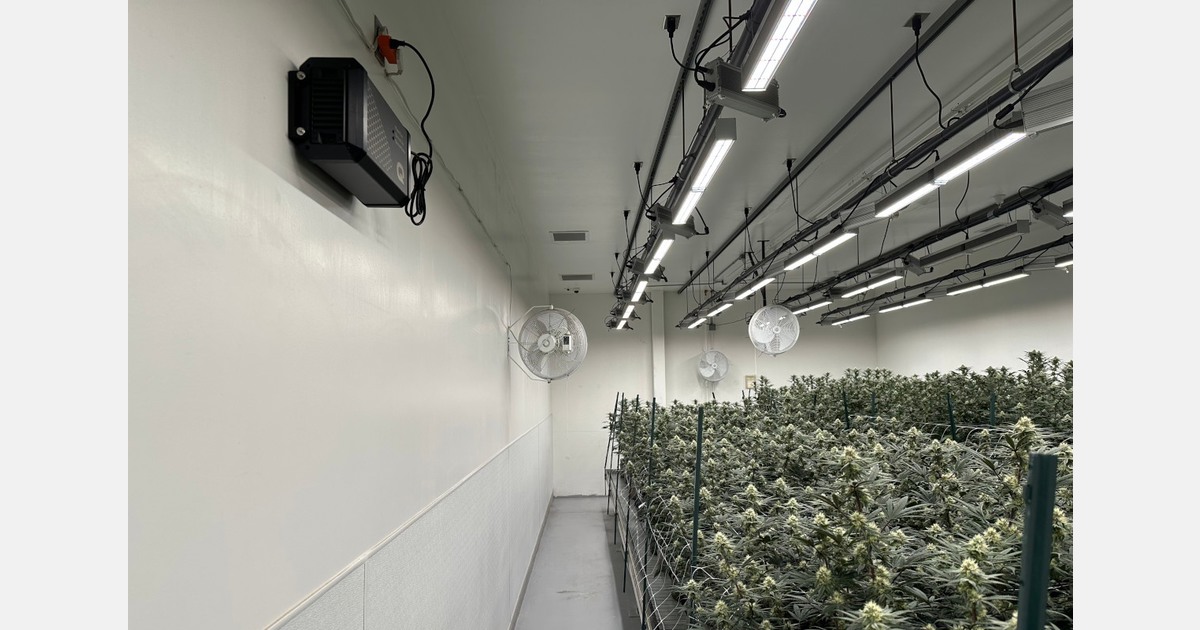
Whether it’s cannabis or produce, every grower faces a constant battle against mold and similar threats. Cannabis is particularly vulnerable, as its humid growing environment and the physical structure of its flowers create an ideal breeding ground for many pathogens. Fruit, vegetables and cut flowers, on the other hand, often die in large quantities as they sit in containers or trucks before reaching their final destination.
For the past two years, DDH has been working with an industrial plasma manufacturer to adapt cold plasma technology for controlled environment agricultural and shipping environments. The result is a variety of products sold under the name Quantum Clear (QC).
plasma
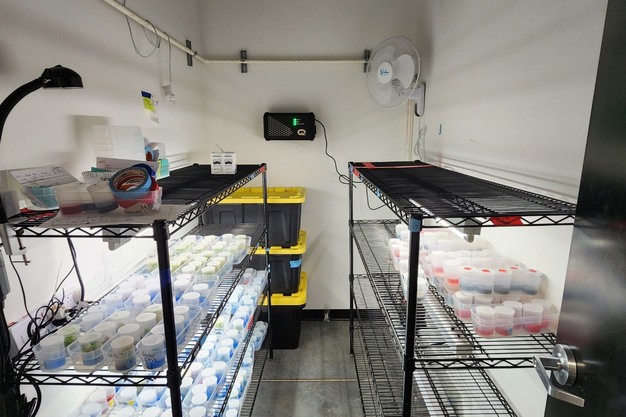
DDH’s Travis Higginbotham says the original inventor had used plasma technology in other sectors and was looking for a partner to bring it to agriculture and horticulture. “It took us two full years of design and testing to get the equipment to work in grow facilities, centralized HVAC systems, shipping trailers and cold rooms,” he said. The company has collected data on various USDA fruit crops, third-party air quality testing for 50 different pathogens and volatile organic compounds such as ethylene, and pilot projects with large ornamental and cannabis operators.
 © Due Diligence Horticulture
The appeal of this approach, Travs points out, is that the plasma field does not produce ozone, which is a concern with some current plasma technologies. The company has UL and Carb certifications, which verify that there is no ozone and that the units are safe for plant and human workplaces.
Preservation of products
The way it works is pretty simple, practically speaking, at least. Air enters on one side of the device, passes through a plasma area and exits on the other side. In this area, gases are energized into a plasma state that produces reactive oxygen and nitrogen species, including hydroxyl radicals and hydrogen peroxide. These compounds interact with airborne pathogens and organic molecules. “The idea is to create an area in the environment that breaks down the cell walls and changes the structure of certain compounds,” explains Travis.
Fruit storage and shipping environments have been an early focus. “The combination of darkness, low temperatures, humidity and well-packaged produce creates ideal conditions for mold,” he says. “Less air exchange and increased ethylene levels also encourage faster fruit ripening and smoother texture. USDA work with bananas, tomatoes, apples and strawberries showed that shipments treated with cold plasma maintained quality and had virtually no visible mold.”
 © Due Diligence Horticulture
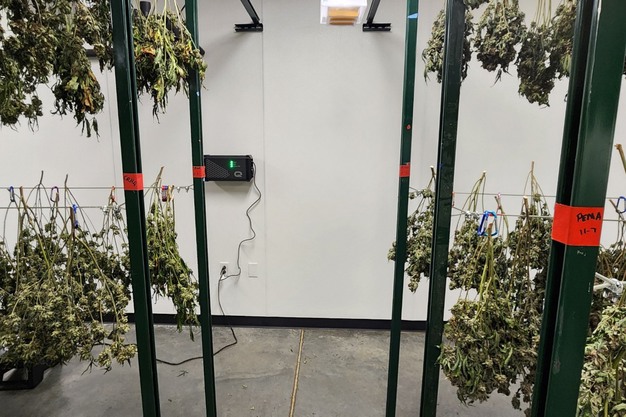
Due Diligence Horticulture has designed versions of the unit for shipping containers, refrigerators, HVAC systems and growing spaces. This enables flexibility throughout the supply chain, providing redundancy and centralized air handling.
All of this potential implementation was also based on the company’s focus on safety, Travis noted, not just for the humans working in the grow rooms, but for the plants as well. Several data sets suggested neutral or positive effects on performance and quality, although the company is still gathering more information. “We’ve doubled and even tripled the application capacity without negatively affecting the pistils of cannabis flowers. The technology is gentle on the plant, but destroys pathogens.”
cannabis
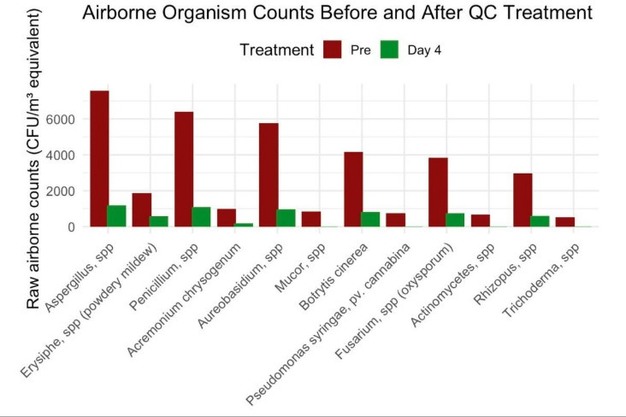
For cannabis growers, interest centers on airborne pathogens associated with empty fills, including aspergillus. “Operators also want to cut down on powdery mildew losses or limit the cost and frequency of IPM interventions during flowering. Since plasma treatment can be applied from tissue culture rooms to post-harvest spaces, trials have looked at how the units behave during the crop cycle.” The graph below shows the results of a producer trial in November 2025 where the Aspergillus count was reduced by 90% after 4 days of use.
 © Due Diligence Horticulture
Growers of vegetables and ornamentals are also in trouble. Trials in shipping with coastal farms and cooler storage with Metrolina Greenhouses have been completed, and further work is underway in Central American Tissue Culture facilities and other controlled environments with good air exchange.
 © Due Diligence Horticulture
Travis emphasized that installation is easy compared to systems that rely on chemical injection. “The units are stand-alone boxes designed for different voltages and room sizes. There is no subscription service attached to the equipment, and the devices come with a standard warranty and optional extended coverage. DDH also offers financing to help manufacturers secure Quantum Clear cold plasma units.”
 © Due Diligence Horticulture
In various studies, the company reports an average reduction of 87.2% in airborne pathogens in less than a week and a greater reduction of over 95% when the units are run continuously for up to a month. “It’s a practical tool for growers who want to not only monitor air quality, but better understand air quality management.” he says “He’s responsible for getting the technology into the hands of producers through our testing program and QC to make sure it’s the solution they expected.”
Want to know more? tune in DDH December 10 webinarth at 10:00 a.m. PT. Click here to register.
For more information:
Due Diligence Horticulture
www.ddhort.com



Walk into most cannabis facilities and the grow rooms should (should) look clean. Plant lines under marked light, climate systems singing, nutrient programs marked to a decimal. However, inside the irrigation lines, a different story often unfolds. Out of sight, out of mind is not always applicable, unfortunately.
Biofilm accumulation in irrigation infrastructure is one of the most persistent and underestimated problems of CEA. Left unchecked, it creates the conditions for pathogen pressure, nutrient inconsistencies and costly crop losses. “However, in many operations, the solutions offered have historically come with their own trade-offs, phytotoxicity concerns, incompatibility with beneficial microbes, or less aggressive chemicals that require complete crop removal before application,” says Key Solutions Group’s Don Lund.
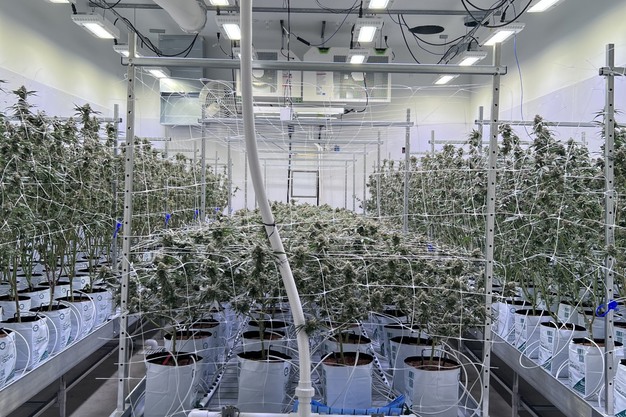 © Key Solutions Group
As the owner of Key Solutions Group, the manufacturer’s representative for PRO-OXINE® Horticulture, a unique chlorine dioxide-based chemical developed specifically for CEA environments, registered by the EPA as a disinfectant, sanitizer, algicide and fungicide and manufactured in the United States. Don is very aware of the space growers need to navigate. “There are a lot of chemicals on the market,” says Don, “and what usually happens on the irrigation side is that growers start dealing with biofilm and end up looking for something that creates phytotoxicity problems. Our chemistry is based on Integrated Disease Management (IDM) principles. The goal is to keep the growing clean from the start through prevention. We’re a science-based company, not a marketing-based one,” he says. “That makes a real difference in this space, especially for growers who have been burned before.”
One chemistry, many applications
What sets PRO-OXINE® Horticulture apart is a proprietary blend of purified sodium chlorite and highly refined oxychlorine species with dual-use flexibility, according to Don. “The same chemistry, activated on-site by a mild acid, can be spread across irrigation lines and hard non-porous surfaces. This means a single product handles what would otherwise require multiple SKUs, reducing inventory complexity and simplifying staff training.”
Activation occurs through a proprietary method, allowing for the persistent residual effect that Don describes throughout the growing cycle, a key difference from chlorine dioxide products, which tend to act in a binary mode: inactive or fully activated, while leaving mostly undesirable toxic byproducts.
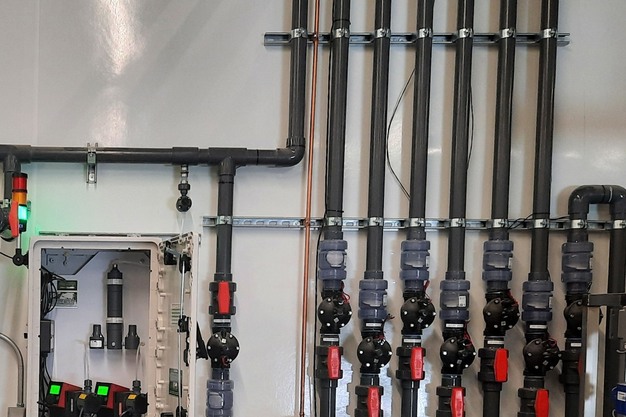 © Key Solutions Group
“With standard chlorine dioxide, you’re either on or off,” Don explains. “Developed specifically by the manufacturer for CEA, it allows you to manipulate ppm levels while maintaining a near-neutral pH, which maintains a clean, healthy irrigation environment throughout the growing cycle, rather than hoping for the best.”
For facilities with existing biofilm problems, the protocol can be adapted accordingly. “Starting slowly or using a shock treatment at night when there are no plants, followed by a wash,” he says. “For clean operations, the focus shifts to prevention: injecting at low ppm during irrigation (2 ppm per EPA rule) keeps lines clean, nutrients effective and the root zone happy and healthy. We eliminate the need for shock between growths while being proven time and time again.”
The chemistry also addresses specific pathogen challenges that cannabis growers regularly encounter, including biofilm, fusarium, botrytis, HLVd, iron bacteria and other water sources, and algae and botrytis build-up on floors and tables. “Applications range from inlet water, storage tanks, irrigation, recycled water systems, tools, facility hard surfaces, equipment and more to disinfecting and effective sanitation with PRO-OXINE® horticulture.”
 © Key Solutions Group
Organic word of mouth
“What’s interesting about our growth in the horticulture field is through word of mouth, as we do very little actual advertising and marketing. Our customers are our best form of marketing as they share their experiences with their industry contacts. Yes, we exhibit a few cannabis and produce CEA shows a year, however testimonials and relationship building have been very key.” Don estimates that about 90% of new business comes from existing customers recommending PRO-OXINE® to members of the Horticulture industry. It’s a dynamic that he attributes not only to product performance, but to the company’s approach to the relationship itself. “We don’t sell consumables,” he says. “We’re selling a solution through prevention…an IDM approach. The mindset is completely different. We want growers to succeed through a proven proactive approach, which is what Key Solutions Groups is all about.”
 © Key Solutions Group
Key Solution Group (Altoona, IA) is currently expanding its presence in Europe, Australia and South America while continuing to grow and produce its own cannabis in North America. Key Solution Group is the manufacturer’s representative for PRO-OXINE Horticulture and the manufacturing facility of Kemin Bio Solutions (Des Moines, IA; Norman, OK).
For more information:
Key Solutions Group
(515) 802-2761
(email protected)
ksg-corp.com
Cannabis News
Georgia Lawmakers Pass Bill To Expand Medical Marijuana Access, Sending It To Governor’s Desk



West Virginians’ demand for medical cannabis continues to grow
Meanwhile, the national conversation reveals an ongoing debate about the value of cannabis, with a new presidential executive order and a New York Times editorial pointing in opposite directions. A WVU Medicine addiction specialist shared some resources on the issues behind that conversation.
In Morgantown, a new medical cannabis dispensary recently opened at Earl Core and Hartman Run roads: Country Grown Cannabis. That brought the dispensary count in Morgantown to eight, with three in Westover, Kingwood, Fairmont and one in White Hall.
And for West Virginia, most data provided by the state’s Office of Medical Cannabis have admitted 35,202 patients in December 2025: a slight decrease from October 2025, when the number was 35,598; but higher than the 34,003 in our previous report in September 2024.
Sales revenue varies from month to month, according to the Transparency Project – a national data source used by the OMC. As of August 2024, revenue was $8.39 billion. Most recently, in October 2025, it was $8.09 million; and in December, 7.97 million dollars.
Read more at Dominion Position

Psycho Berry Hash Wednesday

Women Out Preform Men in Weed Use! Cannabis Coast to Coast News with Alaina Pinto The C Block

Are You Smoking Pesticides? Backpack Boys EXPOSED

HOUSE ARREST VIRTUAL COMEDY TOUR | CHAUNTE WAYANS

Marijuana Retail Report

Biofilm, pathogens, and the costs of dirty irrigation systems

Georgia Lawmakers Pass Bill To Expand Medical Marijuana Access, Sending It To Governor’s Desk

South Carolina Senate Passes Bill to Regulate Hemp THC Drinks

Runtz Marijuana Monday

Weed for Warriors President Sean Kiernan on 1 v 1 with PCMTV Founder Jimmy Young

“Our system can manage equipment across 10,000+ m² using just a few wires”

Florida Workshop to Discuss What Constitutes a ‘Cartoon’ in Hemp Packaging

Mazar-i-Sharif Hash Wednesday

Re-release of the full show of Cannabis Coast to Coast news. Republican Texas DA Fires Up vs. laws;

From Finance to Wellness: Brad Zerman’s Impactful Pivot

DEA’s Cole Reverses His “priorities” ; Prohibitionists Dig In; Dead & Co Celebrates 60 years in SF

Your Cannabis Business: Consistent Filings Are Critical

Weak Michigan Cannabis Sales Again in July – New Cannabis Ventures

New Hampshire Governor Says Federal Marijuana Rescheduling Won’t Change Her Opposition To Legalization

Texas DA Fires Up for Change! Mass. Sheriff arrested on Extortion charges; GOP vs Industry in state
-
 Cannabis News7 months ago
“Our system can manage equipment across 10,000+ m² using just a few wires”
-
 Florida7 months ago
Florida Workshop to Discuss What Constitutes a ‘Cartoon’ in Hemp Packaging
-
 Video6 months ago
Mazar-i-Sharif Hash Wednesday
-
 Video7 months ago
Re-release of the full show of Cannabis Coast to Coast news. Republican Texas DA Fires Up vs. laws;
-
 Video7 months ago
From Finance to Wellness: Brad Zerman’s Impactful Pivot
-
 Video7 months ago
DEA’s Cole Reverses His “priorities” ; Prohibitionists Dig In; Dead & Co Celebrates 60 years in SF
-
 Best Practices7 months ago
Your Cannabis Business: Consistent Filings Are Critical
-
 aawh7 months ago
Weak Michigan Cannabis Sales Again in July – New Cannabis Ventures