
Cannabis News
New York Officials Celebrate 500th Marijuana Dispensary Opening, With $2.3 Billion In Sales Since Market Launch


New York’s marijuana regulators are celebrating the opening of the state’s 500th legal cannabis dispensary, citing $2.3 billion in adult sales since the market opened, supporting about 25,000 jobs across the industry.
At a ribbon-cutting ceremony Friday, Green Comfort Dispensary became the 500th adult-use marijuana licensee to open its doors in the state since its launch in late 2022.
Felicia AB Reid, executive director of the Office of Cannabis Management (OCM), said in a press release that “the growing number of licensed dispensaries reflects a market that is maturing with a purpose.”
“Every new business represents economic growth, community investment and safer access for consumers,” he said. “Together, New York’s legal cannabis market, industry innovation and consumer demand show no signs of slowing down,” they state.
Beyond the 500 store milestone, OCM also highlighted other industry growth statistics, including the approval of 1,949 adult cannabis businesses across all license types. Today there are dispensaries in 51 regions and 161 municipalities throughout the state.
“Each licensed store represents an operator, proven products and a community that chooses safer cannabis,” said Jessica Garcia, president of the Cannabis Control Board (CCB). “Reaching 500 shows the momentum of the industry and our focus on equity, compliance and consumer protection.”
Of the nearly 2,000 adult-use licenses issued so far, OCM said 56 percent have gone to social equity businesses that have been disproportionately affected by the ban.
With tax revenue from marijuana sales and license fees, $5 million has been invested in community reinvestment initiatives, another $5 million has gone toward a grant program for conditional business licenses for eligible applicants, and $2.6 million has contributed to technical assistance for those seeking to enter the market.
“Equity has been the bedrock of this market since the beginning,” said Simone Washington, Chief Equity Officer at OCM. “Achieving this milestone reinforces that progress is possible when equity is built and embedded in the system. Our focus remains that equity is not just a paper principle, but a measurable outcome at every level of the industry.”
Tim Tanavung, CEO of Green Comfort Dispensary, said “it is truly an honor to be recognized as NYS’s 500th licensed historic dispensary.”
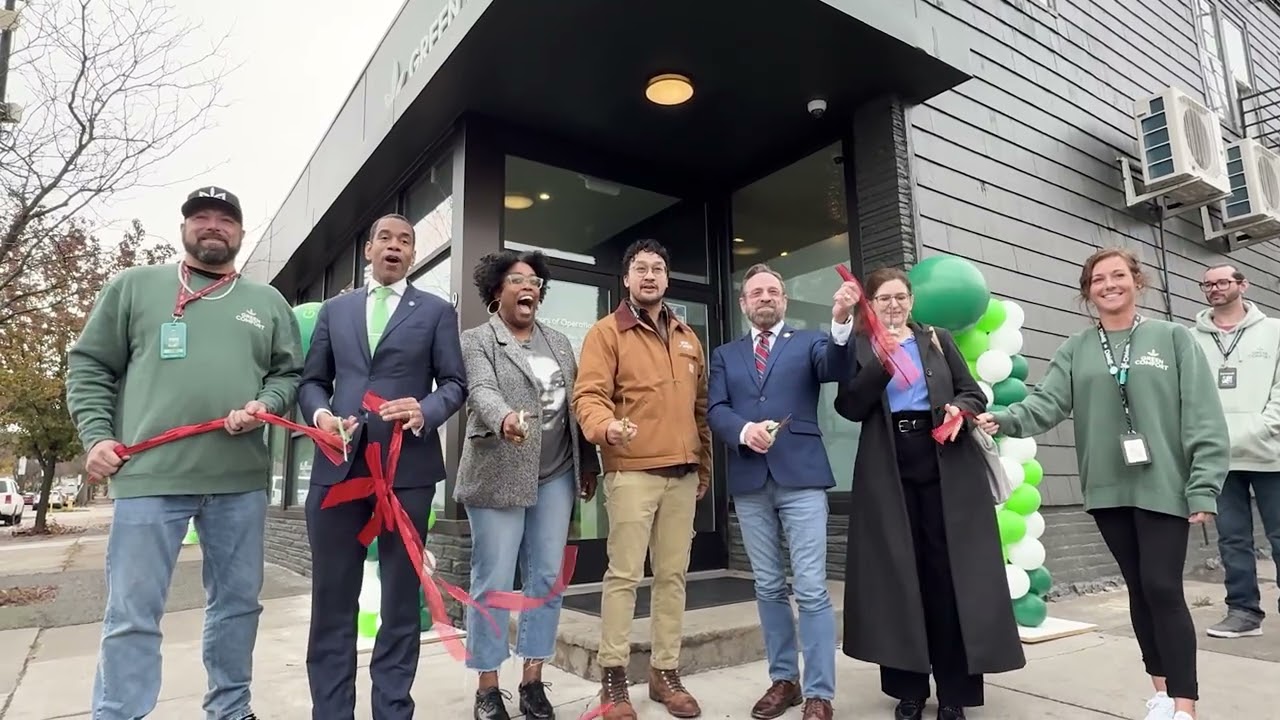
“It is truly a labor of love and passion from myself, David and the entire staff at Green Comfort,” he said. “We are excited to promote a vessel that we can give back to the community, the city of Rochester and the state. We are optimistic for the future of Green Comfort and NYS cannabis.”
As for marijuana sales in the Empire State, regulators announced in September that the state had It officially surpassed $2 billion in adult cannabis purchases.
Meanwhile, given the confusion in the market about temporary license terms, the CCB said it will extend the renewal period for adult conditional use to December 31, 2026.
“This extension provides more time for licensees to secure viable locations and obtain full licensure,” OCM said. “It will also apply to temporary licenses issued between September 9, 2025 and December 30, 2025, ensuring clarity and consistency for all temporary licensees.”
Part of the uncertainty surrounding provisional licensees a the recently identified zoning issue affects more than 100 cannabis businesses Those located too close to public schools or places of worship than permitted by applicable statute. Gov. Kathy Hochul (D) said she will push the legislature to change the state’s marijuana law to address the problem.
—
It’s Marijuana Moment tracking hundreds of cannabis, psychedelic and drug policy bills in state legislatures and Congress this year. Patreon supporters by pledging at least $25/month, you’ll get access to our interactive maps, charts, and audio calendars so you never miss a development.
Learn more about our marijuana bill tracking and become a Patreon supporter to gain access
—
Meanwhile, both chambers of New York’s legislature passed the legislation earlier this year extend the deadline for electronic tax returns for marijuana companiessending the proposal near the governor’s desk.
If signed into law, the measure would give cannabis manufacturers and distributors an extra 30 days to file their tax returns after the end of each quarterly tax year. Currently, companies have 20 days to submit documents, and the legislation would extend it to 50 days.
Sponsors of the bill noted that Hochul vetoed the cannabis business tax reform proposal late last year, saying it would lead to “significant operational challenges for the state and confusion for taxpayers,” but that they have worked to address those concerns in the current version.
The earlier measure would have been vetoed It allowed marijuana growers and processors to pay excise taxes annually rather than quarterly—A change that would extend the same treatment that the state already offers to the alcohol industry.
In July, New York officials announced First round of grants for $5 million program to support retail marijuana businesses for justice-involved people cover start-up costs.
About three months after opening applications Conditional Adult Use Retail Dispensary (CAURD) Grant ProgramOCM and Empire State Development (ESD) announced Wednesday that 52 licensed dispensaries have been awarded up to $30,000 each for start-up and operating costs such as rent, renovations, inventory tracking and security systems.
To enter the program, applicants must be “justice-involved,” meaning a marijuana-related conviction, and experience running a profitable business.
Meanwhile, OCM recently launched a new online map to help adults find licensed marijuana shops—one of the latest efforts to encourage consumers to buy their cannabis on the regulated market.
After a surprising expansion of the state’s legalization law opened the door to a proliferation of illegal marijuana shops, governors and regulators have made it a priority to educate citizens about the need to buy their products from licensed dispensaries as a health and safety imperative.
The broader New York campaign also involved digital advertising and educational resources, including a guide to safe consumption practices, as well as graphics and videos from licensed cannabis business owners and messages about the benefits of participating in the regulated market.
OCM also advises that “enforcement against the illegal market is critical to building a regulated health market,” pointing to what it describes as a successful enforcement effort in 2024. Last spring, for example, New York City officials launched Operation Padlock, an enforcement initiative aimed at shutting down illegal storefronts.. Within a few months, sales at licensed stores that were open before the start of operations rose 105 percent, according to an OCM survey.
Regulators are also moving forward new regulations proposed around the state’s “cannabis showcase” programwhich allows licensed businesses to sell to consumers at farmers market-like events.
As originally authorized, the showcase events were largely a response to the slow expansion of New York’s adult marijuana program. There have been numerous delays in implementation between lawsuits and other issues.
Separately, Hochul signed state budget legislation it did not include a previously controversial provision that would have allowed police to use the smell of marijuana as probable cause that a driver is impaired and then forced to take a drug test.
Legislative amendments removed the provision, which had a coalition of 60 reform groups He argued that Hochul-i and senior lawmakers would “repeat some of the worst damage of the war on drugs.” and allow law enforcement to “restart unconstitutional racial profiling of drivers.”
In April, New York cannabis regulators and labor officials has announced the launch of a staff training program The state’s marijuana industry is legally required to “provide comprehensive safety training to employees.”
Additionally, the press secretary of the OCM stated that the office is working on plans to expand permit and license regulations. adults can buy and use marijuana in movie theaters. Allowing the sale of cannabis products in theaters would set New York apart as the state continues to build legalization legislation.
At the beginning of the year, a collective Companies licensed under the CAURD program asked Hochul to forgive tens of millions of dollars in high-cost loans. issued under a social equity loan fund created by the governor.
A member of the state legislature In December, he said that there is a need to extend the subsidies to CAURD graduatesmany of them are struggling under high cost loans.
Critics — the NAACP New York State Conference, Black Cannabis Industry Association, Minority Cannabis Business Association, Service Disabled Veterans in Cannabis Association, Drug Policy Alliance, NYC NORML and VOCAL-NY — wrote to the governor earlier that month. to express dismay at what they described as marijuana regulators’ “efforts to serve big corporations at the expense of small business and equity results.”
Photo by Mike Latimer.
Marijuana Moment is made possible with the help of readers. If you rely on our pro-cannabis journalism to stay informed, consider a monthly Patreon pledge.














Cannabis News
Transportation Groups Warn Feds Of Marijuana Rescheduling’s ‘Consequences’ For Drug Testing Of Truck Drivers And Pilots




The full show from week of 5-20-24 of Weed Talk News with Alaina Pinto

PAPA & BARKLEY CANNABIS | GUY ROCOURT

Marijuana Retail Report

Maximizing cannabis yields with intercanopy and subcanopy lighting

Transportation Groups Warn Feds Of Marijuana Rescheduling’s ‘Consequences’ For Drug Testing Of Truck Drivers And Pilots

DEA Argues in Favor of Moving Cannabis to Schedule III

Cannabis Contest Reporter Tara Rosenblum from News 12 on Weed Talk News 1vs1 with PCM’s Jimmy Young

NEXT GEN CANNABIS ENTREPRENEUR | ZEKE THOMAS

Experts say THC percentage is the wrong way to shop for cannabis

DOJ Marijuana Lawsuit Filing Cites Drug Testing Industry And Pharma Company ‘Pocketbook Interests’ In Opposing Rescheduling

“Our system can manage equipment across 10,000+ m² using just a few wires”

Florida Workshop to Discuss What Constitutes a ‘Cartoon’ in Hemp Packaging

Mazar-i-Sharif Hash Wednesday

Afghan Black Hash Wednesday

Weak Michigan Cannabis Sales Again in July – New Cannabis Ventures

From Finance to Wellness: Brad Zerman’s Impactful Pivot

Re-release of the full show of Cannabis Coast to Coast news. Republican Texas DA Fires Up vs. laws;

DEA’s Cole Reverses His “priorities” ; Prohibitionists Dig In; Dead & Co Celebrates 60 years in SF

Your Cannabis Business: Consistent Filings Are Critical

Curaleaf Q2 Revenue Falls 8% – New Cannabis Ventures
-
 Cannabis News10 months ago
“Our system can manage equipment across 10,000+ m² using just a few wires”
-
 Florida11 months ago
Florida Workshop to Discuss What Constitutes a ‘Cartoon’ in Hemp Packaging
-
 Video9 months ago
Mazar-i-Sharif Hash Wednesday
-
 Video9 months ago
Afghan Black Hash Wednesday
-
 aawh11 months ago
Weak Michigan Cannabis Sales Again in July – New Cannabis Ventures
-
 Video11 months ago
From Finance to Wellness: Brad Zerman’s Impactful Pivot
-
 Video11 months ago
Re-release of the full show of Cannabis Coast to Coast news. Republican Texas DA Fires Up vs. laws;
-
 Video10 months ago
DEA’s Cole Reverses His “priorities” ; Prohibitionists Dig In; Dead & Co Celebrates 60 years in SF