Connect with us

Cannabis News

South Carolina Lawmakers Should Pass Hemp Legislation That Smartly Regulates Products (Op-Ed)

Published

on

“South Carolina can take an important step forward in regulating the hemp industry, protecting our families and ensuring access to these products.”

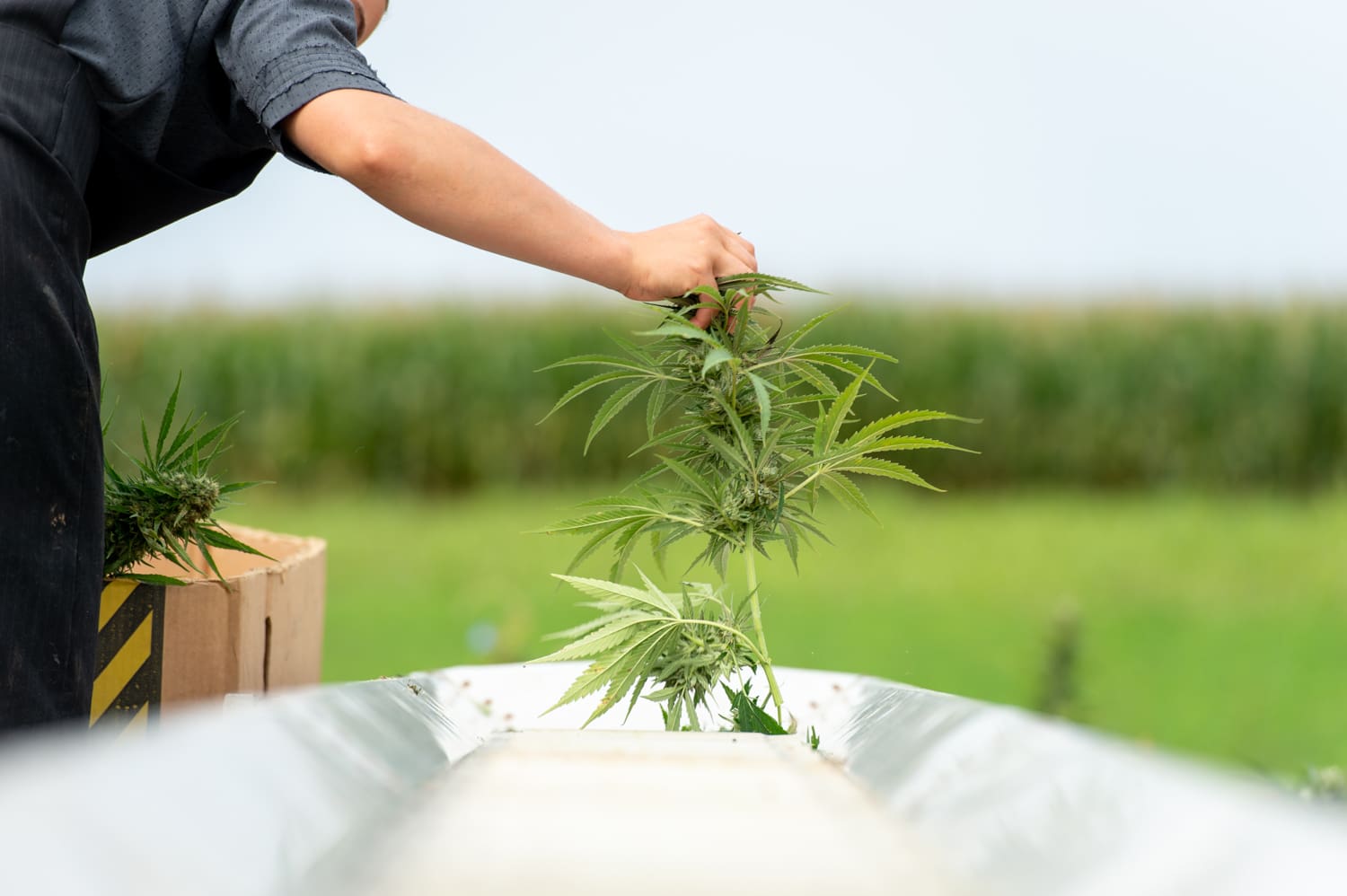
By David Spang, Coastal Green Welles via South Carolina Daily Gazette

In South Carolina, the hemp industry is at a crossroads.

Without common sense regulations for the sale of hemp and hemp-derived products, we risk reducing public safety, damaging the industry’s credibility, and putting South Carolina’s small businesses at risk.

the current South Carolina law does not regulate products containing hemp-derived cannabinoidsin addition to limiting delta-9 THC to 0.3 percent by dry weight under federal law.

This gap has allowed the rapid expansion of products, from gummies to vapes, with little oversight or guidance.

Fortunately, there is a solution.

In recent years, the South Carolina Association of Healthy Alternatives has worked to develop a reasonable and responsible regulatory framework for the state’s hemp industry. As the legislature opens in Columbia, an amendment House Bill 3924 it allows to establish this framework.

With the support of many legislators, we believe this amendment will make it the only piece of legislation that meets the goals of protecting our industry, law enforcement and, most importantly, the public.

States across the country, including Georgia, Tennessee, West Virginia and Kentucky, have passed bills to responsibly regulate hemp and hemp-derived products in their states.

Additionally, last month’s White House order to reclassify marijuana provided a clear direction on full-spectrum hemp, signaling more support for consumable hemp products.

It’s time for South Carolina to join its peers in ensuring access to these products for the people who have come to rely on them and protecting small business owners and the public from bad actors.

In December, local, state and federal law enforcement conducted “Operation Ganjaprenuer,” a series of coordinated operations against criminals trafficking illegal drugs in South Carolina.

Unfortunately, these actions also affected legitimate businesses across the state that sold legal hemp products.

For those businesses, Attorney General Alan Wilson (R) called for what is needed: a reasonably and responsibly regulated South Carolina hemp industry.

This means creating a framework for responsible regulation of hemp-derived consumer products to include:

  • Limit sales to persons over 21 years of age
  • Testing requirements to ensure safe and compliant products for consumers
  • Packaging and labeling requirements
  • Licenses for manufacturers, distributors/wholesalers and retailers
  • Server size limits

For responsible businesses trying to operate legally, current interpretations and inconsistent enforcement are unsustainable.

Business owners who are committed to doing things the right way are forced to compete with bad actors who cut corners, mislabel their products, or target minors.

South Carolina can take an important step forward in regulating the hemp industry, protecting our families and ensuring access to these products.

If we can amend H3294 with full regulatory guidelines and send it to Governor Henry McMaster’s (R) desk, we will ensure that South Carolina follows the responsible regulations of our peer states.

This article was first published by the South Carolina Daily Gazette.

David Spang is the founder of Coastal Green Wellness, which sells hemp products. He is also the president of the South Carolina Healthy Alternatives Association, a group that advocates for responsible regulation of the hemp-derived products industry. Born in South Carolina, lives in Myrtle Beach.

Max Jackson’s photo.

Marihuana Moment is made possible with the help of readers. If you rely on our pro-cannabis journalism to stay informed, consider a monthly Patreon pledge.

Continue Reading

Cannabis News

US (CO): Denver fines cannabis lounge for licensing violations

Published

on

By


Denver has fined Tetra Lounge, one of the city’s only licensed cannabis venues, $10,000. Open since 2018 at 3039 Walnut Street, Tetra has had a complicated relationship with the Denver Department of Licensing and Consumer Protection (DLCP), formerly known as the Department of…

Continue Reading

Cannabis News

Arizona Senators Approve Measures To Criminalize ‘Excessive’ Marijuana Smoke Or Odor

Published

on

By

Arizona senators have passed a couple of measures make the act of creating an “excessive” amount of marijuana smoke or odor a criminal nuisance punishable by jail time.even if the person is using cannabis in their own home in compliance with state law.

Despite concerns about weakening the will of voters who voted to approve legalization and concerns about enforceability and ambiguity about what constitutes “excessive” marijuana smoke, members of the Senate Judiciary and Elections Committee on Friday approved the bill and a joint resolution to put the issue on the table by votes of 5-2 and 4-3, respectively.

The legislation by Sen. JD Mesnard (R) was amended during the hearing to provide a clearer definition of “excessive” smoking and remove the reference to making the offense a “felony.” However, some members still argued that the measures lack clarity and will continue to threaten criminalization, making the offense a Class 3 felony, punishable by up to 30 days in jail, a maximum fine of $500 and a year of probation.

The revised definition of excessive cannabis smoke or odor describes “what a person is able to detect on another person’s private property.”

The law states that excessive production of marijuana smoke or odor is “injurious to health, unreasonable, offensive to the senses, and interferes with the comfortable enjoyment of life or property and is a public nuisance.”

Mesnard said he decided to push the issue “based on personal experience” with his neighbors, “as well as hearing from other people that people can do what they want on their private property, but on other people’s private property, their homes no less, that’s when it starts to become another problem.”

“I can say that it was regrettable for me that I didn’t have to have conversations with my four-year-old, maybe because of what’s going on in some houses down in my neighborhood, there was such a strong smell and smoke coming from the road,” he said. “If it’s important to you to play, there are a lot of ways to do it without affecting the neighbors around you, so it’s easy.”

Several citizens testified against the proposals, arguing that the state’s legalization law would unfairly restrict adults’ right to use cannabis and make it difficult to challenge in court allegations of excessive smoke or odor, for example.

The ACLU of Arizona also expressed opposition to the measure, saying a representative said it would “undermine the intent of the voters” and that the issue of smoking and public odor has already been addressed by the courts, stating that “the mere smell of marijuana no longer automatically establishes criminal activity.”

SCR 1048 and the mirror bill (SB 1725) Relying on subjective assessments like excessive marijuana smell opens up enforcement to the kind of discretionary judgments that research on bias shows leads to disparities and outcomes,” they said. “This leads to equal protection violations and arbitrary enforcement.”


It’s Marijuana Time tracking hundreds of cannabis, psychedelic and drug policy bills in state legislatures and Congress this year. Patreon supporters by pledging at least $25/month, you’ll get access to our interactive maps, charts, and audio calendars so you never miss a development.


Learn more about our marijuana bill tracking and become a Patreon supporter to gain access

On the back of this law, anti-cannabis activists are working to place an initiative on the state’s November ballot. significantly rolling back the voter-approved marijuana legalization law.

A GOP congressman recently said he would like his state to take such a measure, but he also admitted that. President Donald Trump’s recent federal scheduling order could complicate that prohibitionist push.

Under the proposal, possession would be legal if voters chose to enact the initiative — and Arizona’s medical marijuana program would remain in place — but it would shut down the commercial recreational cannabis market that has evolved since voters approved a measure to legalize adult use in 2020.

According to a section of the latest initiative’s findings, “the proliferation of marijuana establishments and recreational marijuana sales in this state has created unintended consequences and negative consequences for the public health, safety, and welfare of Arizonans, including increased marijuana use among children, environmental concerns, increased demand on water resources, public nuisance, illegal market activity, and market instability.”

“Sales of legal marijuana in Arizona have declined for two years in a row, resulting in less tax revenue for the state, and some patients relying on recreational marijuana use instead of taking advantage of the benefits of the state’s medical marijuana program,” he says.

The initiative would instruct the legislature to make appropriate changes, also by amending the existing statute as it pertains to the commercial industry, including tax and advertising regulations.

To vote, the campaign must collect 255,949 valid signatures by July 2nd. If the proposal goes to the voters and is approved, it would take effect in January 2028.

It remains to be seen whether there will be any desire for repeal among voters, as 60% of voters approved legalization on the ballot in 2020.

Even more last year’s poll found majority support for medical cannabis legalization (86 percent), adult-use legalization (69 percent), and banking reform (78 percent).

Max Jackson’s photo.

Marijuana Moment is made possible with the help of readers. If you rely on our pro-cannabis journalism to stay informed, consider a monthly Patreon pledge.

Become a patron on Patreon!

Continue Reading

Cannabis News

General Assembly advances cannabis retail framework

Published

on

By


After years of vetoing the General Assembly, legislation to create a legal adult cannabis market in Virginia passed both chambers on Tuesday, this time ready for a governor’s signature and retail sales to begin in November. The votes provide the clearest sign yet that Virginia is ready to move from legal ownership to a fully regulated no-sale market, a transition that has eluded the commonwealth since 2021, when lawmakers legalized simple ownership.

On Tuesday morning, the House passed House Bill 642, Del. Paul Krizek, D-Fairfax, by a vote of 65-32. A few hours later, the Senate passed House Bill 542 by Sen. Lashrecse Aird, R-Petersburg, by a narrow 21-19 margin, after a failed initial vote.

Similar proposals have cleared the General Assembly in recent years—often with bipartisan support—but were repeatedly vetoed by former Gov. Glenn Youngkin. This year, the political calculation has changed. Democratic Gov. Abigail Spanberger has vowed to sign legislation establishing a regulated retail market.

Under Krizek’s bill, the Virginia Cannabis Control Authority would administer the retail system, with no retail sales permitted before November 1, 2026. “It’s about fixing a situation that isn’t working,” he said, noting that while it is legal for adults to possess cannabis, retail sales remain unregulated.

Read more at Virginia Mercury


Continue Reading
Advertisement

Trending

Copyright © 2021 The Art of MaryJane Media