Connect with us

Cannabis

Glass House Intends To Become Second Company To Uplist

Published

on

Glass House Intends To Become Second Company To Uplist
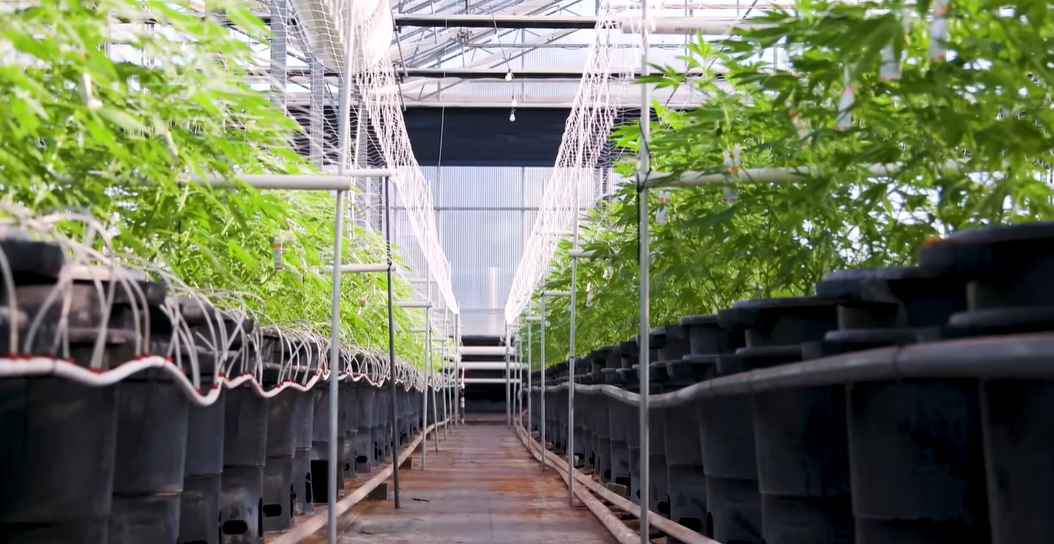
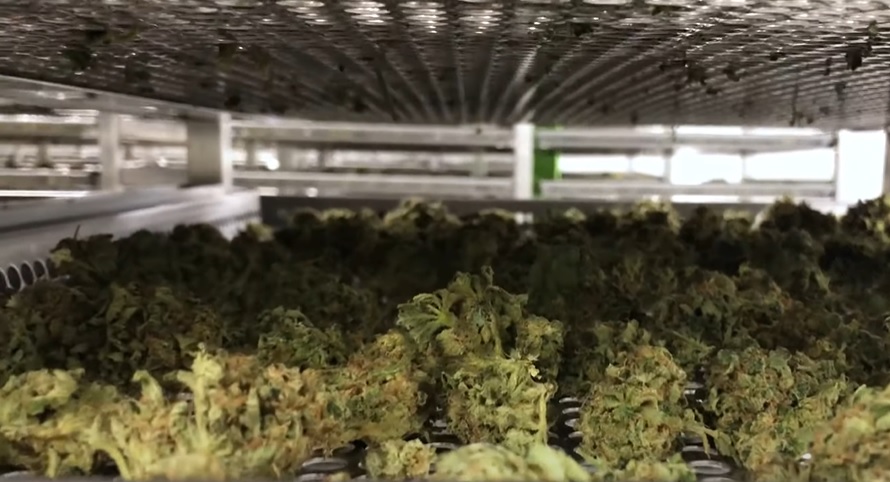
Will Glass House be the next company to climb the list? In our latest TDR Trade To Black podcast presented by FlowHub, Shadd Dales and Anthony Varrell are live from the Glass House Brands (NYSE: GLAS ) facility in California for the company’s Investor Day, broadcasting around the clock from inside one of the largest hemp operations in the country. The team is on the ground, walking the facility, talking to staff and hosting a full cast of guests, including CEO Kyle Kazan, President Graham Farrar, Mark Codes, Noah Hamman, The Big Short’s Fred Gomez, Vinny Daniels and Seth Yacatan.

Two major regulatory developments dominated the early conversations. The DEA has begun conducting on-site inspections of cannabis businesses that have applied for federal protection under President Trump’s reclassification order, with operators reported being cooperative rather than adversarial with inspectors. Hours later, the U.S. Supreme Court ruled unanimously 9-0 that prosecuting a marijuana user for having a firearm violates the Second Amendment, a decision that homeowners described as a powerful data point for a July 15 deadline before an Administrative Law Judge to reschedule.

Glass House Brands has made headlines by becoming the second cannabis company to list on a senior exchange, announcing plans to trade on the New York Stock Exchange. AdvisorShares ETF portfolio manager Noah Hamman joined the show to address questions about the lack of new inflows into cannabis ETFs, explaining that market makers can build inventory on their balance sheets without triggering formal creation or redemption events, and that rising stock prices benefit ETF shareholders regardless.

The conversation shifted to industry consolidation, where guests and hosts debated whether a major MSO merger could happen before the end of the year. Consensus Tier 1 operators were identified as Verano, Curaleaf, GTI and Trulieve, with Glass House identified as Tier 1 in its own zone as a developer. Private MSOs including Good Day Farm and STIZI have been mentioned as potential acquisition targets.

Prominent Glass House investor Mark Codes joined in personally touting the rise of big tobacco partnerships, pointing to the NYSE listing as a benchmark of credibility that removes a major objection from risk-averse corporate partners. He predicted that Glass House could eventually sell more than a million shares a day, and speculated that a strategic stake sale to the tobacco company could send the stock skyrocketing.

CEO Kyle Kazan and President Graham Farrar closed the episode by discussing the benefits of California’s climate cultivation, ongoing dialogue with other MSOs regarding biomass supply partnerships, the company’s DEA Form 225 bulk drug manufacturer license as a mechanism for interstate commerce, and early-stage CBD shipments to Europe as a revenue opportunity outside of the current regulatory framework. Hear it all when you join.

Cannabis

Trulieve’s News, Canopy’s Turnaround, and Vireo Growth

Published

on

By

Trulieve's News, Canopy's Turnaround, and Vireo Growth

In our latest Trade To Black podcast presented by Flowhub, Anthony Varrell sits down with Canopy Growth (TSX: WEED ) (TSX: WEED ) (Nasdaq: CGC ) CEO Luke Mongo following the company’s fiscal 4Q and full-year 2026 earnings release this morning. Anthony also covers Vireo Growth’s recent acquisition, a definitive agreement to acquire C21 Investments (CSE: CXXI ​​), adding approximately 15 Nevada dispensaries and C21’s award-winning Silver State Relief brand to Vireo’s rapidly expanding empire.

Vireo Growth announced a definitive agreement to acquire C21 Investments, adding about 15 Nevada dispensaries to its expanding footprint, and confirmed Jason Purnell as head of deconsolidated Trulieve harvester;

Canopy Growth CEO Luke Mongo is celebrating roughly one year since he took the helm. Canadian Medical revenue was the highlight of the quarter, growing 27 percent in Q4 and 18 percent for the full fiscal year, driven by strong patient service, rapid order fulfillment and a growing patient base. Mongeau acknowledged headwinds from changes in Veterans Affairs Canada reimbursement levels, but said the company remains committed to that patient community. On balance, he described fiscal 2026 as a year of recovery; the company recapitalized, reduced debt, extended maturities to 2031, and entered fiscal 2027 from a position of much greater financial stability.

Canopy’s European business also rebounded sharply, posting 68 percent growth in Q4 after Mongeau spent the year retooling its supply chain to consistently meet EU-GMP flour specifications. The company regained its third position in Poland and is entering the UK market in the current financial year, with Australia also being relaunched. In the Storz & Bickel vaporizer segment, which was down 14 percent for the full year, Mongeau pointed to rate headwinds and SKU overlap as contributing factors.

This and more when you join.

Continue Reading

Cannabis

Big Changes Are Hitting The Cannabis Industry Now

Published

on

By

Big Changes Are Hitting The Cannabis Industry Now

It Trade to black The podcast, hosted by Shad Dales and Anthony Varrell and presented by FlowHub, opened its Thursday episode with a look at the latest news from the hemp industry, including analysis of the SAM lawsuit challenging redistricting. Episode #1 features LEEF Brands (OTCQB: LEEEF ) Board Member Jamie Mendola, who explains why scale in California can still be a strategic advantage despite the state’s well-known challenges. Plus in segment #2, FundCanna CEO Adam Stettner returns with the big news the company announced this morning: FundCanna integrates ReadyPaid BNPL directly into Apex Trading’s $150M monthly market.

In a news delay, the legal challenge filed by the National Drug Testing Association (NDASA) and MMJ International Holdings is aimed at Acting Attorney General Todd Blanche’s procedural path to move cannabis to Schedule III, specifically his use of the contract clause to bypass the standard DEA hearing process.

The first segment of guests welcomed Jamie Mendola, a board member and investor at LEEF Brands, for his debut appearance on the program. Speaking from San Francisco, Mendola offered a broad assessment of cannabis valuations in the current environment, arguing that while listings and rescheduling are significant catalysts, the industry’s next challenge is to demonstrate revenue growth after several years of solid performance. He explained why liquidity is the most important factor for institutional investors. funds with hundreds of millions of dollars under management won’t get into positions they can’t get out of cleanly, making Trulieve’s growing trading volume a really positive signal for the industry.

Mendola then elaborated on what drew him to LEEF Brands. The company operates primarily as a behind-the-scenes ingredient supplier, providing high-quality distillate, live resin and insoluble oil to leading California brands, rather than competing directly with them at retail. A key development has been the company’s 1,900-acre farm in Santa Barbara County, where LEEF grows hemp biomass for about eight dollars per pound, compared to the roughly twenty to thirty dollars it would otherwise pay to outsource.

The final segment featured FundCanna CEO Adam Stettner, who discussed the two latest announcements. The first was a benchmarking tool that allows cannabis retailers to compare their inventory performance and capital allocation against top operators in FundCanna’s database of over 6,000 cryptos; The second and more significant announcement was the introduction of FundCanna’s ReadyPaid buy-now-pay-ater product directly to the Apex Trading marketplace, which processes approximately $150 million in wholesale cannabis transactions per month. The integration allows buyers to engage in approximately seven minutes, receive inventory immediately, and pay over time as they generate revenue, while sellers get paid on day zero.

This and more when you join.

Continue Reading

Cannabis

Why Pharma Is Taking Cannabis Seriously

Published

on

By

Curaleaf Reverse Split, SAM Keeps Losing

Avicanna is hosting its sixth annual Clinical Symposium in Toronto’s Mars Discovery District, and CEO Aras Azatyan joined the program to discuss the cannabis event and the broader moment in pharma. Azatyan noted in this episode of the Trade To Black Podcast that the US realignment has dramatically elevated the conversation with his pharmaceutical companies. institutional investors and pointed to the FDA’s recent breakthrough therapy designation for a THC-based drug candidate as a meaningful regulatory signal that cannabinoid-based medicine is being taken seriously at the highest levels.

Azatyan described the two-day symposium, which will take place on Thursday and Friday, as the leading academic and clinical forum in the field of cannabinoid research. Speakers include Dr. Hans Clarke, president of the Canadian Pain Society, neurologist Dr. Edmund Lewis, and a retired Canadian general, presenting sessions covering PTSD and veterans care, chronic pain, epilepsy, women’s health, and brain injury. Major industry players including Canopy, Curaleaf and Verdea are sponsoring the event.

When asked where the medical cannabis market is going, Azatyan outlined a three-level vision. A federally integrated medical marketplace modeled after Canada’s, including formularies, insurance coverage and compounding; and a pharmaceutical channel that pursues FDA-approved drug designations for specific clinical indications, with orphan disease exclusivity and co-development partnerships with existing pharmaceutical companies. He emphasized that Avicanna’s decade of Canadian clinical work, including nearly 15 government grants secured by principal investigators, allows the company to bring its MyMedi and Rolfito platforms, formulations and intellectual property across the border as US partnerships develop.

Azatyan closed by reflecting on what distinguishes Avicanna’s credibility in the clinical community. Unlike many Canadian licensed manufacturers that abandoned medical research when adult use opened up, Avicanna continued to fund and support physicians during that time, earning a level of trust that is now paying dividends as the realignment makes the medical opportunity a reality. He expressed hope that next year’s symposium could be hosted in a major US city, which shows how quickly he expects the landscape to change. Tune in for the full interview.

Continue Reading
Advertisement

Trending

Copyright © 2021 The Art of MaryJane Media