
Cannabis News
Consistency across thousands of plants is a different problem than consistency in one room


Maintaining consistency across thousands of plants, multiple buildings, and dozens of crops that all behave differently is a different problem than branding a single room, and that problem is at the heart of the final episode. Grodan’s GroShow Podcastwhere host Riley Jones sits down with the team behind ProGrow, one of Michigan’s leading grow operations, now operating close to 3,000 lights and retailing under the Pure Options brand.
“That family element more than anything else has shaped how we got to where we are today,” says Jacob Nelson, ProGrow’s Vice President of Agriculture. “We did things when it was a gray market. We’re not just a corporate company.” ProGrow grew out of the Michigan grower scene, and that background is still in operation today. Scale eventually forced the corporate machinery, tracking KPIs, logging data, revising P&Ls, but Jacob sees it as the cost of running a business of this size, not the changes.
Merging with large-scale space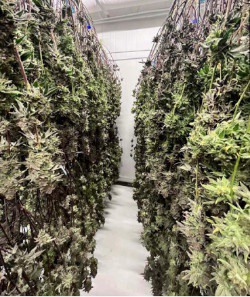 © Frog
The facility itself bears the marks of those early days. When Jacob started, he was one of three growers who divided the building into thirds and did everything by hand. “Every day I had two, three rooms, 12 tanks I was messing with myself,” he says. “It was manual. Doing all the nutrient mixing by hand, programming the irrigation controllers and plans through Rainbird, all the manual light adjustments.” Three growers mixed 52 250-gallon batch tanks in a 300-foot aisle, adding about three hours of work before anything else was done.
The first real step towards automation was a Dilution Solutions controller. “This was our biggest and first step into automation,” says Jacob. “Now we have Lexi who can probably only do half an hour.” What used to take three people per hour now takes about half an hour for Construction Operations Manager Lexi Carlson. The controller also took over irrigation scheduling and plan planning, and from there, Crop Director Nick Winninger and Lexi pushed the company further than Jacob when he first took over, keeping automation of large parts of the irrigation cycle with fine control at the end of the P1 and P2 phases.
The substrate followed the same path to standardization. ProGrow moved from Promix in large pots, then one liter Promix, then one liter coke, then pre-filled coke bags, before landing on Grodan 6×6 Hugo slabs. “You fill a chamber with pre-filled bags and then you turn them around and hydrate them, and there would be a couple of inches of variation from the top of each pot to where the actual cacao starts,” says Nick. Every loose medium involved some version of this problem, variation in pot volume, bail-to-bail variation in Promix composition, inconsistency starting within the substrate hydrated pot. “You get a cube of rockwool and it’s the same as the cube of rockwool next to it,” Nick continues. “We’ve never been able to dial that in with groundless media.” In other words, stone wool gave the team the one thing that all other mediums denied: a starting point that was the same from slab to slab.
Precision irrigation
This uniformity allows precise watering. “We’re looking at the average in the room. If there’s a lot of range, some are dry, some are heavy, you’re always splitting the difference,” says Nick. ProGrow tracks volumetric water content in all of its buildings, running Terrace 12 sensors alongside EOS units, even though a single reading doesn’t carry much weight on its own. No two sensors behave the same, and even the same sensors do not agree next to each other, so the trendline matters more than the numbers. “You see a trend line, you touch the actual cube and you have to relate what you feel to what you’re seeing on the trend line,” explains Nick. The team still collects the effluent by hand, watching the volume and pH come in and out, and still plants the buckets every morning. The sensors point to a direction, and the hands confirm it.
The watering strategy moves with the cycle. ProGrow creates in week four, with P2 intervals of around three hours and shot sizes of around six minutes, then changes vegetatively in week five, shortening the intervals and adding saturation, before returning to the creative approach for the final weeks of the wash. Relative dryland targets are around 50% vegetatively and between 35% and 45% vegetatively, the plants being relatively dry.
 © Frog
A game of genetics
This does not remove the fundamental difficulty of running so much genetics on a clock. ProGrow forces almost everything into a 63-day harvest window, and not everything cooperates. “If you think for a second that you’re going to automate that part and let the ship drive itself, you’re sadly mistaken,” says Jacob. Some cultivars want 70 days, others 50. The team reads visual cues in the room and feels the cubes, then marries that qualitative feedback with sensor and environmental data to direct each strain to the same destination without over-driving or under-driving. In other words, the timeline is fixed, and manual judgment is what shapes each tension.
The new genetics go in the same balance. ProGrow’s dedicated R&D bench receives new selections, which first undergo quarantine and pathogen testing before reaching a production table or R&D room. “We’re not necessarily too critical of the performance numbers,” says Jacob. “We’re looking at growth and how stress works. And tolerance is an important thing. How tolerant can you be of maybe not being in a perfect production environment?” The current test bench includes 81 plants, three strains of each, resulting in 27 strains at a time, none of which receive optimal nutrition because they share the watering events of the production room around them. That setting tells the team less about peak performance than it does about resilience. A strain that only works under ideal conditions is a liability when one of 27 sharing a table. The real judgment comes later, when the team decides which ones win the production.
Changing the lights
Lighting is part of the model that the team is constantly evolving. For three to four years ProGrow has run a mixed spectrum HPS and metal halide ceramic board in a purpose built facility. “I’ve always loved the quality we’ve gotten out of that spectrum,” says Jacob. “Quality and height control was a lot of the reason.” The CMH spectrum helped manage the backlog when larger media left the bench for larger plants. That’s not fixed, though. The team recently fully loaded a room with HPS and are seeing the PPFD gains it brings. Several rooms also use an HPS-LED panel, Jacob’s favorite based on terpene profile and biomass, although the cost of LED keeps it out of every room.
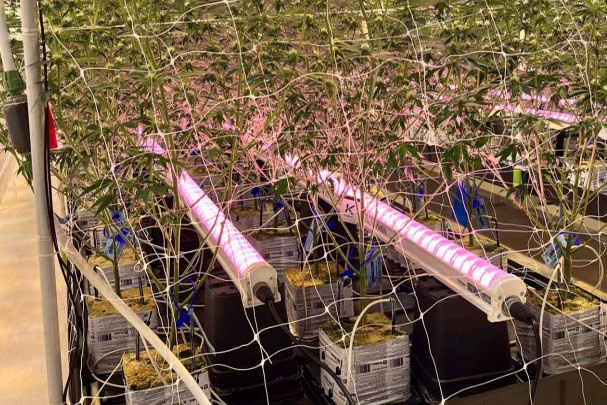
The under-canopy lighting, adapted to ProGrow about a year and a half ago, has been one of the biggest winners. “I was skeptical, but the results are certain,” says Jacob. It improved yields and drove consistency from top to bottom of the plant, which is important because ProGrow is vertically integrated, with its own retail and processing. Bottom eyes that once had to be sorted into pre-rolls or mandatory extractions can now be assigned based on what the company needs instead of being pushed into a SKU because of their inconsistency. In other words, the transformation turned a constraint into an opportunity.
 © Frog
It’s post-harvest that Jacob believes many operators undo their work. “You can degrade quality very quickly if you put a lot of work into getting past that point,” he says. ProGrow makes a relatively short dry, about eight to nine days, slow at the front and faster at the end, without drastic environmental changes. Fresh air exchange is a priority, a lesson learned in the newer closed building where trapped gas compounds and CO2 degraded the product. Whole-flower canning and hand-cutting are standard at ProGrow in particular, while other facilities move faster to more budget-friendly SKUs while cutting, with labor allocated based on the price each building produces.
When asked what’s changing most quickly, Jacob points to lighting and the push to go under the hood in every facility, along with year-end bonuses on new overhead lighting. The watering, on the other hand, he calls consistent and stable, although Lexi and Nick continue to refine it through the Dilution Solutions controller. The longer project is the standardization of buildings, and lighting is at the center of this, as different lighting forces a different approach to the environment and separates the facilities as the team is trying to bring them together. “How do we get as close as possible between multiple facilities so that we can really spread the vision of the company across all of our facilities?” says Jakob. “That’s a big part of climbing.”
Click here to view the full episode
For more information:
Frog 101
grodan101.com














Dalgety Ltd has entered into a partnership with Curaleaf Laboratories to supply pharmaceutical grade cannabis medicines to the UK cannabis market. The arrangement combines Dalgety’s cultivation operations, which are certified to EU-GMP standards, with Curaleaf Laboratories’ pharmaceutical manufacturing and distribution capabilities. According to the companies, this creates a UK-based supply route that does not rely on imported cannabis flowers, as Dalgety cultivates its product in-house. Dalgety claims it was the first company in the UK to grow, manufacture and supply EU-GMP medical cannabis from a single site.
 © Curaleaf Laboratories
The growing facility, which is more than 30,000 square feet, is located indoors and uses hydroponic growing methods along with automated lighting, irrigation, humidity and temperature control systems. The company reports that it uses AI-assisted environmental monitoring, which extends the traceability of batches to the final product and compares them to operating standards for air filtration systems. Post-harvest processing is said to follow EU-GMP protocols, including microbial and cannabinoid testing.
The stated goal of this approach is to reduce between-harvest variation in terms of THC and CBD content, terpene profiles, and microbial safety. Dalgety says his cultivation is overseen by staff with experience in horticulture and biochemistry, some of whom have worked on cannabis cultivation projects internationally.
Through a partnership with Curaleaf Laboratories, Dalgety’s UK-grown cannabis is processed and distributed through a UK-based supply chain, rather than imported from overseas. Companies suggest that this arrangement can shorten the time it takes to get products to market compared to importing, and reduce the likelihood of supply disruptions. Because Dalgety and Curaleaf Laboratories are involved in cultivation, manufacturing and distribution, the companies say this oversees the product at every stage, making it clearer for prescribers to see where and how the product was made.
 © Curaleaf Laboratories
Dalgety operates to EU-GMP standards and has been subject to regulatory review by the MHRA and the Home Office. Its operations include environmental monitoring, microbial testing, stability testing, controlled drying and curing procedures and quality assurance processes, along with controlled and secure facilities.
The company describes its work as controlled environment farming, hydroponic systems, environmental control technology, and efforts to stabilize cannabis genetics and phenotypes for batch-to-batch consistency.
 © Curaleaf Laboratories
Dalgety has also opened its cultivation facilities for visits to healthcare professionals, clinicians, pharmacists, researchers and other industry stakeholders. The company says this is in response to the fact that much of the cannabis historically supplied to UK patients has been grown overseas, which has limited opportunities for UK clinicians to see first-hand the cultivation and quality control processes. These tours aim to provide visitors with information on cultivation standards, EU-GMP compliance procedures, environmental control systems, testing processes and the regulatory framework governing cannabis manufacturing in the UK.
Dalgety and Curaleaf Laboratories describe their partnership as expanding access to UK-grown medical cannabis, improving supply chain reliability and helping to meet sector regulations, placing it in the wider context of growing demand for cannabis-based treatments from UK patients.
For more information:
Curaleaf Laboratories
Email: (email protected)
https://curaleaflaboratories.co.uk/
Cannabis News
Arkansas GOP Governor And Democratic Challenger Agree On Opposing Marijuana Legalization
Cannabis News
Will the top World Cup expert in the fruit, vegetable, and horticulture sector come from Canada, the U.S. or Belgium?

FreshPublishers 2026 World Cup Group Stage
The World Cup is coming to an end, with the third-place play-off between France and England on Saturday, and the final between Spain and Argentina the following day. It won’t be long until the grand winner of FreshPublishers’ first World Cup pool is revealed.
 © Fresh Publishers
As previously reported, Slim Kooli from Courchesne Laros is the favorite to win the €1,000 prize. He has secured a comfortable lead over Nol Batist of North American Interstate Greenhouse Company, while buyer Bjorn Van Ryckeghem of Deprez Construct is currently in third place.
| 1 | Sim School | Spain | 1–0 | 2–1 | 737 | 9716 | |
| 2 | Nol Batist | France | 2–1 | 1–1 | 674 | 9433 | |
| 3 | Bjorn Van Ryckeghem | France | 2–2 | 3–1 | 674 | 9264 | |
| 4 | Christian Anton Smedshaug | England | 1–2 | 1–2 | 659 | 9134 | |
| 5 | Perry Springintveld | Spain | 1–1 | 2–1 | 647 | 9105 | |
| 6 | Willem Tijssen | Spain | 2–0 | 2–1 | 710 | 9098 | |
| 7 | Hans Borsboom | Spain | 2–1 | 2–1 | 528 | 9058 | |
| 8 | Bart Triemstra | Spain | 2–1 | 2–1 | 737 | 9052 | |
| 9 | Youness Bensaid | Spain | 2–1 | 1–1 | 722 | 8954 | |
| 10 | Vijay Dijkstra | Portugal | 2–0 | 2–1 | 382 | 8953 |
However, there have been some surprises during the tournament, and bonus points must be added, so we will keep the suspense a little longer. On Monday we will find out who is the main World Cup announcer in the international fruit, vegetable and horticulture sector…

BREAKING NEWS DEA RESCHEDULES CANNABIS TO SCHEDULE 3!

ASK ME ANYTHING | MONTEL

Marijuana Retail Report

Redefining the standards of UK cannabis

Arkansas GOP Governor And Democratic Challenger Agree On Opposing Marijuana Legalization

Michigan Cannabis Brand Forced to Close After Investigation Finds Inventory Discrepancies, Out-of-State Transport

The C Block…more 420 recaps on Weed Talk News …recorded 4_29_24

PART 1 TAKING A KNEE | NATE BOYER

Marijuana Retail Report

Will the top World Cup expert in the fruit, vegetable, and horticulture sector come from Canada, the U.S. or Belgium?

“Our system can manage equipment across 10,000+ m² using just a few wires”

Mazar-i-Sharif Hash Wednesday

Florida Workshop to Discuss What Constitutes a ‘Cartoon’ in Hemp Packaging

Afghan Black Hash Wednesday

From Finance to Wellness: Brad Zerman’s Impactful Pivot

Weak Michigan Cannabis Sales Again in July – New Cannabis Ventures

Re-release of the full show of Cannabis Coast to Coast news. Republican Texas DA Fires Up vs. laws;

DEA’s Cole Reverses His “priorities” ; Prohibitionists Dig In; Dead & Co Celebrates 60 years in SF

Texas DA Fires Up for Change! Mass. Sheriff arrested on Extortion charges; GOP vs Industry in state

Your Cannabis Business: Consistent Filings Are Critical
-
 Cannabis News11 months ago
“Our system can manage equipment across 10,000+ m² using just a few wires”
-
 Video10 months ago
Mazar-i-Sharif Hash Wednesday
-
 Florida11 months ago
Florida Workshop to Discuss What Constitutes a ‘Cartoon’ in Hemp Packaging
-
 Video9 months ago
Afghan Black Hash Wednesday
-
 Video11 months ago
From Finance to Wellness: Brad Zerman’s Impactful Pivot
-
 aawh11 months ago
Weak Michigan Cannabis Sales Again in July – New Cannabis Ventures
-
 Video11 months ago
Re-release of the full show of Cannabis Coast to Coast news. Republican Texas DA Fires Up vs. laws;
-
 Video11 months ago
DEA’s Cole Reverses His “priorities” ; Prohibitionists Dig In; Dead & Co Celebrates 60 years in SF