
Cannabis News
How growers can maximize LED efficacy and energy efficiency


In the world of horticultural lighting, especially in cannabis cultivation, efficiency is the efficiency with which electrical energy is converted into usable light for the plant. But there’s a lot more to it than just a number on a spec sheet. Efficiency affects energy costs, performance and ultimately profitability.
“Energy costs are rising worldwide. Between the increased demand for electric vehicles, data centers, AI infrastructure and the overall electrification grid, growers will continue to feel the pressure of higher electricity bills,” says Fluence’s Daniel Pilsworth. “Lighting and HVAC together make up the largest portion of a grow facility’s operating expenses. Therefore, every photon counts.”
From efficiency gains to intelligent system design
A decade ago, the industry made the leap from high-pressure sodium (HPS) fixtures to LEDs. LEDs offered significant efficiency gains, reduced heat emission and improved environmental control. Growers can direct more power to productive light instead of waste heat, while easing the burden on HVAC systems. Over time, those first transitions led to significant savings, but the low-hanging fruit has already been reaped. “The diode technology inside LEDs has been refined tremendously, and the annual efficiency gains we once saw, 2-3% over a year, have slowed to 1% or less,” continues Daniel. “The industry has reached a plateau in raw diode efficiency. That shift has changed the conversation. It’s no longer just how efficient a single diode can be, but the entire system is designed to get the most out of every watt. The next leap in efficiency won’t come from the component level. It’s going to come from the way we apply light.”
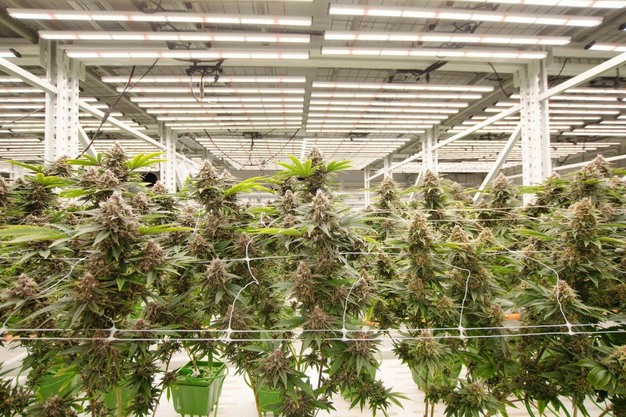 © Fluence Bioengineering
The relationship between spectrum and efficiency
Spectrum plays a major role in determining the efficiency of appliances. Red LEDs are inherently more efficient than white LEDs because they emit light directly, while white LEDs rely on phosphor coatings that absorb energy during the conversion process. A fixture with a high red content can achieve 3.5 µmol/J or more, while broad whites can be around 2.7 µmol/J. That said, a high-red environment isn’t always the best choice. “Excessive red light can make it difficult for workers to work in the room, and more importantly, it increases the risk of photobleaching, those ‘white tipped’ eyes that reduce the overall quality and market value of flowers. Photobleaching can be strain-dependent and can be influenced by other environmental factors. The goal is always balance.”
Balancing efficiency and capital constraints
Cannabis remains a capital-constrained market. Because federal legalization has not yet occurred in the US, growers do not have access to the same low-cost financing as traditional agriculture. That makes every dollar of CapEx and OpEx count. “A higher-efficiency fixture carries a higher purchase price, so the right decision depends on your financial position, local energy rates, and available rebate programs. Some utilities directly tie incentive eligibility or payment value to the fixture’s efficiency, meaning higher-efficiency fixtures can offset much of the initial cost. In some cases, rebates can reach $1,000 or more. Ultimately, there is no one-size-fits-all answer for manufacturers. they must weigh it against long-term energy savings and incentive benefits.
Where will the next profits come from?
As diode efficiency skyrockets, lighting manufacturers are innovating elsewhere—how to deliver light, where to deliver it, and when. “At Fluence, our research program has been focused on optimizing the spectrum, intensity and placement of light to reduce energy use while improving performance and quality,” said Daniel. “Dynamic and tunable lighting is one of the most promising tools. By adjusting the spectral composition throughout the plant’s growth cycle, growers can use more red when it’s safe and pull back when the crop becomes sensitive to photobleaching. Our new RAPTR 2 high-light incorporates this flexibility. Its tunable T48 spectrum allows growers to vary it from 40 to 80 percent. 3.5 µmol/J efficiency maintaining precise environmental control, we combine this technology with horticultural support, our science team works directly with growers to design lighting schedules that offer maximum energy savings and plant health.
Beyond the ball: The “red sandwich” strategy
Another limitation of efficiency is under the canopy. “Our research has shown that downlighting provides much higher red content without the risk of photobleaching seen from overhead lighting. By splitting the photons, which we call our Red Sandwich Lighting Strategy, we can increase yield, uniformity and quality while further improving energy efficiency.
For more information:
fluency
fluence-led.com








Cannabis News
German state authority says cannabis flower must be dried where it’s grown, tightening the screws on EU GMP washing

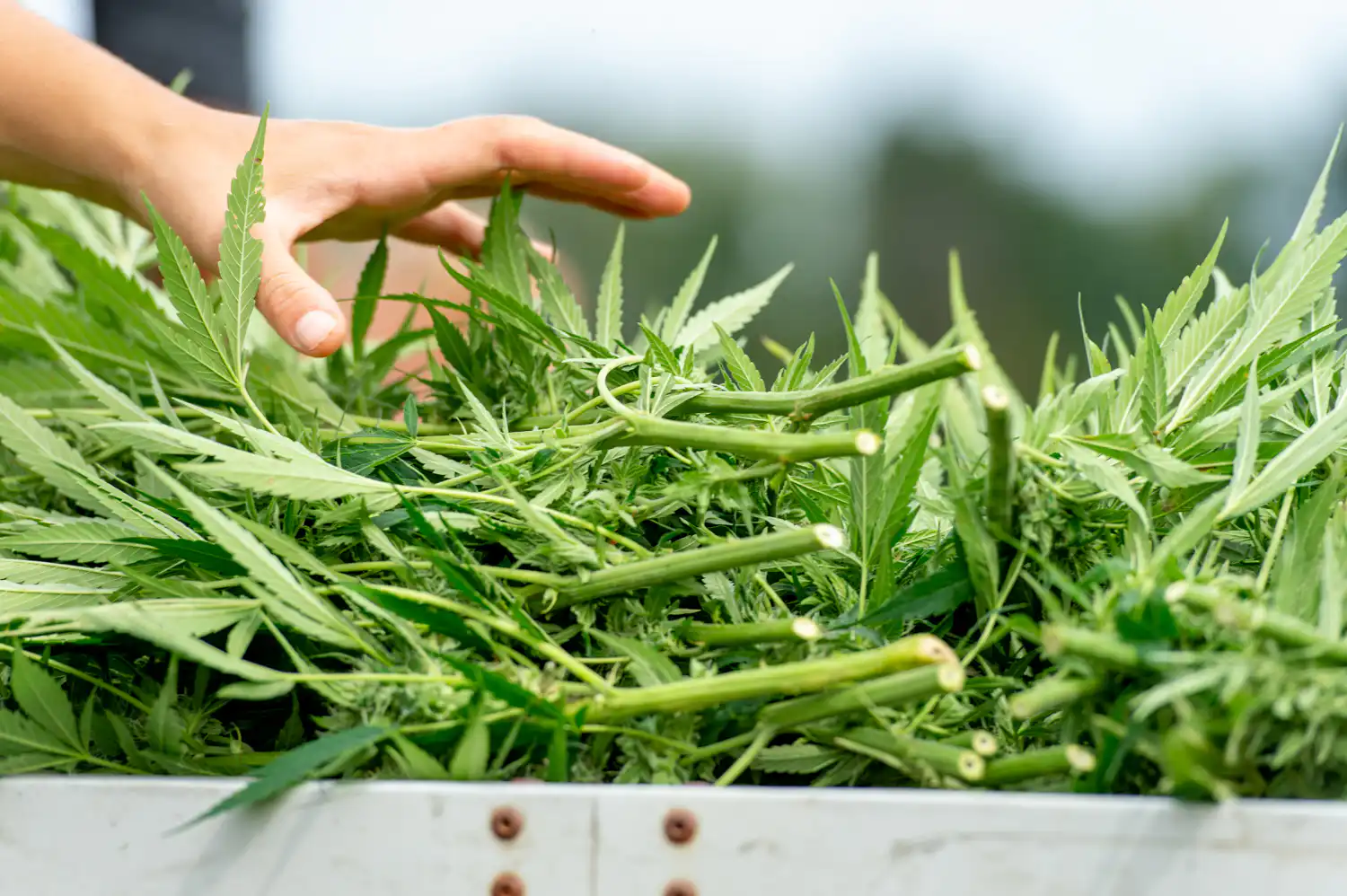
In Hesse, medicinal cannabis flowers must be dried and cut where the plants are harvested, the Hessian State Office for Health and Care says in a June 8 guidance letter, unless a grower can prove beyond doubt that skipping or splitting the drying does not result in a loss of quality.
The document treats drying under controlled conditions as a critical manufacturing step that affects product quality, which places its parameters within GMP standards rather than the more lenient GACP standard that governs cultivation (source: HLfGP brochure). Annex 7 of the GMP guideline allows coarse cutting and possibly a primary drying step under GACP conditions, but only when the work actually falls within these limits and the quality of the drug is not compromised. The authority says it does not have a process that has allowed flowers that can be classified as GACP material to be transported over long distances, stored, imported and further processed without loss of quality. Either the requirements for GACP flower are not met because the handling goes beyond the initial drying and coarse cutting, or the flower cannot be shown to survive longer storage and transport without degrading before subsequent steps.
 © Philiprowe | Dreamstime
What a third country allows does not change that. According to the authority, if the cannabis flower is partially manufactured in a country where the GMP guideline does not apply, the guidelines must still be met for material released and sold as medicine in Germany. The responsibility lies with the Qualified Person under the German Medicinal Products Act who releases the flower for sale, and is responsible, even if partial manufacturing takes place in sites operating under different regulations in other EU states or third countries.
This is the mechanism behind EU GMP clearance, the practice of converting imported flowers through a European facility to obtain certification that the original material would not otherwise carry. The Hesse letter does not use that term. What it does is to close the interpretation loophole that allows a partial dry abroad to be finished and certified in Europe, by calling the dry finish a GMP step that cannot be cleared through a GACP origin.
The policy also restricts reprocessing. According to Chapter 5 of the EU GMP guideline, reprocessing is only possible in exceptional cases, under strictly defined conditions and a full risk assessment, which includes drying or reducing the microbial load. Batches undergoing such steps cannot be sold without proof of suitability and stability, and when rework is applied to most batches, it should become a validated part of the standard process.
A producer active in the supply chain, who asked not to be named, says the Hesse letter is one of two recent moves, covering the second-issued Darmstadt district, in line with the regions already taking a stand against EU GMP clearance in Cologne. In the accounts of this grower, the regions have closed the loophole that allowed partial drought in a country like Colombia to end in Germany, Darmstadt has refused to allow this conversion in its territory.
The most difficult case, according to this producer, is the multi-country chain. The flower partially processed in Colombia, sent to Portugal and converted there according to the EU GMP is still something that Germany completely rejects, although it should be caught by a qualified person who does the job properly, and a chain that goes to a third country, according to the producer’s estimates, approximately ninety percent is not allowed. Qualified people have more responsibility than before, and when they check the supply line and find the chain invalid, the Darmstadt regional authority would look into it.
Cannabis News
Marijuana Opponents Attack Government Analysis Behind Rescheduling Recommendation On Second Day Of DEA Hearing

Entourage Health Corp. has entered creditor protection. The company and six related entities filed on June 17 under the Companies’ Creditors’ Arrangement Act owed approximately $240.1 million to the sole affiliate of the LiUNA Pension Fund, its owner, its secured creditor and the lender that is now funding the money (First Report pp. 3-6-9
That affiliate, 2437653 Ontario Inc. No. 1 company, Entourage, secured a 2024 deal that took the former WeedMD private and off the TSX Venture Exchange (December 2024 PR). Shareholders were paid half a Canadian cent per share, or C$0.005, and the board recommended a sale in December 2024 (December 2024 PR).
Jason Alexander, head of the special committee of independent directors, recommended to shareholders. “The transaction ensures that shareholders will receive immediate tangible value while positioning the Company for future growth and flexibility,” Alexander said (December 2024 PR). The company took on $167.6 million in debt in that sale, having already breached the covenant with the same guarantee (December 2024 PR). Eighteen months later that debt was $240.1 million when it was filed, and the growth promised by the sale is a settlement (First Report 6-18 p.

Adult use is off, medical is still running
The leisure business is closing, not saving. Entourage laid off about 53 workers in early June before the order, and 22 remain (First Report p. 6 Adult use inventory is being cleared, finished products are shipped to provincial distributors, and flowers are sold in bulk to the market to other licensed growers (First Report p. 12 Color Cannabis, Dime Bag and Saturday Cannabis are the brands going down with it (First Report p. 5
What remains open is the doctor’s arm as the exclusive supplier of cannabis under the Starseed brand to local residents of the Workers International Union of North America (First Report p. 5 The pension fund that funds the procedure is tied to the same union that the medical brand serves, and the part of Entourage that serves union members is the part that is kept alive while the rest is sold for parts.
At the end of July the money runs out with no new money (First Report p. 11 The money comes again from the pension fund affiliate, a $1.1 million debtor-in-possession facility at 5% per annum, no commitment fee, no exit fee (First Report pp. 10-11). The monitor, Ernst & Young, checked terms against other DIP loans in the cannabis sector from January 2024 and concluded that a third-party lender would not lend on better terms given the state of the business (First Report p. 11 The lender, which already owed $240 million, is the only one willing to advance another million to keep the lights on through the sale.
Health Canada is the largest unsecured creditor, owed $494,505, ahead of all suppliers and competitors on the company’s books (List of Creditors p. 1 Supreme Cannabis is owed $262,133, medical platform HelloMD is owed $169,564, the Town of Aylmer is owed $144,815, the Independent Retail Cannabis Board is owed $137,098 and High Tide is owed $124,583 (List of Creditors p. 1 Unsecured claims total $3,288,333 in more than 100 names, many of which have yet-to-be-determined amounts by medical clinics (List of Creditors 1-5 p. Against $240 million guaranteed, none of them will see much.
In the June 29 return, the lender asks the judge to extend the stay until August 28, approve the DIP facility, and double the Administrative and Directors fees to $500,000 each (First Report 4-8-12. p. The directorship is rising as directors face payroll, holiday pay and excise duties over a longer period of time, and the company’s directors and officers insurance expires at the start of July (First Report p. 12
The sales process starts on the same day, based on a marketing effort that started around May and was presented before the deal that sparked interest but no one could make a deal (First Report p. 13 Insiders and affiliates have until July 6th to say they intend to bid, the bid deadline is July 30th, the successful bid must be received by August 7th, and the outside deadline is August 28th (First Report p. 15 The affiliate of the pension fund has written to the Monitor that it will not make an offer (First Report p. 16), and any other affiliate that does so must be removed from the process (First Report p. 16 The settlement request for non-cannabis equipment and the sale of the Aylmer facility, a 26,000-square-foot extraction and processing facility that has been the company’s production base at 250 Elm St.
For more information:
Neighborhood Health
1.844.933.3636
(email protected)
entouragehealthcorp.com

New Hampshire Ready to go for 25th Adult Use Legal State – Special Report from Weed Talk News

PHYSICIAN HEAL THYSELF with CANNABIS | DR MANISHA SINGAL

Marijuana Retail Report

German state authority says cannabis flower must be dried where it’s grown, tightening the screws on EU GMP washing

ALJ Hearing Week: What To Watch For

Marijuana Opponents Attack Government Analysis Behind Rescheduling Recommendation On Second Day Of DEA Hearing

Glass House Brands Begins Trading on NYSE

Weed Talk News with Alaina Pinto The B Block -5-29-24

CANNABIS CAREERS | KARSON HUMISTON

Marijuana Retail Report

“Our system can manage equipment across 10,000+ m² using just a few wires”

Florida Workshop to Discuss What Constitutes a ‘Cartoon’ in Hemp Packaging

Mazar-i-Sharif Hash Wednesday

Afghan Black Hash Wednesday

Weak Michigan Cannabis Sales Again in July – New Cannabis Ventures

From Finance to Wellness: Brad Zerman’s Impactful Pivot

DEA’s Cole Reverses His “priorities” ; Prohibitionists Dig In; Dead & Co Celebrates 60 years in SF

Re-release of the full show of Cannabis Coast to Coast news. Republican Texas DA Fires Up vs. laws;

Curaleaf Q2 Revenue Falls 8% – New Cannabis Ventures

Your Cannabis Business: Consistent Filings Are Critical
-
 Cannabis News10 months ago
“Our system can manage equipment across 10,000+ m² using just a few wires”
-
 Florida11 months ago
Florida Workshop to Discuss What Constitutes a ‘Cartoon’ in Hemp Packaging
-
 Video9 months ago
Mazar-i-Sharif Hash Wednesday
-
 Video9 months ago
Afghan Black Hash Wednesday
-
 aawh11 months ago
Weak Michigan Cannabis Sales Again in July – New Cannabis Ventures
-
 Video11 months ago
From Finance to Wellness: Brad Zerman’s Impactful Pivot
-
 Video10 months ago
DEA’s Cole Reverses His “priorities” ; Prohibitionists Dig In; Dead & Co Celebrates 60 years in SF
-
 Video11 months ago
Re-release of the full show of Cannabis Coast to Coast news. Republican Texas DA Fires Up vs. laws;