
Cannabis News
Medical Marijuana ‘Significantly’ Decreases Use Of Opioids By Chronic Pain Patients, New Study Finds



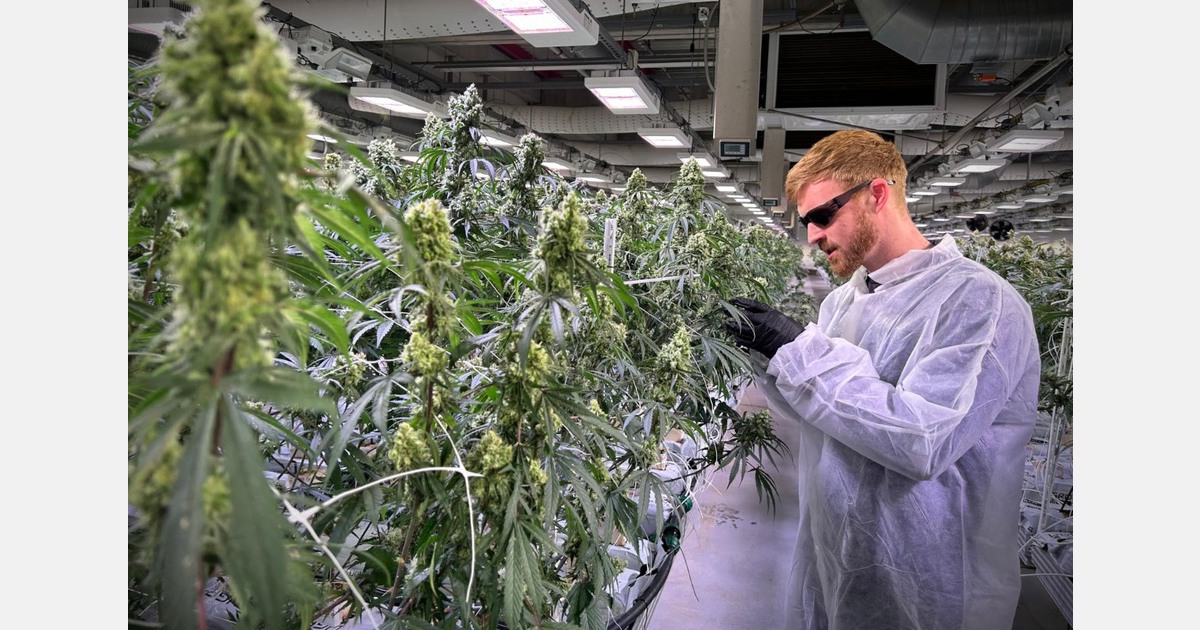
The UK cannabis market has grown steadily over the past five years, although not always in the way operators had hoped. New brands and imported products have driven much of the expansion, while domestic cultivation has slowed. Alexander Mountain has seen this from the inside long before most people in the industry knew it existed. “I’ve been waiting for this since 2009,” says the founder of growing consultancy Trichome Solutions.
Regulations, compliance, EU-GMP requirements, all of which have made getting a facility off the ground a multi-year exercise. “I’ve worked with organizations and seen firsthand that it takes three, four, even five years to get going,” says Alexander. “It’s a tough market to break into in the UK, which in itself slows down the overall maturation.” The last six months, however, have brought about a change. “There are now clear goals and programs for business. An almost militant approach to protocols. It’s starting to feel like the rest of the EU and Canada.”
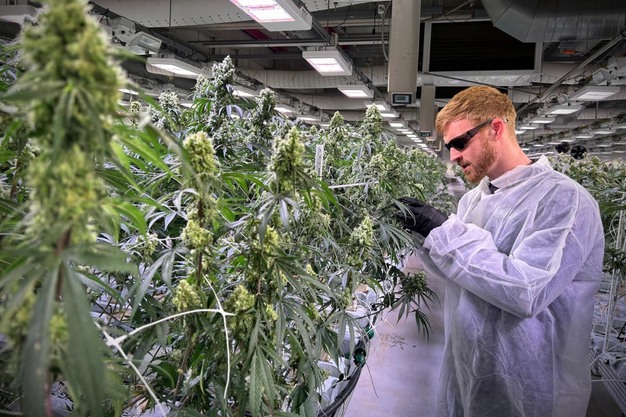 © Trichome Solutions
Capitalization and cultivation
Early investment in cannabis in the UK came largely from private capital, and the gap between capitalization and cultivation know-how cost many operators dearly. Consultants were brought in to design and build the facilities, but rarely stayed to operate them. The result was a facility that had to be rebuilt almost as soon as it opened. “A lot of adjustments, changes in workflows, logistical expansion,” says Alexander. “This, of course, requires more capital. This delays profitability and, in some cases, leads to employee burnout.” The model he believes in is the owner-operator structure that has worked in markets such as the US, Canada and Thailand.
In terms of cultivation, genetic selection and post-harvest are where Alexander gives most of his attention. Seasonal changes in the UK favor indoor parameters where possible, although low-light greenhouses have worked for some operators with adequate supplementary lighting. Getting the right genetics for the specific market drives early success and patient retention. Post-harvest, however, he believes the sector is constantly underestimating. “I focus a lot on preserving the plant material and maintaining its chemical profile, particularly cannabinoids, terpenes and volatile sulfur,” he says. “Even simple things, like having enough space to dry properly, seem like common sense. But unless you’ve actually done it, you don’t always realize how important those details are to the quality of the final product.”
UK cannabis demand
Patient demand in the UK has been shaped by the equity market, and licensed operators are working to close this gap. The dynamics here are different from other markets. In Germany and Canada, THC content drives purchasing decisions. In the UK, Alexander is seeing more focus on taste, aromas and the overall experience. “With the amount of choices coming in through imports, people are finding their own strains and becoming more selective,” he says. Closing this gap, in his opinion, involves the farmers as much as the prescribers. “Patient education and support should come from doctors. Producers should teach them about their products. I think growers should invite prescribers more often.”
Over the next three to five years, Alexander expects reliance on imports to ease as domestic supply chains develop and the market stabilizes. He says that there will be operators who come out from the other side, specialized ones. R&D, heritage genetics, premium indoor and post-harvest optimization. “We are now working in the international cannabis industry,” he says. “With comparisons, going on a flight, there is no room for complacency. The operators who find their niche and really excel in it will be the ones who build a strong identity and remain competitive in the cannabis space.”
For more information:
Trichoma solutions
(email protected)
trichomesolutions.com
Linkedin
Instagram
Cannabis News
DC Mayor Proposes To Let Medical Marijuana And Alcohol Companies Partner On THC Drinks

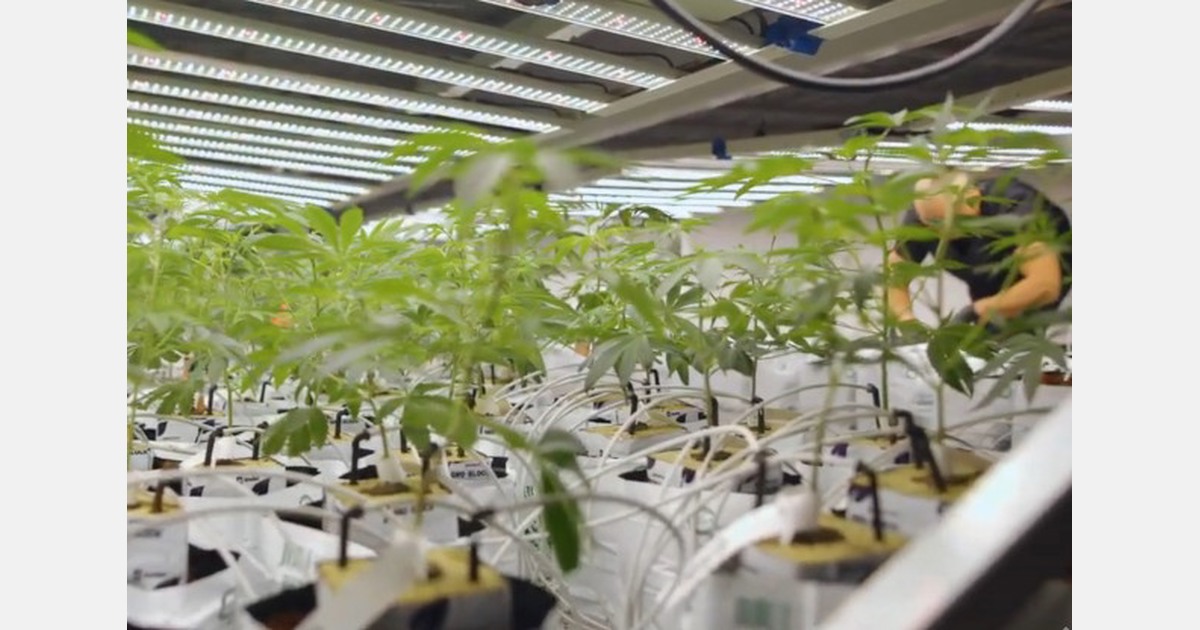
At 5,000 square feet, Flora Arbor is about as small as a licensed cannabis grower can legally get. That’s not the problem the company is trying to solve. “We’re a very small breed, which means we can control things very well.” he says David Myrowitz, director of cultivation. “It also means that we have to be successful in every round.” Three flower cells, collected in three weeks. There is no such thing as a bad lot to disappear into a larger average. Every shift counts, and the operation is built around that reality.
It starts in the pump room
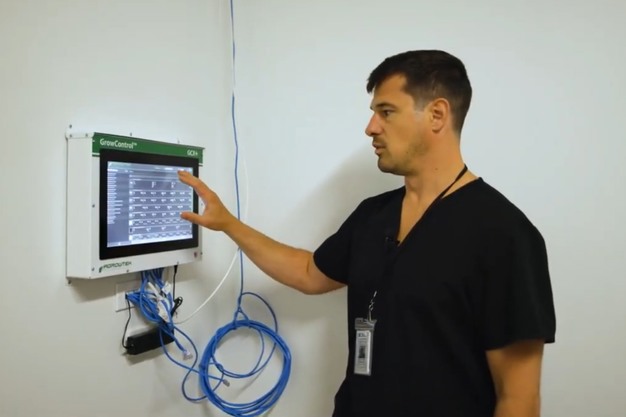
Reverse osmosis water is fed into holding tanks, nutrients are mixed by an Agrowtek fertigation machine, and the entire system runs from a GCX controller that monitors moisture sensors, dissolved solids, and soil temperature in every room. Canopy sensors feed directly into HVAC, which Flora Arbor runs on Cultiva units. “If you talk to any grower, any grower, they’ll tell you the number one thing for successful growing is having a good HVAC system,” says David. “There is somewhere that we don’t have expenses.”
 © Flora Arbor
Genetics and cells
Mother plants are removed every three to six months, so cuttings are always taken from young stock. The clones move from the humidity domes to a humidity-controlled room, then to the vegetables, where a crop-correction protocol runs several irrigation streams per day to encourage growth. Moisture sensors in the grow bags track each drying cycle, and daily watering patterns are revised based on the goals of the grow system.
The flower rooms have a double-level system, with taller plants at the bottom, shorter ones at the top, grouped to keep microclimates outside and an even distribution of light. The second mesh is lowered as the plants develop to give each bud site its own square and keep airflow moving through the canopy.
In a recent route, rooms from different phases of the cycle were working at the same time. Hawaiian Rain has been crossed with permanent marker, disk chips, cereal milk. David pointed to the development of crystals in the Hawaiian Rain cross, the citrus resin charge of Disco Fries, the height management challenge of pushing a cultivar as high as possible without burning them in the lights. “We try to have a nice spread of genetics, a nice representative of each flavor profile and effect, to make sure everyone can get something they like,” he says.
Crossing the finish line
Post-harvest is managed at home, by hand. The product is sorted on the cutting table A-Bd, B-Bud and cutting table, strictly separated, the grade on the label means something. The tiered structure also serves a second purpose. “We think it’s really important to make sure quality flowers are available to people of all means, not just people who can afford the premium,” says David. The three-week harvest cycle is Flora Arbor’s main argument for the consumer. Small batches, constant rotation, nothing stored.
“Every time you get a bag, it’s going to be fresh, freshly picked grass,” says David. “It’s not something that’s been sitting in some MSO’s vault for six months because they’ve collected 2,000 pounds and can’t sell it.” The bet is that in a market where no one has solved the consistency complaint, being small enough to catch all the cattle is more valuable than the economies of scale you allow to get there.
For more information:
Flora Arbor
1300 Abbott Dr, Elgin, IL 60123
847-504-8450
(email protected)
floraarbor.com

Embark Hash Hits Wednesday

Elon Musk Greenlights Weed Content on X at Benzinga; Cannabis Coast to Coast News with Alaina Pinto

Is It REALLY Safe To Smoke w33d If You’re Pregnant?

EVIDENCE / CANNABIS | DAN DALTON [cannabis grow in former prison]

Marijuana Retail Report

The Cannabis Storm Will Hopefully Pass Over – New Cannabis Ventures

“UK medical cannabis is maturing”

DC Mayor Proposes To Let Medical Marijuana And Alcohol Companies Partner On THC Drinks

Anti-Cannabis Coalition Sues Trump Admin Over Medicare Hemp Coverage Plan

Romulan Marijuana Monday

“Our system can manage equipment across 10,000+ m² using just a few wires”

Florida Workshop to Discuss What Constitutes a ‘Cartoon’ in Hemp Packaging

Mazar-i-Sharif Hash Wednesday

Re-release of the full show of Cannabis Coast to Coast news. Republican Texas DA Fires Up vs. laws;

From Finance to Wellness: Brad Zerman’s Impactful Pivot

DEA’s Cole Reverses His “priorities” ; Prohibitionists Dig In; Dead & Co Celebrates 60 years in SF

Your Cannabis Business: Consistent Filings Are Critical

New Hampshire Governor Says Federal Marijuana Rescheduling Won’t Change Her Opposition To Legalization

Weak Michigan Cannabis Sales Again in July – New Cannabis Ventures

Texas DA Fires Up for Change! Mass. Sheriff arrested on Extortion charges; GOP vs Industry in state
-
 Cannabis News7 months ago
“Our system can manage equipment across 10,000+ m² using just a few wires”
-
 Florida8 months ago
Florida Workshop to Discuss What Constitutes a ‘Cartoon’ in Hemp Packaging
-
 Video6 months ago
Mazar-i-Sharif Hash Wednesday
-
 Video8 months ago
Re-release of the full show of Cannabis Coast to Coast news. Republican Texas DA Fires Up vs. laws;
-
 Video8 months ago
From Finance to Wellness: Brad Zerman’s Impactful Pivot
-
 Video7 months ago
DEA’s Cole Reverses His “priorities” ; Prohibitionists Dig In; Dead & Co Celebrates 60 years in SF
-
 Best Practices8 months ago
Your Cannabis Business: Consistent Filings Are Critical
-
 Cannabis News8 months ago
New Hampshire Governor Says Federal Marijuana Rescheduling Won’t Change Her Opposition To Legalization