
Cannabis News
Not an average greenhouse at NC State University

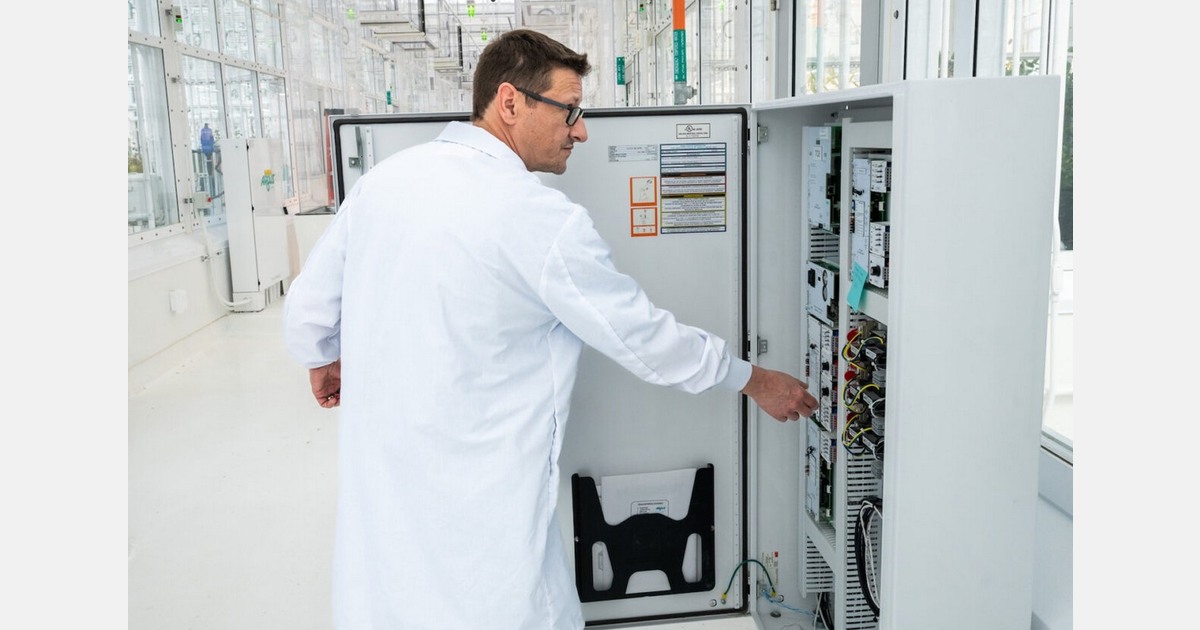
It takes a minute to adjust your eyes to Joe Chierak and Mike Beddoe in hats through the greenhouse doors of NC State University’s Plant Sciences Building.
It’s so bright there’s a sunglasses case in the entryway.
“When the sun shines on the white floor, it’s like being blinded by snow,” says Beddoe.
The 24-foot-tall glass and steel behemoth that sits atop the Centennial Campus building might look like an ordinary greenhouse.
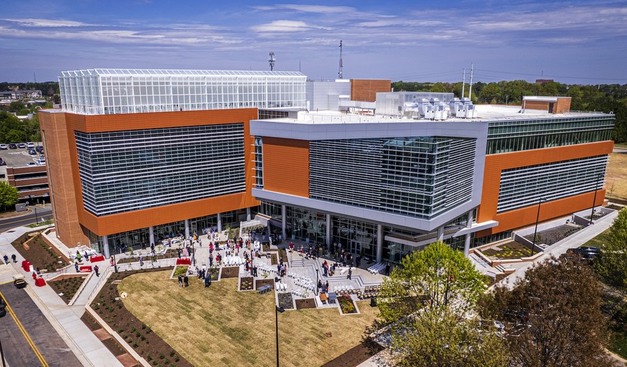 © NC State UniversityThe 10,000-square-foot Plant Sciences Building controlled-environment laboratory has 11 greenhouse bays (top left) that provide fully conditioned, glass-bottom growth environments for research.
But inside computer-controlled facilities, researchers work year-round to tackle the biggest challenges farmers face from disease, pests and extreme weather.
Plants for dozens of changing research projects are grown at any given time, all with different needs, requirements, growing seasons, and Chiera and Beddoe are tasked with overseeing them.
“We serve the entire campus,” says Chiera.
Increasing innovation
Researchers in one room have rows of blue-green plants. They are mostly eucalyptus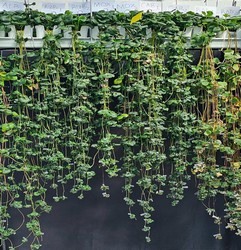 © NC State University Widely planted hardwood trees throughout the world.
By editing specific genes in eucalyptus, NC State researchers like forestry professor Jack Wang and genome editing expert Rodolphe Barrangou are developing trees to make paper and other wood products, reducing emissions and promoting the sustainability of paper mills.
In another room, they set up chain-like runners of hanging strawberry plant racks, which can be used to root and grow more strawberries.
Associate Professor of Horticultural Sciences Mark Hoffmann is researching new ways to propagate strawberry plants to minimize the spread of pathogens before they are shipped from nurseries to growers.
Growing plants for this job requires precise control of light, humidity and other conditions.
Controlled environments for research accuracy
Shouting over the hum of fans, sprinklers and other equipment, Beddoe leads her down the hall to a back office.
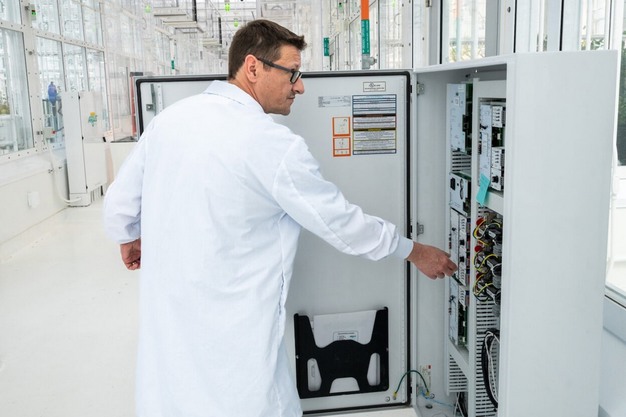 © NC State UniversityEach greenhouse bay is individually monitored, helping to ensure that experiments meet the researchers’ exacting standards. Pictured: Mike Beddoe.
“This is the brains of the entire greenhouse,” Beddoe says, tapping into a control system that allows the researchers to adjust the environment in each room to their needs.
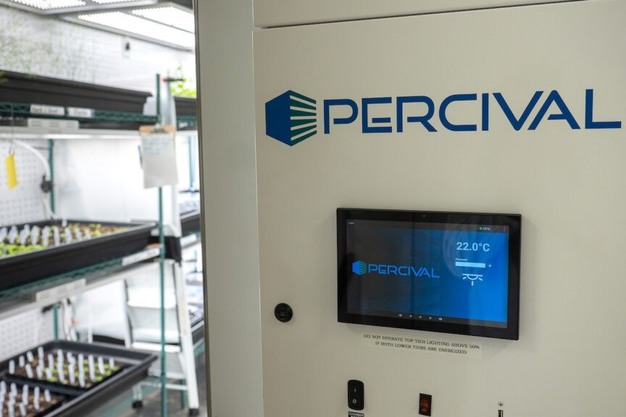 © NC State UniversityThe Plant Sciences building has 25 growing chambers of various sizes where plants are grown for food, fiber and even erosion control.
The facility includes 11 independently controlled greenhouse rooms spanning more than 10,000 square feet, as well as 25 plant growth chambers.
Sensors in each room continuously monitor temperature, soil moisture, CO2 concentration and more.
The data is then sent to a central computer, where it is analyzed and compared to optimal standards before issuing commands to the system, such as adjusting shade screens or turning on misters. Watering schedules are also programmed.
“We try to automate everything,” says Beddoe.
Safety first
Passing pots and earthenware, Chiera leads to one of the most unique rooms on the fifth floor.
The biocontainment greenhouse is one of the few facilities nationwide designed to safely screen for agricultural pests and pathogens.
Every year, farmers around the world lose up to 40% of their crops to pests and diseases.
As new threats continue to emerge that could threaten global food security, NC State is not taking any chances.
So they have converted one wing into a specialized high-capacity facility known as a biosafety level 3 laboratory.
Research here could be used to test treatments for crop diseases, for example, or to develop fruit and vegetables with greater resistance to insect pests.
The space itself is only accessible to credentialed staff, who work under the watchful eye of security cameras.
Chiera walks through the automatically closing doors and the researcher dons gowns, gloves, face shields and other protective gear before entering the lab.
What comes here, stays here
From air and water handling to waste disposal, it’s designed to ensure that what comes here stays here.
All water discharged from the BSL-3 greenhouse is run down pipes and boiled before leaving the facility.
Solid waste is treated in a special oven called an autoclave, which uses steam and pressure to ensure that any microbes are dead.
Air is also designed for safety.
A negative pressure ventilation system creates a flow of air in a direction to prevent anything in the air from escaping, and all the exhausted air is filtered out.
“So if we’re dealing with a pathogenic plant that produces spores, for example, it will trap them and not release them,” says Chiera.
Supporting diverse research in the face of tough challenges
Back in the main corridor, Chiera and Beddoe make their way through the hall to their next meeting, passing thousands of green plants along the way.
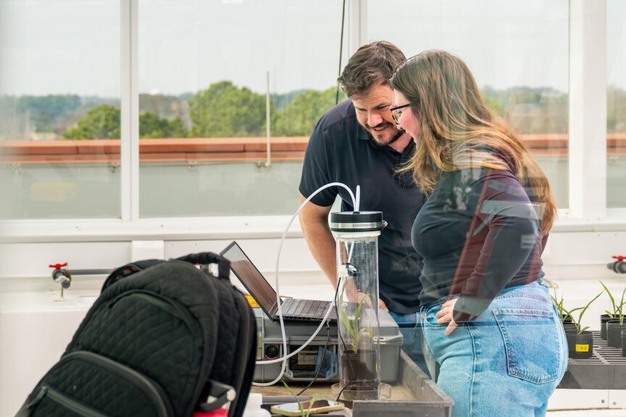 © NC State UniversityAlex Woodley (left) and Raine Lookabill study greenhouse gas emissions from greenhouse soils as part of efforts to find ways to reduce them and mitigate their effects.
Back in the main corridor, Chiera and Beddoe make their way through the hall to their next meeting, passing thousands of green plants along the way.
In one room, tests are being done on the sweet potato. Electrical and Computer Engineering Professor Wenye Wang and his team are developing ways to help farmers monitor starchy and swollen roots as they grow underground, using low-cost Wi-Fi signals (PDF) instead of expensive buried sensors.
in another room, NC State Professor Dorith Rotenberg, Department of Entomology and Plant Pathology, is growing corn. Plants will eventually become dinner for insects, such as plant eaters and aphids, to better understand how these insects spread viruses that can stunt growth and reduce yield in one of the world’s largest crops.
A fan favorite
Beddoe stops in front of a room at the end of the corridor. “This is my favorite bay,” he says.
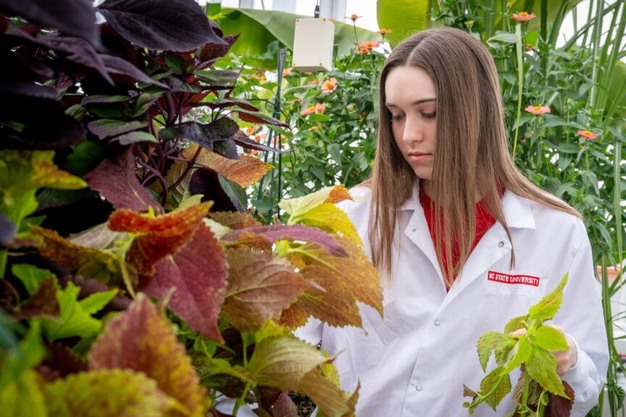 © NC State UniversityGrayson Cothran tends plants in a popular greenhouse bay where students have the opportunity to care for various plants and learn about greenhouse operations.
Inside, there are soybeans and banana plants basking in the sun, cotton plants with their hibiscus-like blooms, as well as a genetically engineered petunia that looks like an ordinary white flower during the day but glows at night using bioluminescent mushroom genes.
“These plants are mostly for our students,” explained Beddoe. “So they can learn different ways to water and breed and things like that.”
Always called
Beddoe will return here before heading home as part of his twice-daily inspections.
Because keeping the greenhouse running requires a lot of hands-on work.
“One of us is always on call,” says Beddoe, whose phone buzzes on evenings and weekends if something needs attention.
“Plants don’t take vacations,” he added.
Source: NC State University











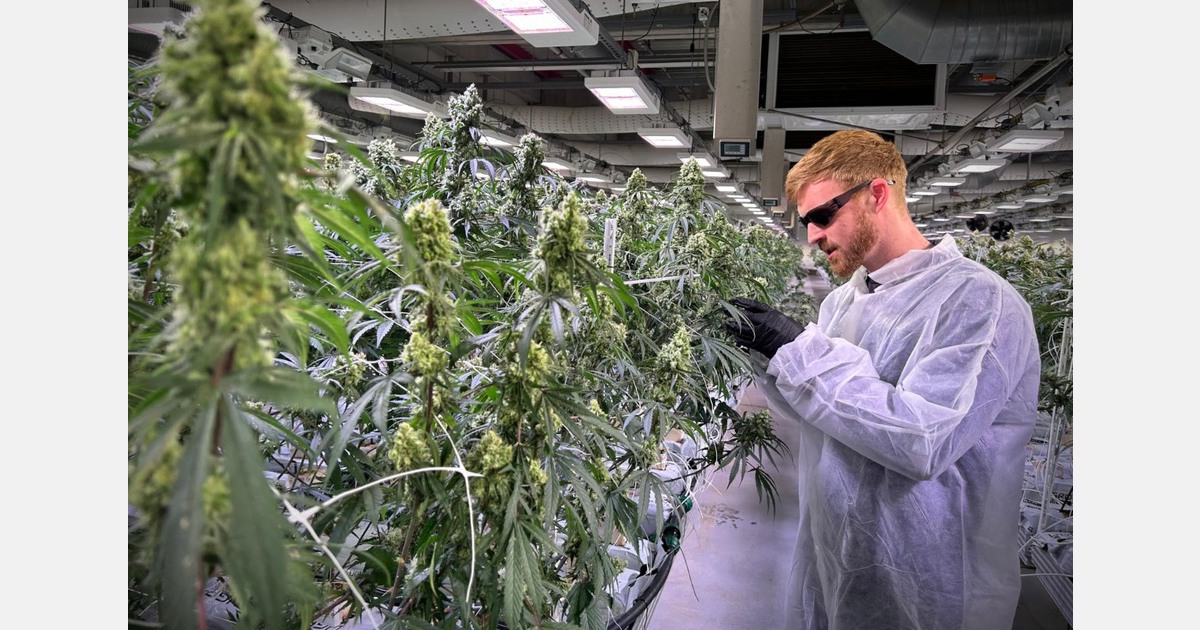
The UK cannabis market has grown steadily over the past five years, although not always in the way operators had hoped. New brands and imported products have driven much of the expansion, while domestic cultivation has slowed. Alexander Mountain has seen this from the inside long before most people in the industry knew it existed. “I’ve been waiting for this since 2009,” says the founder of growing consultancy Trichome Solutions.
Regulations, compliance, EU-GMP requirements, all of which have made getting a facility off the ground a multi-year exercise. “I’ve worked with organizations and seen firsthand that it takes three, four, even five years to get going,” says Alexander. “It’s a tough market to break into in the UK, which in itself slows down the overall maturation.” The last six months, however, have brought about a change. “There are now clear goals and programs for business. An almost militant approach to protocols. It’s starting to feel like the rest of the EU and Canada.”
 © Trichome Solutions
Capitalization and cultivation
Early investment in cannabis in the UK came largely from private capital, and the gap between capitalization and cultivation know-how cost many operators dearly. Consultants were brought in to design and build the facilities, but rarely stayed to operate them. The result was a facility that had to be rebuilt almost as soon as it opened. “A lot of adjustments, changes in workflows, logistical expansion,” says Alexander. “This, of course, requires more capital. This delays profitability and, in some cases, leads to employee burnout.” The model he believes in is the owner-operator structure that has worked in markets such as the US, Canada and Thailand.
In terms of cultivation, genetic selection and post-harvest are where Alexander gives most of his attention. Seasonal changes in the UK favor indoor parameters where possible, although low-light greenhouses have worked for some operators with adequate supplementary lighting. Getting the right genetics for the specific market drives early success and patient retention. Post-harvest, however, he believes the sector is constantly underestimating. “I focus a lot on preserving the plant material and maintaining its chemical profile, particularly cannabinoids, terpenes and volatile sulfur,” he says. “Even simple things, like having enough space to dry properly, seem like common sense. But unless you’ve actually done it, you don’t always realize how important those details are to the quality of the final product.”
UK cannabis demand
Patient demand in the UK has been shaped by the equity market, and licensed operators are working to close this gap. The dynamics here are different from other markets. In Germany and Canada, THC content drives purchasing decisions. In the UK, Alexander is seeing more focus on taste, aromas and the overall experience. “With the amount of choices coming in through imports, people are finding their own strains and becoming more selective,” he says. Closing this gap, in his opinion, involves the farmers as much as the prescribers. “Patient education and support should come from doctors. Producers should teach them about their products. I think growers should invite prescribers more often.”
Over the next three to five years, Alexander expects reliance on imports to ease as domestic supply chains develop and the market stabilizes. He says that there will be operators who come out from the other side, specialized ones. R&D, heritage genetics, premium indoor and post-harvest optimization. “We are now working in the international cannabis industry,” he says. “With comparisons, going on a flight, there is no room for complacency. The operators who find their niche and really excel in it will be the ones who build a strong identity and remain competitive in the cannabis space.”
For more information:
Trichoma solutions
(email protected)
trichomesolutions.com
Linkedin
Instagram
Cannabis News
DC Mayor Proposes To Let Medical Marijuana And Alcohol Companies Partner On THC Drinks

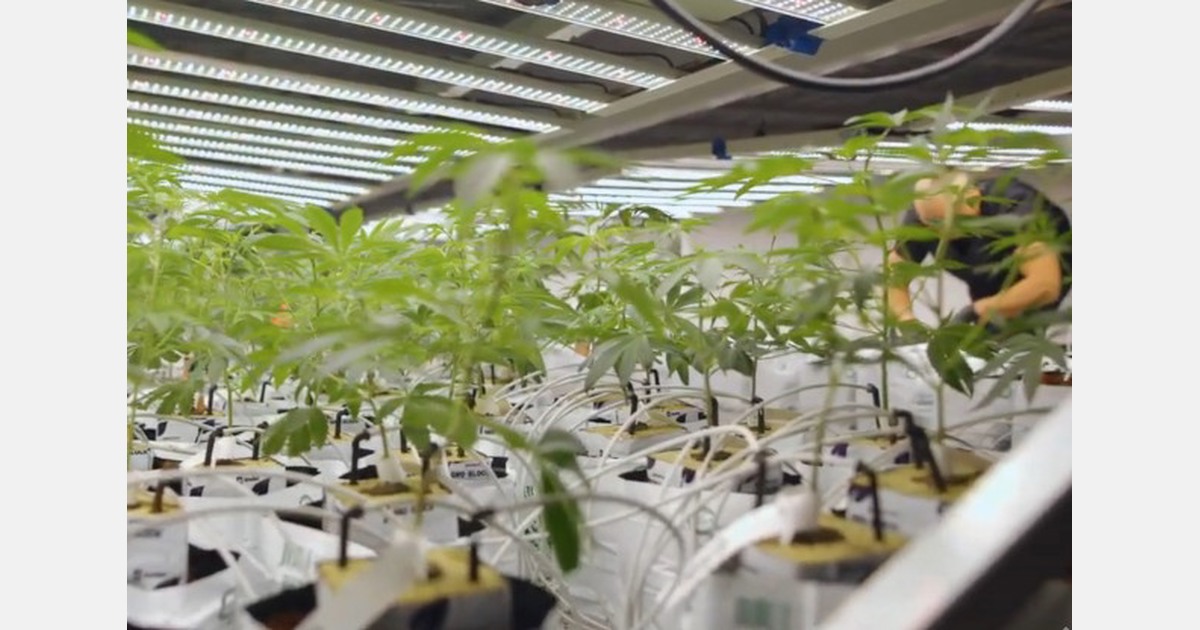
At 5,000 square feet, Flora Arbor is about as small as a licensed cannabis grower can legally get. That’s not the problem the company is trying to solve. “We’re a very small breed, which means we can control things very well.” he says David Myrowitz, director of cultivation. “It also means that we have to be successful in every round.” Three flower cells, collected in three weeks. There is no such thing as a bad lot to disappear into a larger average. Every shift counts, and the operation is built around that reality.
It starts in the pump room
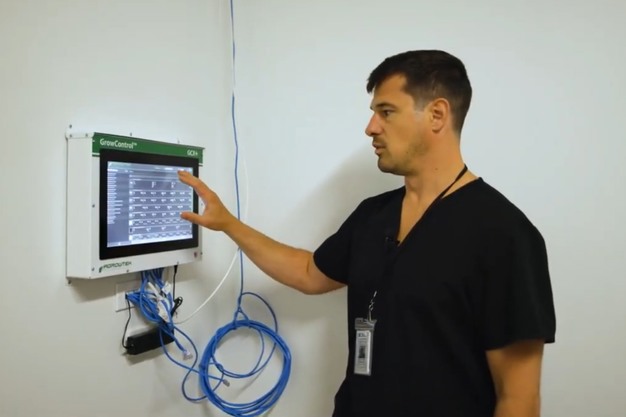
Reverse osmosis water is fed into holding tanks, nutrients are mixed by an Agrowtek fertigation machine, and the entire system runs from a GCX controller that monitors moisture sensors, dissolved solids, and soil temperature in every room. Canopy sensors feed directly into HVAC, which Flora Arbor runs on Cultiva units. “If you talk to any grower, any grower, they’ll tell you the number one thing for successful growing is having a good HVAC system,” says David. “There is somewhere that we don’t have expenses.”
 © Flora Arbor
Genetics and cells
Mother plants are removed every three to six months, so cuttings are always taken from young stock. The clones move from the humidity domes to a humidity-controlled room, then to the vegetables, where a crop-correction protocol runs several irrigation streams per day to encourage growth. Moisture sensors in the grow bags track each drying cycle, and daily watering patterns are revised based on the goals of the grow system.
The flower rooms have a double-level system, with taller plants at the bottom, shorter ones at the top, grouped to keep microclimates outside and an even distribution of light. The second mesh is lowered as the plants develop to give each bud site its own square and keep airflow moving through the canopy.
In a recent route, rooms from different phases of the cycle were working at the same time. Hawaiian Rain has been crossed with permanent marker, disk chips, cereal milk. David pointed to the development of crystals in the Hawaiian Rain cross, the citrus resin charge of Disco Fries, the height management challenge of pushing a cultivar as high as possible without burning them in the lights. “We try to have a nice spread of genetics, a nice representative of each flavor profile and effect, to make sure everyone can get something they like,” he says.
Crossing the finish line
Post-harvest is managed at home, by hand. The product is sorted on the cutting table A-Bd, B-Bud and cutting table, strictly separated, the grade on the label means something. The tiered structure also serves a second purpose. “We think it’s really important to make sure quality flowers are available to people of all means, not just people who can afford the premium,” says David. The three-week harvest cycle is Flora Arbor’s main argument for the consumer. Small batches, constant rotation, nothing stored.
“Every time you get a bag, it’s going to be fresh, freshly picked grass,” says David. “It’s not something that’s been sitting in some MSO’s vault for six months because they’ve collected 2,000 pounds and can’t sell it.” The bet is that in a market where no one has solved the consistency complaint, being small enough to catch all the cattle is more valuable than the economies of scale you allow to get there.
For more information:
Flora Arbor
1300 Abbott Dr, Elgin, IL 60123
847-504-8450
(email protected)
floraarbor.com

Elon Musk Greenlights Weed Content on X at Benzinga; Cannabis Coast to Coast News with Alaina Pinto

Is It REALLY Safe To Smoke w33d If You’re Pregnant?

EVIDENCE / CANNABIS | DAN DALTON [cannabis grow in former prison]

Marijuana Retail Report

The Cannabis Storm Will Hopefully Pass Over – New Cannabis Ventures

“UK medical cannabis is maturing”

DC Mayor Proposes To Let Medical Marijuana And Alcohol Companies Partner On THC Drinks

Anti-Cannabis Coalition Sues Trump Admin Over Medicare Hemp Coverage Plan

Romulan Marijuana Monday

CC2C News Special Report VA joe Parsons & Lonnie Hayes VA Exec. Director from M4MM

“Our system can manage equipment across 10,000+ m² using just a few wires”

Florida Workshop to Discuss What Constitutes a ‘Cartoon’ in Hemp Packaging

Mazar-i-Sharif Hash Wednesday

Re-release of the full show of Cannabis Coast to Coast news. Republican Texas DA Fires Up vs. laws;

From Finance to Wellness: Brad Zerman’s Impactful Pivot

Your Cannabis Business: Consistent Filings Are Critical

New Hampshire Governor Says Federal Marijuana Rescheduling Won’t Change Her Opposition To Legalization

DEA’s Cole Reverses His “priorities” ; Prohibitionists Dig In; Dead & Co Celebrates 60 years in SF

Weak Michigan Cannabis Sales Again in July – New Cannabis Ventures

Texas DA Fires Up for Change! Mass. Sheriff arrested on Extortion charges; GOP vs Industry in state
-
 Cannabis News7 months ago
“Our system can manage equipment across 10,000+ m² using just a few wires”
-
 Florida8 months ago
Florida Workshop to Discuss What Constitutes a ‘Cartoon’ in Hemp Packaging
-
 Video6 months ago
Mazar-i-Sharif Hash Wednesday
-
 Video8 months ago
Re-release of the full show of Cannabis Coast to Coast news. Republican Texas DA Fires Up vs. laws;
-
 Video8 months ago
From Finance to Wellness: Brad Zerman’s Impactful Pivot
-
 Best Practices8 months ago
Your Cannabis Business: Consistent Filings Are Critical
-
 Cannabis News8 months ago
New Hampshire Governor Says Federal Marijuana Rescheduling Won’t Change Her Opposition To Legalization
-
 Video7 months ago
DEA’s Cole Reverses His “priorities” ; Prohibitionists Dig In; Dead & Co Celebrates 60 years in SF