
Cannabis News
Social equity operator runs cannabis seed to sale in the LA neighborhood they grew up in

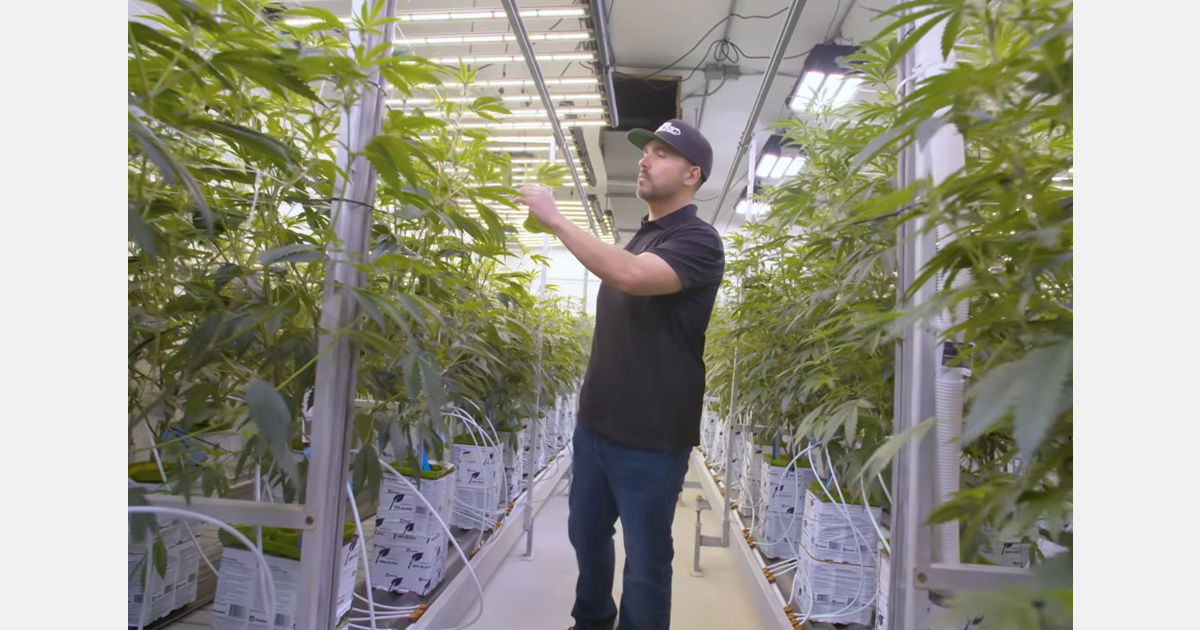
When most people picture cannabis, they picture the counter, the plump flower already sitting on the shelf. The amount of industry it puts into it is visible, in cultivation and manufacturing and distribution, and in the filling work that consumes most of the day. Orlando Padilla got into the traditional side of the plant long before it was legal, and he made time for it, and now runs NovaGrow Labs, a social equity operator that takes cannabis from seed to sale and sells it vertically in Los Angeles. In a video recently released by the LA Department of Cannabis Regulation. “Now you have this opportunity to become an authorized operator, but you have to put in the work.”
Vertical integration
First came the factory, then the business. “I was in love with the plant at a very young age, and coming from the traditional side of things, it was exciting to be able to do things legally and correctly,” says Orlando. “So creating a real cannabis-based business was almost a dream come true for me.” Vertical integration is the way that dream holds its shape, each license in hand, the flower leads all the way. “We are able to cultivate, grow our own flower, package it under our own brand or package it for others, distribute it and ultimately sell it at our doorstep,” says Orlando. “The cultivation never stops. As an indoor crop, we’re basically growing 24/7. You have to have reliable people.”
It’s that hour-by-hour schedule that keeps Reg Escobar growing. “There are schedules to meet, there are many critical points,” says Reg. The room comes down to its inputs, the systems that maintain the temperature against the nutrient program, the watering cycles, the light cycles. Genetics carries the heaviest burden of proof. “We do a lot of fen hunting for different breeds,” says Reg. “Finding the right product that we believe is usable and will represent our brand.” None of them run on a person. “I couldn’t do it by myself, that’s why I need all these, we’ll call them lieutenants, running the business,” says Reg. “We rely on our employees because they have the final say. They are the ones in charge of the product, and communicating with them helps us ensure that what we get from distribution and cultivation is what we expect every time.”
 © City of Los Angeles Department of Cannabis RegulationOrlando Padilla
That same trust carries over to the counter, where it becomes product knowledge. “Many of our employees are very knowledgeable about all the products in the store,” says Jewels, an employee of The Chronic. “So we make sure we pick the product that’s exactly what you need.”
Cultivation was NovaGrow’s first license, and every operator must clear the way to the filling machinery. “Metrc’s integration was very difficult to successfully cultivate and work through the industry on any type of license,” says Reg. “You have to understand our compliance systems, the tracking and tracing system, the SOPs that are issued by DCC, maybe DCR, any of our local regulators, with the proper training to overcome that.” SOPs have come together over time, written specifically for each license, the thing that moves the operation on its day. The day begins before the doors open. “The retail store opens at 6:00, so we have the staff coming in at 5:45,” says Orlando.
Part of the community
For people who work on the floor, shifts involve more than just your classic work schedule. “It’s a blessing to be a part of it, to see where we started and where we are and talk about our future,” says Moses, an attorney with The Chronic. The brand NovaGrow is launching comes with a name that carries its history. “If you know the history of running the brand, The Chronic, there’s a lot of responsibility with that brand name,” says Orlando. “I feel very blessed to have the opportunity to work with that name. So when I deliver the product I have to make sure it’s of the highest quality and people respect it. It’s a respectable name in this industry.”
The base of the whole thing is the block it sits on. “Our culture is about community. We’re part of the community and we’re happy to be part of the community,” says Moises. “I grew up in this neighborhood, so it’s very special to me. Everyone has their local coffee shop, their local donut shop. We’re the local cannabis shop.”
The weight of regulation is the part that Orlando says new operators misread. “This is the most regulated industry in the world, and there are so many levels, so many hurdles,” says Orlando. Fulfillment is the majority of the work, not part of it. “Cannabis fills almost 75%,” says Reg. “A lot of new operators and owners think it’s something they’ll be able to handle themselves, but a successful operation definitely needs a compliance manager, a familiar person who can provide training and guaranteed SOPs to make sure we’re staying within regulation, compliance and the 10 different tax levels that are going on.”
Los Angeles puts its own layer on top. “Now with the city of L.A., construction and safety and the fire department, it’s very difficult to operate here,” Orlando says. The scrutiny is heavier on someone who came from the illegal market. “I understand this came from an illegal underground place, but now that it’s legal, it’s a challenge because we’re constantly being watched,” Orlando says. “Getting a license is hard enough, and once we get these licenses, we need that extra support to be able to operate.” The tools exist, in his reading, and taking it is the gap. “I think the tools are there. DCR, you’re doing a good job of making the platform available, but I still think people need that push to get on there and actually use what you have available,” says Orlando.
Too many operators leave those resources on the table, as Reg sees it. “I feel like there are a lot of operators out there that aren’t making the most of their resources,” says Reg. “That’s what we’ve really tried to do here at Nova, especially starting in Orlando, being part of the social equity program.”
For Orlando, his stake is personal, and they cross everything that existed before the license. “I’m very passionate about this. I made time for this thing,” Orlando says. “For me, this is vindication and validation. Coming from the streets, let’s keep it real, seeing the evolution of cannabis and now being a business owner in the city of LA, speaking with Dr. B is a special day for me.” What Reg lets other operators do is stop trying to do it alone. “Get involved with your cannabis community, use whatever resources you have,” says Reg. “It’s the only way we can all stay together as a community and thrive and succeed.”
Source: Los Angeles Department of Cannabis Regulation



Fluent has entered into a definitive agreement to sell Etain, LLC, the Company’s New York-based operating entity. The purchase agreement was signed on July 22, 2026. The transaction provides for the sale of Etain’s Registered Entity license, certain of the Company’s New York operating assets and related New York leases for cash, subject to customary purchase price adjustments.
The Company believes the Transaction advances its strategic objectives and expects the Transaction to comply with applicable regulatory requirements in connection with the Company’s previously announced plan of arrangement for Vireo Growth Inc. (the “Deal”) while providing for an orderly transition of the New York operations to an experienced operator committed to serving patients and consumers.
Completion of the free transaction is subject to closing conditions, including, among other customary conditions, approval of the change in ownership by the New York State Cannabis Control Board and the completion of all conditions to the completion of the Agreement.
For more information:
FLUENT Corp
getfluent.com/
Cannabis News
Marijuana Has ‘Horrific Health Risks’ And No Medical Value, Former Trump Attorney General Claims

A former US attorney general who served in President Donald Trump’s first term says marijuana poses “tremendous health risks,” has no medical value and should not be rescheduled under federal law.
“Marijuana redistricting would create a false impression that it is safe, reduce penalties for illegally selling the drug, and provide a large tax windfall to those who legally supply it,” William Barr wrote in a Wednesday op-ed for The Washington Post, Kevin Sabet, CEO of the prohibitionist organization Smart Approaches to Marijuana. “That would be a disaster.”
The opinion comes as the Trump administration moves forward with cannabis reregulation.
According to an order issued in April by US Attorney General Todd Blanche, Marijuana products regulated by a state medical cannabis license were immediately changed from Schedule I As did marijuana products approved by the Food and Drug Administration (FDA) under Schedule III of the Controlled Substances Act (CSA).
an administrator The hearing is looking at the broader rescheduling of marijuanawith The Drug Enforcement Administration (DEA) has been tasked with advocating for cannabis reform highlighting the testimony about the medical benefits of marijuana and its relative safety compared to other substances such as alcohol and opioids. It included appearances by a Food and Drug Administration (FDA) scientist and a doctor from New Hampshire. Medical marijuana provides relief to pain patients and can serve as an alternative to opioids.
But Sabet and Barr, who served as Trump’s attorney general from 2019-2020, argued that “the evidence presented at the hearing did not support the rescheduling of marijuana” and instead “confirmed what decades of data have shown: raw marijuana has no scientifically established medical value and is highly susceptible to abuse.”
After the parties to the hearing have filed termination rights, the DEA administrative law judge overseeing the proceedings will make a recommendation regarding rescheduling, and the agency administrator will make a final decision.
DEA Administrator Terrance Cole only organizations and individuals opposed to marijuana reform have been invited to the hearing as a designated participant – telling supporters that they do not meet the definition of “interested person” to participate because they have not been “affected or prejudiced by any rule or proposed rule that may be issued.”
—
It’s Marijuana Time tracking hundreds of cannabis, psychedelic and drug policy bills in state legislatures and Congress this year. Patreon supporters by pledging at least $25/month, you’ll get access to our interactive maps, charts, and audio calendars so you never miss a development.
Learn more about our marijuana bill tracking and become a Patreon supporter to gain access
—
The former attorney general’s new opinion says “the stakes couldn’t be higher”, arguing that “marijuana today is more dangerous than ever” and that it is “addictive”, throwing out a list of alleged harm to mental and physical health.
“These unhealthy effects are a predictable result of a powerful and addictive drug being normalized, commercialized and marketed as a medicine,” Barr and Sabet say. “It would be one thing if marijuana had medical value. But there is no credible evidence that marijuana is an effective treatment for any medical condition, despite the millions of dollars spent trying to prove otherwise.”
The Department of Health and Human Services (HHS) published a 252 analysis in 2023 that concluded that marijuana had accepted medical value and should be rescheduled.
The new opposition piece also says that “rescheduling would unlock enormous revenue for the corporate marijuana industry by bringing it into a category that has not been covered by a longstanding reduction in federal drug tax deductions,” referring to a law known as 280E, which repeals Sections I and II.
“This, in turn, would allow the industry to spend even more on advertising and marketing to young people,” Barr and Sabet. he wroteArguing that “those who would lose this dragon in society are laying the foundations for another Big Tobacco”.
The Sabet organization, SAM, is one of several parties Challenging the Marijuana Redistricting Process which have been upheld by a federal Court of Appeals. those separate parts State attorneys general have filed lawsuits against cannabis reform, Opponents of marijuana legalization and a a cannabis-based biopharmaceutical corporation.
SAM’s lawsuit was signed by attorneys at Torridon Law PLLC, where Barr is a partner.
The team announced in January that it was Hiring Barr’s firm to fight cannabis rescheduling After Trump signed an executive order directing officials to quickly complete the process.
During the first Trump administration, Barr was accused by a Justice Department official Directing improper anti-company investigations into multiple cannabis company mergers– Accounting for almost a third of the division’s cases in 2019.
Several Democratic members of Congress introduced a resolution calling for an investigation into Barr’s possible impeachment, saying “abused the power of his office” to improperly investigate marijuana businesses while engaging in other allegedly illegal conduct.
Marijuana Moment is made possible with the help of readers. If you rely on our pro-cannabis journalism to stay informed, consider a monthly Patreon pledge.


When growers pull out two LED fixtures side by side, the first number they usually discuss is percent red. This is an easy specification to fix. They are efficient at producing red photons and incredibly efficient at photosynthesis, and cannabis eats away at the flower. So more red must be better, right?
Not so simple. Red is an input to a spectrum, and the spectrum is an input to a room. There is no single spectrum that wins everywhere. An indoor room pushes hard, a greenhouse that soaks up sunlight, a temperamental cultivar, and aggressive yields call for something different. Knowing what each light strip actually does allows you to choose a tool that fits your grow instead of one that just has a big number on the sales page.
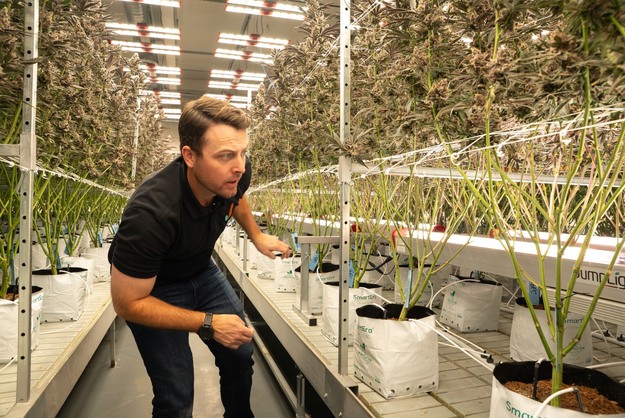 © JumpLights
Blue: structure
Blue (approximately 400-500 nm) gives shape to the plant. It maintains dense growth, strong stems, tight internodes and allows it to develop as desired. It also encourages stomatal opening, so the plant manages water and gas exchange better. Get blue and you’ve built a plant that can carry heavy flowers with no problem.
Green: access
Green was eliminated as the wavelength is “reflected” by plants. It turns out that it does a real job. Blue and red are absorbed above; the green goes deep into the fat and reaches the leaves that are never touched by the above photons. In a compact room, it’s the difference between plants photosynthesising from the top down and those that work only from the top. Green won’t replace your red or blue, but it does carry usable light where they can’t reach.
Red: engine
Red is the horse of the flower. It absorbs as efficiently as anything in the spectrum, and is responsible for most of the biomass you’re after. Redder generally means faster flower development, more weight and better efficiency per watt.
But red has a ceiling, and it’s tied to what you run. Push PPFD upwards with a heavy red spectrum and some cultivars begin to whiten at the top: the flower should be dense with pale, washed tips. Genetics, intensity, barrel temperature and your general environment all feed into it. If you’re using aggressive light levels, a lower red spectrum will buy you room before that becomes a problem, leaving you almost no photosynthetic punch to get it.
Far Red: More than Emerson
Far-red (700-750 nm) appears in more devices every year. It contributes little to photosynthesis on its own, but it moves plant morphology and works with red through the Emerson Enhancement Effect. Used properly, it helps to deepen the light, encourage uniformity of the canopy and encourage the response of the bloom. The key word is small. A touch of far red rounds out a spectrum; he’s not there to make a show.
Matching the red percentage with the room
Cannabis addresses the entire spectrum, not a line on a spec sheet. Reds cause flowers, but blues, greens and crimsons give the plant something it needs. Where you land in red refers to how you grow.
A lower red spectrum (30-40%) captures more blue and green, gives you better morphology, reduces the risk of photobleaching, and holds up when you’re running extreme PPFD. Moderate spectrum (40-55%) is the sweet spot in commercial greenhouses: strong photosynthetic efficiency, strong flowering, balanced growth. A high-red spectrum (70%+) makes the most sense in a greenhouse, where the sun is already giving you lots of blue and green and your supplemental light can cast effective red to fill the gap.
Where does the ETS MAX series fit in?
This is the thinking behind the JumpLights ETS MAX series. Instead of forcing a spectrum into each room, it rarely comes up because a greenhouse and a high PPFD indoor flower room are not the same problem.
- ETS MAX 4C41% red: for indoor rooms operating at very high intensity, where photobleaching is a real risk. The wider, red bottom balance allows you to push the tops without overcooking them
- ETS MAX 4A48% red: balanced internal spectrum that maintains high output while controlling bleaching.
- ETS MAX 5B57% Red: A high-performance indoor option. Moderate red, marked with efficiency and flower at the same time, up to 3,450 μmol/s, with efficiency that holds the spectrum.
- ETS MAX 7A76% red: built for the greenhouse. The sun already supplies blue and green, so this leans heavily on the complementary red, up to 3,900 μmol/s in the infrastructure most greenhouses already have in place.
Bottom line
Choosing an activity is not a competition for the highest red number. The winning spectrum is the one that matches your environment, your intensity, your genetics, and what you’re trying to produce. Combine spectrum, intensity, environmental control, light distribution and genetics, and you’ve got a lighting strategy. Keep a spec isolated and all you’ve got is a bright room.
The ETS MAX line was created around this idea: choose the spectrum of the room you actually have, indoor or greenhouse, and let the device work with your grow rather than against it.
For more information:
JumpLights
www.jumplights.com

Is There Investment Capital Left In The Cannabis Industry?

Exposing Modern Myths About Cannabis with Madicyn Marinaro

Dr. Peter Grinspoon on Medicinal Monday’s Cannabis Chat Throwback!!

Hemp Headlines & High Hopes: This Week in Cannabis

PCMTV Takes On CWCB!!

Cannabis in South Africa with George Joubert

Trulieve shuts down Mass dispensaries; Too much weed In NY & NBA Won’t test players for cannabis

Terpnami, Trends, and Truth: David Downs on Cannabis

Green Rush Live 6 9 23

The Future of Medical Cannabis with Steph Sherer

“Our system can manage equipment across 10,000+ m² using just a few wires”

Florida Workshop to Discuss What Constitutes a ‘Cartoon’ in Hemp Packaging

Mazar-i-Sharif Hash Wednesday

Afghan Black Hash Wednesday

From Finance to Wellness: Brad Zerman’s Impactful Pivot

Weak Michigan Cannabis Sales Again in July – New Cannabis Ventures

Re-release of the full show of Cannabis Coast to Coast news. Republican Texas DA Fires Up vs. laws;

Texas DA Fires Up for Change! Mass. Sheriff arrested on Extortion charges; GOP vs Industry in state

DEA’s Cole Reverses His “priorities” ; Prohibitionists Dig In; Dead & Co Celebrates 60 years in SF

Texas DA Partakes on Tik Tok to prove a point; Boston Sheriff arrested for Extortion of $ w/ Ascend
-
 Cannabis News1 year ago
“Our system can manage equipment across 10,000+ m² using just a few wires”
-
 Florida1 year ago
Florida Workshop to Discuss What Constitutes a ‘Cartoon’ in Hemp Packaging
-
 Video1 year ago
Mazar-i-Sharif Hash Wednesday
-
 Video1 year ago
Afghan Black Hash Wednesday
-
 Video1 year ago
From Finance to Wellness: Brad Zerman’s Impactful Pivot
-
 aawh1 year ago
Weak Michigan Cannabis Sales Again in July – New Cannabis Ventures
-
 Video1 year ago
Re-release of the full show of Cannabis Coast to Coast news. Republican Texas DA Fires Up vs. laws;
-
 Video1 year ago
Texas DA Fires Up for Change! Mass. Sheriff arrested on Extortion charges; GOP vs Industry in state