
Cannabis News
Two federal courts hold cannabis capital raisers liable for securities fraud



Raising capital in the cannabis industry comes with real legal risk, and two recent federal rulings drive home that point.
In Michigan, five investors known as the “5 Guys” sued after they wired $1.5 million for a stake in a Muskegon dispensary joint venture, only to realize they had diverted the money to cover the parent company’s payroll and operating costs instead of funding the business as promised. The defendants tried to defend themselves using the “unlawful contract” defense, arguing that because marijuana is federally illegal, courts should not enforce agreements related to it. Thus Chief Justice Y. Jarbou drew a distinction: claims that would seek to validate illegal enterprise, such as breach of fiduciary duty, were dismissed, but fraudulent claims survived, as ordering restitution for fraud is not the same as enforcing an illegal agreement. The Court has also declined to allow the reliance rebuttal standard to automatically eliminate allegations of fraud.
In California, the SEC’s case against American Patriot Brands — a former food truck company that got into cannabis and raised more than $50 million from investors — reached the penalty phase. Judge Anne Hwang ordered the company nearly $24 million, including more than $2.6 million for high salary and personal expenses to its CEO, plus permanent injunctions and two executive officers and directors.
Together, the rulings send a clear message: the legal gray area of cannabis does not extend to fraud. Operators are advised to treat each raise as a securities offering, spend investors’ money as directed, fully disclose related party agreements and bring securities advice rather than surface issues.











Cannabis News
Federal Judge Questions Link Between Marijuana And Guns, Citing ‘Widespread State Legalization’
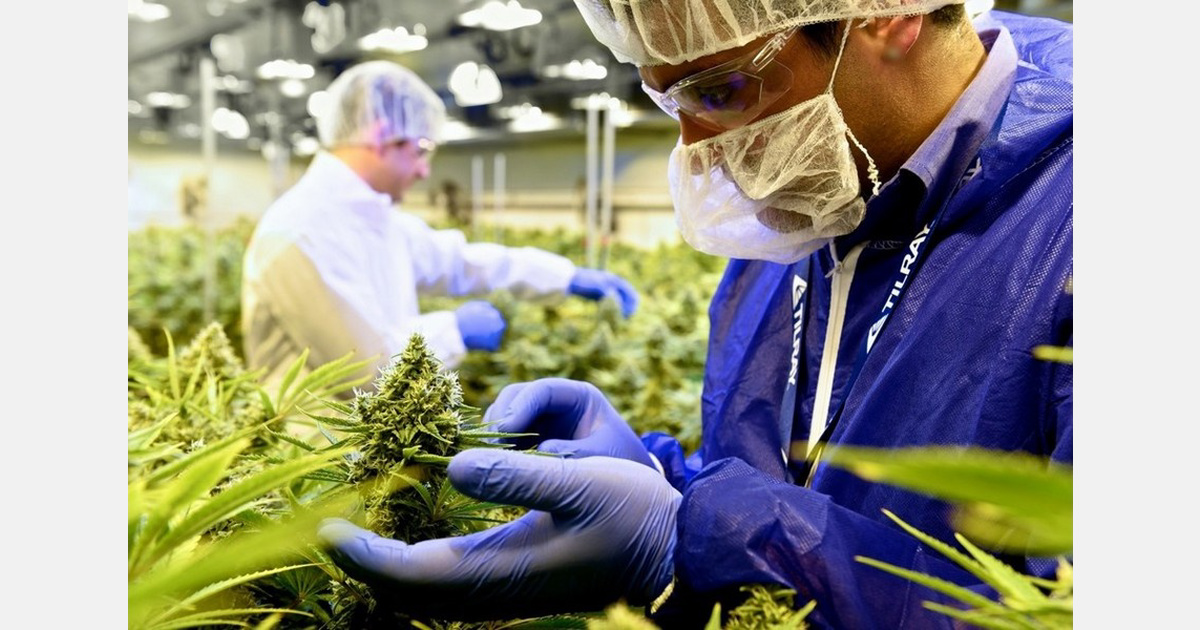
Tilray Medical has announced the launch of its first medical cannabis product in Panama, part of the company’s continued global expansion and commitment to improving patient access to pharmaceutical grade cannabinoids worldwide.
Following the successful shipment of Tilray Oral Solution CBD100 from Tilray Medical’s EU-GMP certified production facilities in Portugal through a joint venture with Solana Life Group S. de RL, the Product is to be distributed through Farmacias Arrocha, one of the leading pharmaceutical chains in Panama, where patients will be able to access Tilray Oral Solution CBD with medical prescription100. This is expected to provide patients and healthcare professionals with access to regulated medical cannabis of pharmaceutical quality through established healthcare channels.
Rajnish Ohri, International President, Tilray Brands, said: “At Tilray Medical, we believe that every patient deserves access to safe, consistent, pharmaceutical-grade cannabis products. The launch in Panama reflects our broader vision to expand access to cannabinoid-based medicines around the world. We want pharmacists and patients to help shape the future of responsible access, advance medical education and provide high-quality treatment options that improve lives.”
The launch supports the Panamanian medical cannabis framework established by Law 242 of 2021 and follows important regulatory advances made by the Ministry of Health, including No. 0406 of May 12, 2026. The decision, which established the main conditions for the admission of patients. The Ministry also recently introduced the System for the Identification of Medical Cannabis Users and Authorized Caregivers (SIUCMAA), creating a structured way to authorize medical practitioners and register patients.
Manufactured in Portugal under strict European Union Good Manufacturing Practice (EU-GMP) standards, Tilray Oral Solution CBD100 is intended for use in patients with qualified medical conditions permitted under Panamanian law, where permitted. The products reflect Tilray Medical’s longstanding commitment to pharmaceutical quality, product consistency, patient safety and regulatory compliance.
Tilray Medical’s advanced cultivation and manufacturing facilities in Portugal serve as a strategic global export hub, supplying EU-GMP certified medical cannabis products to regulated markets worldwide. The platform enables Tilray Medical to effectively support growing international demand while maintaining the highest pharmaceutical manufacturing standards across its global operations.
For more information:
Tilray
www.tilray.com
Cannabis News
Medical Marijuana Is ‘Effective’ In Providing Relief To Patients With Restless Legs Syndrome, Study Shows

Legalization is the goal, Is Sked. 3 the way to get there? Is it Worth the Wait? Industry Reactions!

MEMOIR OF AN AMERICAN HOSTAGE IN IRAN | AMIR HEKMATI

Marijuana Retail Report

Two federal courts hold cannabis capital raisers liable for securities fraud

Ontario Cracks Down On Illegal Cannabis Landlords

Federal Judge Questions Link Between Marijuana And Guns, Citing ‘Widespread State Legalization’

San Francisco Considers Letting Cannabis Consumption Lounges Host Music, Serve Food

Legalization is the goal, Is Sked. 3 the way to get there? The B Block of Weed Talk News 5/14/24

FREE CANNABIS JOB TRAINING | ADRIANA HERRERA

Marijuana Retail Report

“Our system can manage equipment across 10,000+ m² using just a few wires”

Florida Workshop to Discuss What Constitutes a ‘Cartoon’ in Hemp Packaging

Mazar-i-Sharif Hash Wednesday

Afghan Black Hash Wednesday

Weak Michigan Cannabis Sales Again in July – New Cannabis Ventures

From Finance to Wellness: Brad Zerman’s Impactful Pivot

Re-release of the full show of Cannabis Coast to Coast news. Republican Texas DA Fires Up vs. laws;

DEA’s Cole Reverses His “priorities” ; Prohibitionists Dig In; Dead & Co Celebrates 60 years in SF

Curaleaf Q2 Revenue Falls 8% – New Cannabis Ventures

Your Cannabis Business: Consistent Filings Are Critical
-
 Cannabis News11 months ago
“Our system can manage equipment across 10,000+ m² using just a few wires”
-
 Florida11 months ago
Florida Workshop to Discuss What Constitutes a ‘Cartoon’ in Hemp Packaging
-
 Video9 months ago
Mazar-i-Sharif Hash Wednesday
-
 Video9 months ago
Afghan Black Hash Wednesday
-
 aawh11 months ago
Weak Michigan Cannabis Sales Again in July – New Cannabis Ventures
-
 Video11 months ago
From Finance to Wellness: Brad Zerman’s Impactful Pivot
-
 Video11 months ago
Re-release of the full show of Cannabis Coast to Coast news. Republican Texas DA Fires Up vs. laws;
-
 Video11 months ago
DEA’s Cole Reverses His “priorities” ; Prohibitionists Dig In; Dead & Co Celebrates 60 years in SF