Connect with us

Cannabis Industry News

Vermont House Committee Removes Language to Cut THC Caps from Senate-Approved Cannabis Regulations Bill 

Published

on

Vermont House Committee Removes Language to Cut THC Caps from Senate-Approved Cannabis Regulations Bill 

A Vermont House committee removed provisions from a bill to update the state’s cannabis regulations that would have raised THC limits and cut the excise tax on cannabis products. Compass Vermont reports. The House Government Operations Committee removed language from the bill that would have removed the 30% THC cap on flower entirely, raised the THC cap on concentrates from 60% to 70%, and lowered the excise tax from 14% to 10%.

The committee held provisions to double the per-package THC limit for edibles from 100 milligrams to 200 milligrams; increase the personal possession and retail transaction limit from one ounce to two ounces and the hash possession limit from 5 grams to 10 grams; cut outdoor grower license fees by roughly half; establish a two-year pilot program for cannabis event permits; the conversion of industrial worker licenses from annual to biennial; cancellation of the built-in license type; and authorizing the governor to enter into interstate cannabis commercial compacts if federal law changes.

Eliminating the THC cap was included in the bill passed by the Senate in March.

The legislation goes before the Appropriations Committee of the House of Representatives. If approved, the proposal would move to the full House, but would have to be re-approved by the Senate due to House amendments.

TG joined Ganjapreneur in 2014 as a news writer and began hosting the Ganjapreneur podcast in 2016. He is based in upstate New York, where he also teaches media at a local university.

Continue Reading

adult use

Minnesota Lab Closes Cannabis Testing Program Following License Suspension

Published

on

By

Minnesota Lab Closes Cannabis Testing Program Following License Suspension

Minnesota testing lab Legend Technical Services announced last week that it is shutting down its cannabis testing program after state cannabis regulators freeze the license last month, MPR News reports.

Legend was first licensed to test medical cannabis products in 2014, but in 2025, the state temporarily approved the lab to also test adult products to bolster the new market. Officials notified the lab in May that the grace period for its testing methodologies and safety practices had expired.

“We no longer see the Minnesota Cannabis Program fitting into our long-term corporate plans for laboratory and consulting services at LEGEND. Under the current regulatory framework, we do not foresee an ability to continue to meet our customers’ expectations in an economically sustainable manner.” — Written statement from the company, via MPR News

Legend’s cannabis and hemp program manager, Taylor Schertler, said in the report that the company’s decision to close the program came as a surprise, and that he was one of three employees laid off in the process.

Josh Collins, director of communications for Minnesota’s Office of Cannabis Management (OCM), said the agency was “disappointed” to hear the lab was closing its long-standing cannabis department, but said it was important that “all test facility licensees (are) held to the same standards.”

Legend Technical Services also performs testing for environmental purposes and medical devices.

Based in Portland, Oregon, Graham is the editor-in-chief of Ganjapreneur. He has been writing about the legalization landscape since 2012 and has contributed to Ganjapreneur since our official launch in…

Continue Reading

Cannabis Industry News

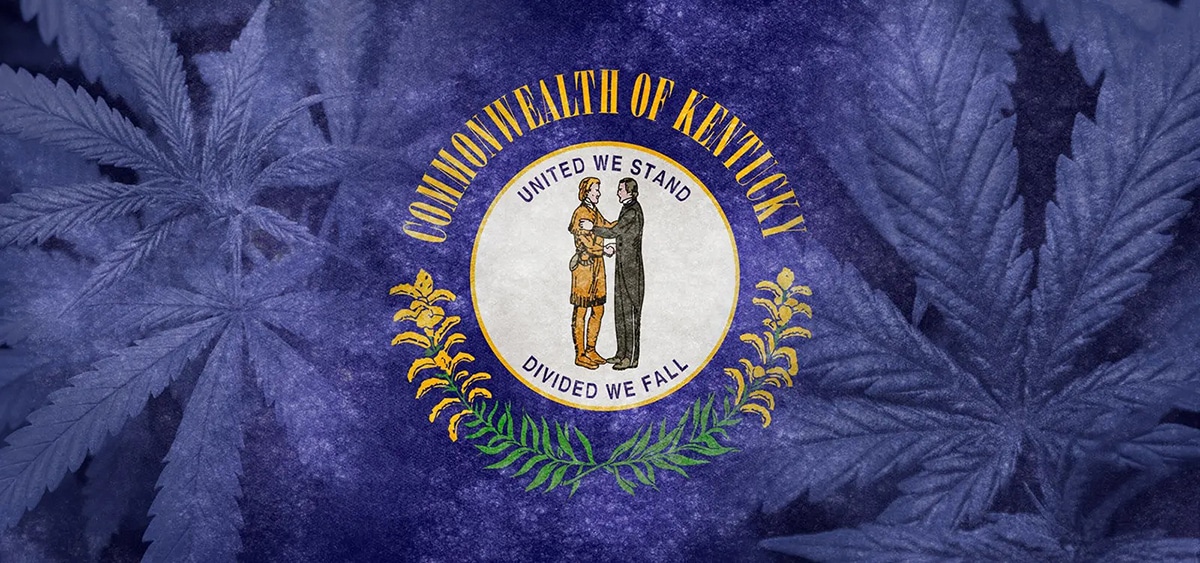
Kentucky Gov. Rescinds Order Allowing Out-of-State Access for Cannabis Patients

Published

on

By

Kentucky Gov. Rescinds Order Allowing Out-of-State Access for Cannabis Patients

Kentucky Governor Andy Beshear (D) recently rescinded a 2022 executive order that allowed medical cannabis patients to use and possess cannabis products outside the state, WLWT5 reports.

The governor initially issued the order to streamline qualifying patient access to medical cannabis products while the state worked to implement its program. Beshear said this week that with Kentucky’s medical cannabis program now fully operational, protections for patients who possess out-of-state products will end on July 1.

Meanwhile, the governor signed another executive order this month, adding 15 new qualifying medical conditions in the program. That order caused opposite reactions by several top Republicans, who called on officials to prosecute any medical cannabis licensees who comply with the governor’s latest order.

Also, an Office of Inspector General investigation into the state’s medical cannabis licensing process determined Earlier this year, Kentucky’s Office of Medical Cannabis (OMC) licensing methods were “transparent and fair” to all applicants.

Based in Portland, Oregon, Graham is the editor-in-chief of Ganjapreneur. He has been writing about the legalization landscape since 2012 and has contributed to Ganjapreneur since our official launch in…

Continue Reading

adult use

New York Court Overturns Injunction That Stopped Hemp Shop Raids 

Published

on

By

New York Court Overturns Injunction That Stopped Hemp Shop Raids 

A New York appeals court last week struck down a preliminary injunction that banned raids on unlicensed cannabis stores and licensed hemp sellers across the state. Times Union reports. The Third Appellate Division rejected the stores’ claims that the warrantless searches were unconstitutional.

The lawsuit, filed by several hemp businesses in state Supreme Court in 2024, alleges that the Office of Cannabis Management and the Cannabis Control Board (CCB) violated the rights of store owners by protecting against unreasonable search and seizure. In January 2025, a judge agreed and granted a preliminary injunction to stop the raids.

The appeals court found that Superior Court Judge Thomas Marcelle erred in his decision to grant the order, that state regulators had properly defined how the state would conduct inspections and that regulations required vendors to consent to the inspections. The appeals court said those regulations included certain restrictions — such as conducting searches only during business hours — and that penalties were only administrative in nature, not criminal.

“The Cannabis Act and its implementing regulations, when considered together, adequately define how inspections are conducted. An otherwise lawful administrative search is not held unconstitutional simply because the police participate in the search or because the search reveals evidence of criminal activity.” — Decision of the Third Appellate Division via Times Union

The ruling also noted that the retailers did not exhaust all possible administrative appeals processes before filing suit.

Hemp shop raids began in 2023 after the CCB introduced new restrictions on the hemp products that could be sold in the state, targeting many products that were already available.

TG joined Ganjapreneur in 2014 as a news writer and began hosting the Ganjapreneur podcast in 2016. He is based in upstate New York, where he also teaches media at a local university.

Continue Reading
Advertisement

Trending

Copyright © 2021 The Art of MaryJane Media