
Cannabis News
Idaho Medical Marijuana Campaign Launches Signature Drive For 2026 Legalization Ballot Initiative


An Idaho campaign has introduced a new certified initiative to put medical marijuana legalization on the state’s 2026 ballot.
The Natural Medicine Alliance of Idaho (NMAI) on Wednesday announced the Idaho Medical Cannabis Act, which will give patients with qualifying conditions access to marijuana from a limited number of dispensaries and provide a regulatory framework for the market.
After Idaho Attorney General Raúl Labrador (R) told the secretary of state that the initiative’s short and long ballot titles provided a “truthful and unbiased” view of reform, the campaign is now allowed to circulate petitions.
“It’s about giving families and individuals options when nothing else has worked,” said Amanda Watson, NMAI communications manager, in a press release. “This initiative was created with Idaho values in mind. It would require strong oversight, measures to prevent recreational use, and most importantly, it would provide relief to thousands of Idahoans with serious illnesses. It is a compassionate and conservative approach to health care.”
Here are the main provisions Idaho Medical Cannabis Law:
- Healthcare practitioners may recommend medical cannabis to patients with conditions including cancer, anxiety and acute pain.
- Medical marijuana patients or designated caregivers can purchase up to 113 grams of cannabis for smoking or 20 grams of THC extract for vaporization per month.
- The state would issue three vertically-integrated cannabis business licenses, and then potentially six licenses in total.
- Marijuana would be reclassified under state law, Title II.
- State and local law enforcement would be prohibited from assisting in drug enforcement activities related to the state’s illegal cannabis program.
- There would be anti-discrimination protections for those who use or sell marijuana in compliance with state laws, preventing adverse actions by employers, landlords and educational institutions.
- There does not seem to be any equity-based reform, nor will the initiative be given the opportunity to grow at home.
To get on the ballot, the campaign must collect 70,725 valid signatures, including 6 percent of registered voters in 18 of Idaho’s 35 legislative districts. NMAI is recruiting paid applicants to carry out the plan.
In response to the new medical cannabis initiative, a separate campaign launched late last year, Kind Idaho, told supporters on Wednesday that it would cancel its signature drive. ballot initiative to legalize the personal possession and cultivation of marijuana the adults
“In the spirit of working together to ensure we have a pro-cannabis measure on the ballot in 2026, we will not be releasing the #DecriminalizeCannabisNow petition until we have collected 70,000 signatures,” Kind Idaho said via email. “We will support their signature collectors until then.”
Pleasant Idaho previously put medical marijuana ballot measures before voters Both in the 2022 and 2024 elections, but the efforts were unsuccessful.
Meanwhile, next year voters will see a different type of proposal on the ballot: the constitutional amendment approved by the Legislature to make it so. only members of the legislature can legalize marijuana or other controlled substances.
—
It’s Marijuana Time tracking hundreds of cannabis, psychedelic and drug policy bills in state legislatures and Congress this year. Patreon supporters by pledging at least $25 a month, you’ll get access to our interactive maps, charts, and audio calendars so you never miss a development.
Learn more about our marijuana bill tracking and become a Patreon supporter to gain access
—
Lawmakers held a separate hearing to discuss it in March bill to legalize medical cannabisbut in the following months there has been no significant action on the matter.
Separately, it would be a bill from Republican Bruce Skaug (R) earlier this year set a mandatory minimum fine of $420 for possession of cannabisremoving judges’ discretion to apply lower sentences. Skaug said the bill, which ultimately stalled in committee, would send a message that Idaho is tough on marijuana.
Members of the House of Representatives were also admitted bill to ban marijuana adsalthough the Senate later defeated the measure.
Photo by Chris Wallis // Side Pocket Images.
Marijuana Moment is made possible with the help of readers. If you rely on our pro-cannabis journalism to stay informed, consider a monthly Patreon pledge.











Cannabis News
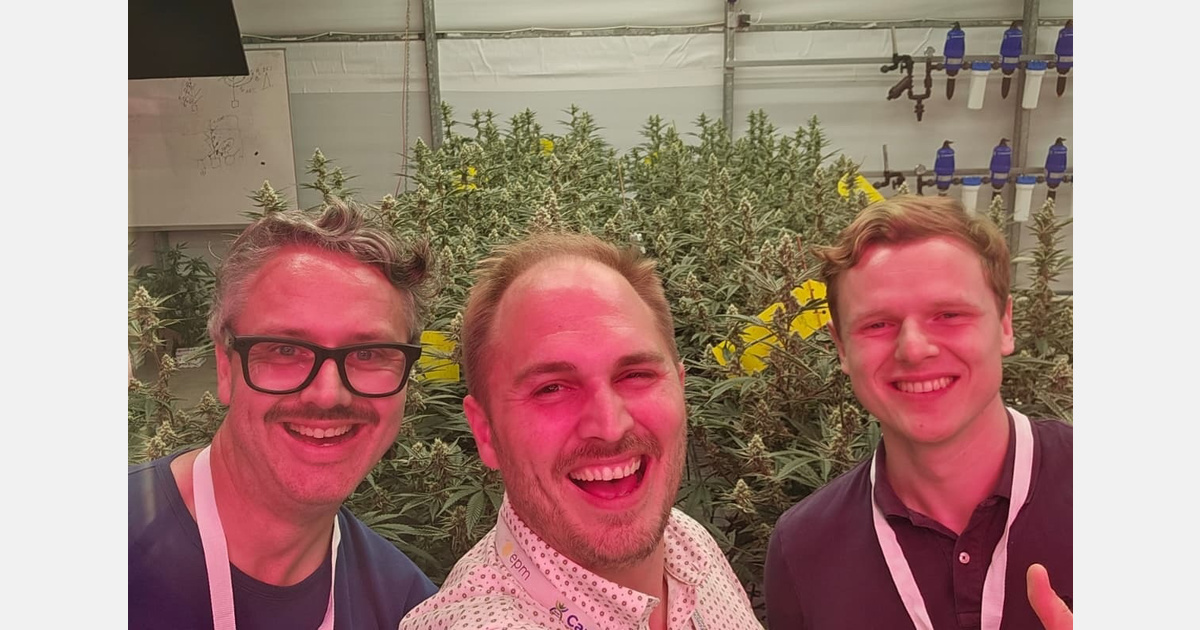
More than 100 growers and tech developers gathered at Innexo’s cannabis research facility
Jorge Cervantes closed Innexo’s Acceleration Day with a review of genetics, a line of attendees waiting to sign copies of the Grower’s Bible, and a single sentence that puts everyone in the greenhouse within a bloodline. “We are descendants of this country, this room,” says Jorge. The forefathers he named were Nevil Schoenmakers and David Watson, the two breeders who took cannabis genetics beyond prohibition and built the foundation of every plant on the test bench. None of the seeds being scanned for spaceflight, none of the veggie-free trials, none of the triploids would exist without the work started by those two men, and the June 8 event is the clearest update of what got them off the ground.
 © Innexo
 © Innexo
The last Acceleration Day brought together more than 100 people and 60 companies in the greenhouse, coming from all over Europe and from Israel, Morocco, Turkey, Tasmania and Uruguay, the event started a few years ago with 20 people, in a free-for-all format.
Cannabis all day
Dominique van Gruisen, CEO and founder of Innexo, had breakfast and coffee before opening the program for the day. “We’re here to be that sandbox where LPs and tech developers can come together around the factory. That was my mission a couple of years ago,” says Dominique. “We started with 20 people at a free-for-all event, and now we’re at 100 people with an exclusive event. It’s a big leap.” The event spanned 12 hours for the first time, from morning to evening, which eased the pace rather than tightening it.
 © Innexo
After the presentation, Xavier Gaya of Avitas Global took to the stage to explain why Avitas is working with Innexo and why it’s crucial that someone other than the host implements with LPs, then recited a poem to set the tone. They all dressed in white and went to the greenhouse to what Dominique calls the boutique network with the plant. “I don’t think there was a single person who didn’t talk to an LP or a tech developer,” says Dominique. “You see them coming together around common issues. Fluence joined Atami, Grodan wants to join Faven, you have these synergies in place that combine experience to move the industry forward.” Rehearsals on the tables became the connective tissue between people who would otherwise have stayed in their corners.
Xabier came in after the greenhouse session had already started. “I saw 60 to 70 people dressed in white from head to toe, looking at the different tests on the table. It seemed to me like a school project, and the person doing the experiment was next to explain,” says Xabier. “Everything was green, everything was dressed in white, it was a bit surreal to see.” His reading of the research is that of an operator, not a scientist. “I don’t like scientists who don’t push the envelope. If you have to do science, you have to push the envelope, and science has to be operationally useful,” says Xavier. What Avitas said taking the stage is that deployments need to live with LPs, not be locked within the walls of the host.
 © Innexo
For the crops in the room, the trials were the reason they were there. Mendocino Mike, from Northern California, came online as much as to touch the plants. “As a grower, I was interested in the tests I saw, the no veg technique, the different lighting strategies, as well as networking the people in the rooms. It’s not just about shiny shoes,” Mendocino Mike says. “It was a group that looked after plants like that, that was the main takeaway.” He draws a hard line between the European standard and what he knows at home. “It’s so different from California. It’s just EU MMJ, the way we grow and cultivate it, and the bottom line we’re looking for. Here you have to pass very strict microbial tests. In California they’re lower because of the rec frame,” says Mike.
 © Innexo
 © Innexo
Oussama Badad, Founder and Chief Scientific Officer of Growmics, Chief Scientific Officer of Trilogene Seeds and a Fulbright Fellow, has been following for two years now and uses the gap to measure the event against himself. “I came here last year, I came back this year, and I see the evolution. I have seen many new faces, and LPs which is very important for this event, to come to see these innovators on this platform, to support the cause,” says Oussama. “The quality of the talks this year, the technology, the sending of seeds into space, the testing of the Faven guys, you can see it with your own eyes.” What he values is the curator. “Dominique was a great host. It’s a very well-organized event where you’re not running around meeting people, it just happens organically, so it’s effortless,” says Oussama. “You come where the research is done. We visited the lab this morning to see all the equipment.” His current reading is correct. “It’s time to strengthen, so it’s about getting the cool kids together and seeing what we can do with high standards,” Oussama says. “We’ve seen advances in other crops, so why not use that technology in cannabis?”
F1, triploids and space travel
The evening’s knowledge session went from borderline absurd to downright absurd, covering, as Dominique put it, spectral fingerprints, F1 hybrids, triploids and the project to send cannabis seeds into space. “It’s almost literally amazing that we can now send seeds into space, and mimic what the Chinese have successfully done with some crops,” says Dominique. “We have a global collective effort. Inexo does a spectral scan of the seeds before and after they are launched into space.” All participants went home with a 3D model of a cannabis plant attached to a QR code. “This technology alone will allow us to take cannabis from the 60s into the space age,” says Dominique.
 © Innexo
 © Innexo
 © Innexo
Josh Goodman-Levy, who leads Dosatron’s hydroponic business outside of North America, attended his third Acceleration Day and weighed in on the conference circuit. “A lot of times you have consultants, sales professionals, it pays to play the whole thing, there’s more authenticity and culture at Innexo,” says Josh. “The improvement and quality of the event is evident every time I come. The speakers, the research, the networking, it’s really unique in the European market.”
For more information:
Innexo BV
innexo.nl
Cannabis News
California Marijuana Regulators Unveil New AI Tool To Prevent Product Packaging That May Appeal To Kids


Flora Farms Pest Management Program it is built to reduce to nothing depending on the harvestso the plant ends up clean. Luke Allenbrand, Flora Farms’ crop leader, leads an integrated pest management program that focuses on prevention. “We don’t honestly deal with a lot of mites because of the IPM program, because of the predatory mites that we’ve put down as a precaution,” says Luke. “It allows us to have a much cleaner garden in the back half.” Preventative work keeps spray volumes relatively low because the curative side of the program rarely needs to be heavy.
“Actually, we are at the lowest number of these sprays that we have. The milliliters that we are using are numbers that do not exist to be a prevention,” says Luke. “But as soon as you see an uptick of those mites or anything, we bring it up to a therapeutic amount, which is still a small milliliter. And as long as you’re on a fast track with it, you see them disappear within 10 days.” The targets are spider mites, which feed on the plant’s THC and terpene production and degrade the flower.
 © Flora Farms
Tested solutions
The three products used by the company are derived from agricultural and food use. “We actually apply about three insecticides that are very common around the agricultural and food grade of these products, using a suite of IPM, Venerate and Grandevo, insecticides that will deal with these mites,” says Luke. The application is intermittent rather than constant. “We usually use a 5-day spray cycle so we can have rest periods in between, so it’s not just a consistent density of that spray,” says Luke. He sees progress against mites in the gaps between the successions.
However, at some point, the spraying stops. “We finish the spray cycle by day 40. We usually don’t want to spray anywhere after day 40. At that point, you’re going to damage the product,” says Luke. “And at that point, we’ll put predatory mites in. It really helps us get to that final push point by day 59, 60 of that harvest. So we actually have a lot less of our spray in that late period. So it’s a much better tasting product.” Predatory mites take over the job of spraying, leaving nothing on the flower.
Biological control
Biological control has two forms. “We usually use them, they’re called crazy mites, and honestly, it’s crazy to see,” says Luke. “Actually, I’ve seen some of the ones in a close-up photo kill a bug, some of the cocoons actually drive away, and even attack the spider mites themselves. Very beneficial. Callias are also slow. They’re little bags that we hang on plants and they’re very beneficial to us.” Different predators work at different speeds, which is why the program runs more than one.
Missouri’s testing regime is the context in which growers operate. Each plant is tested for pest control chemicals and must pass before the product goes ahead. “Other crops and other black market shops or smoke shops in Missouri don’t have to worry about the testing we have to do,” Luke says. “Everything we use here is natural. Each of our pest management is a lot of essential oils that fight these mites. Everything we would put on a plant is food grade.” The test covers foreign chemicals, heavy metals, and anything else that an unregulated supply should never consider.
The whole arc is from biology to chemistry and back to biology. “We go from predatory mites to a food-grade spray regimen, and then back to predatory mites at the end. That way, these plants will have time to finish with no chemicals, nothing,” says Luke. “The rest of that life cycle, about 15 to 20 days, is the most natural it will have. No spraying at all during that, just to push predatory mites off that end, so there’s no residual mite damage on those plants.”
For more information:
Flower Farms
florafarmsmo.com

C Block – Portland Pickles Baseball Team Serves THC Infused Beverages -Honeysuckle NYC Assault

TOMMY CHONG | BLUNTZ

Marijuana Retail Report

More than 100 growers and tech developers gathered at Innexo’s cannabis research facility

California Marijuana Regulators Unveil New AI Tool To Prevent Product Packaging That May Appeal To Kids

Idaho Legislative Council Approves Ballot Language to Limit Legalization Powers to Lawmakers

Weed Talk News Special Report Aaron Smith Executive Director NCIA 1 v 1 with PCM Founder Jimmy Young

LAGANGA ESTRANJA | BUNTZ

Marijuana Retail Report

We don’t really deal with a lot of mites because of our IPM program

“Our system can manage equipment across 10,000+ m² using just a few wires”

Florida Workshop to Discuss What Constitutes a ‘Cartoon’ in Hemp Packaging

Mazar-i-Sharif Hash Wednesday

Afghan Black Hash Wednesday

Weak Michigan Cannabis Sales Again in July – New Cannabis Ventures

From Finance to Wellness: Brad Zerman’s Impactful Pivot

DEA’s Cole Reverses His “priorities” ; Prohibitionists Dig In; Dead & Co Celebrates 60 years in SF

Re-release of the full show of Cannabis Coast to Coast news. Republican Texas DA Fires Up vs. laws;

Your Cannabis Business: Consistent Filings Are Critical

Curaleaf Q2 Revenue Falls 8% – New Cannabis Ventures
-
 Cannabis News10 months ago
“Our system can manage equipment across 10,000+ m² using just a few wires”
-
 Florida10 months ago
Florida Workshop to Discuss What Constitutes a ‘Cartoon’ in Hemp Packaging
-
 Video8 months ago
Mazar-i-Sharif Hash Wednesday
-
 Video8 months ago
Afghan Black Hash Wednesday
-
 aawh10 months ago
Weak Michigan Cannabis Sales Again in July – New Cannabis Ventures
-
 Video10 months ago
From Finance to Wellness: Brad Zerman’s Impactful Pivot
-
 Video10 months ago
DEA’s Cole Reverses His “priorities” ; Prohibitionists Dig In; Dead & Co Celebrates 60 years in SF
-
 Video10 months ago
Re-release of the full show of Cannabis Coast to Coast news. Republican Texas DA Fires Up vs. laws;