Connect with us

Cannabis News

Hemp Isn’t A Loophole—It’s A Legal Industry, And It’s Under Attack (Op-Ed)

Published

on

“What this will do is put consumers at risk, steal tax revenue from municipalities and states, and ultimately hurt farmers across the nation.”

By Adam Stettner, FundCanna

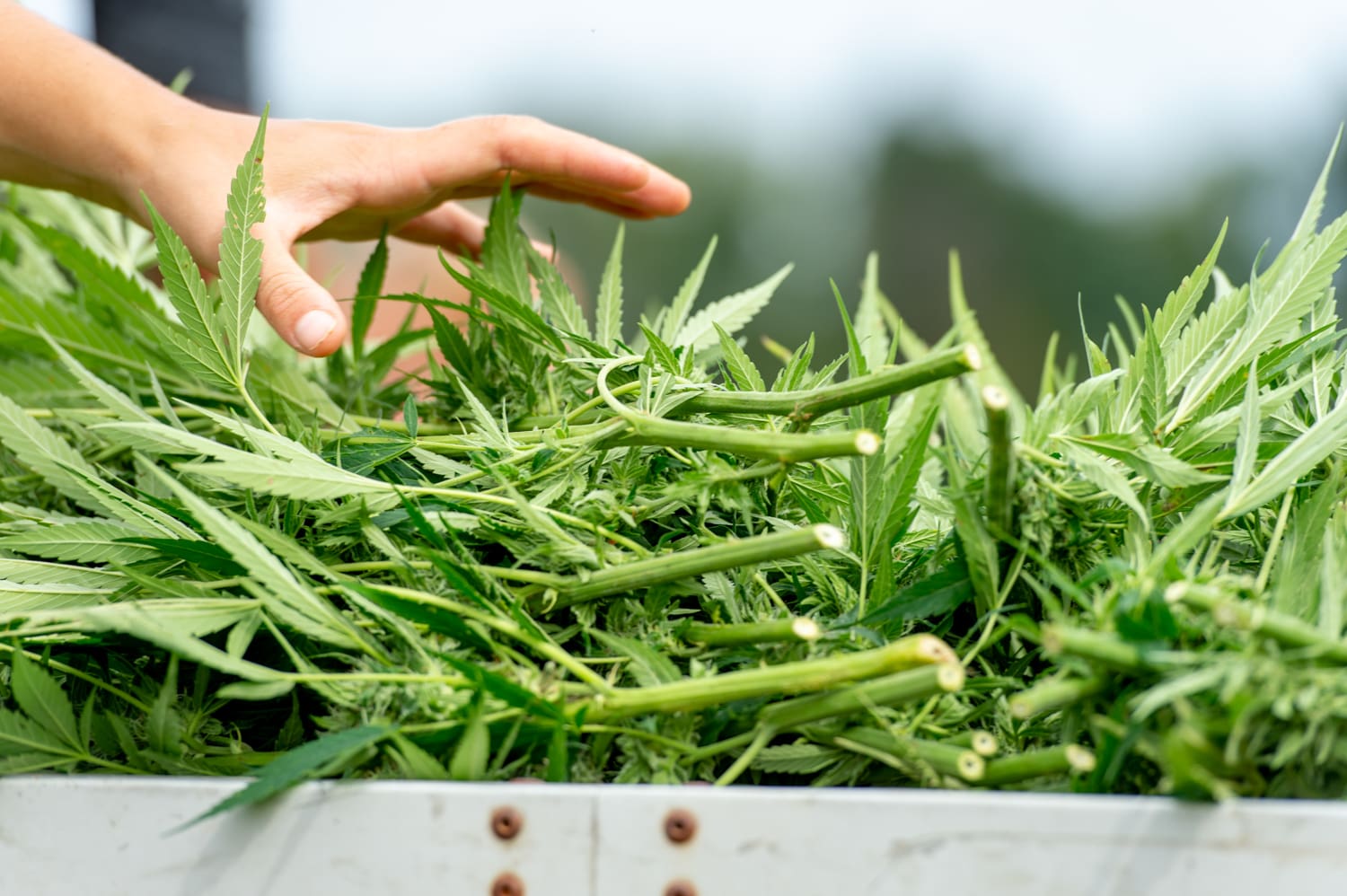
Congress did something terribly shorthanded. They crammed a massive policy change into a budget deal and mistakenly called it “public safety.”

If the changes stand, it will wipe out a more than $28 billion market, kill about 300,000 jobs, and eliminate one of the best national paths we have today to safe and sensible cannabis reform and regulation. A prime example is when the government burned down a house to kill the spider.

This is not politics. The 2018 Farm Bill is an example of evil politics being used to kill an industry without having the courage to reverse it and fight back.

The Straw Man: “Unregulated hemp is dangerous, so we need a blanket ban.”

Proponents of the change argued that hemp-derived intoxicants such as Delta-8 THC are a public health threat. That it is sold to children. They are untested. That they escaped a loophole in the 2018 Farm Bill.

Although there is some element of truth in their arguments, this is not indicative of the whole truth.

In short, that narrative is written to support blanket prohibition. Every industry has bad actors, companies and people who game the system. Instead of destroying an entire industry to get rid of bad actors, you analyze the problem, determine the underlying problem, and use logic and law to create, regulate, and enforce structure.

That is not what Congress has done.

Leading this charge is Sen. Mitch McConnell (R-KY), who appears to be trying to clean up what he sees as a legislative mess he authored. In 2018, he supported the Farm Bill that legalized hemp. Today, he says this law inadvertently unleashed an unregulated flood of what he calls “gas station cannabis” and that the only solution is to shut down the entire industry.

The correct solution? A framework that includes maximum potency, laboratory testing, package size, distribution guidelines, age conditions, and a structure to enforce the above. All of this would address concerns about “gas station hemp” and the risk to children.

In short, I’m all for regulation. This is not a regulation. It is eradication.

Reality: This is a legal, licensed, thriving and job-creating industry

The 2018 Farm Bill legalized hemp. That law was written, passed and signed by Congress and President Donald Trump, who has since endorsed the benefits of CBD and cannabinoids and asserted that cannabis policy should be left up to the states.

Since then, an entire market has grown up around hemp-derived cannabinoids. Manufacturers, retailers and financial partners have invested hundreds of millions in business compliance, taxation and job creation.

Cannabis entrepreneurs have built legitimate and highly regulated businesses that now employ hundreds of thousands of Americans. Their success does not depend on speculation, but on sustainable business models, sound financial management and sustainable access to capital;

The new provisions ban products containing more than 0.4 mg of THC per container. If passed, that would wipe out 95 percent of the hemp-derived market, according to industry estimates. And it would do so without holding a single hearing or public comment period, driving an industry underground to beg for regulation.

What this will do is put consumers at risk, steal tax revenue from municipalities and states, and ultimately hurt farmers nationwide. It will drive cultivation, production and manufacturing into the black market as it has done in the case of prohibition or unexpected legal structures.

One only has to look at the state’s legal cannabis market, which still operates under federal prohibition, to see a legal market that has grown to $35 billion but has simultaneously fueled an illegal market north of $100 billion.

The ban doesn’t work. Half-baked structures and scattered laws without a clear framework, understanding of basic economic principles and lack of regulation/enforcement do not work.

“This is just the beginning”? Let’s not invent ghosts

Some in the broader cannabis industry fear this is the horse behind future attacks on legal THC. This paranoia is understandable, but wrong.

This is not part of a coordinated federal crackdown. It’s a last-minute misguided attempt to solve a real consumer safety issue using the wrong tool. The maturity of the cannabis industry will be determined by its ability to distinguish between good policy and bad process. It is the latter.

Every part of the plant, regardless of label, requires logic, science-backed education, data, debate, and sensible, thoughtful regulation.

Do you want security? Regulate, not abolish

Intoxicating products must be tested, sales must be restricted to adults, packaging and potency must be clearly labeled. This is called regulation.

We regulate alcohol, tobacco and caffeine. We regulate thousands of other industries. What we don’t do is ban entire industries through the fine print in budget bills.

If Congress wants to fix the Farm Bill’s flaws, hold hearings. Invite scientists. Ask the Food and Drug Administration for guidance. Bring industry leaders to the table. What we don’t need is a hidden policy reversal tucked into a spending bill without public debate.

Over the decades, prohibition brought us figures like Al Capone and El Chapo, and created drug trafficking from all corners of the world. It involves crime, money laundering, loss of life, and it’s all pointless. What will the ban create in this case? Just imagine.

Although scientifically less dangerous than cannabis, the regulated alcohol and tobacco industries today employ millions, generate billions in sales and, above all, provide consumers with standardized and safer products through proper oversight. Yet we continue to vilify and ban rather than regulate.

The financial consequences are real

Ban hemp, and you haven’t gotten rid of “gas station” hemp.

You kill an entire industry, even the good parts. You eliminate hundreds of thousands of jobs. You eliminate tax revenue at the federal and state and municipal levels. You immediately take $30 billion out of the economy and push that money into illegal channels. You’re directly putting the product you’ve outlawed into the hands of children and those you claim to protect. Eliminating jobs and the possibility of regulation, oversight, safer products and age-status in the process.

Banning the industry does not protect consumers, it penalizes law-abiding and responsible business owners who are open to regulation and oversight.

The cannabis industry doesn’t want a free pass, but it deserves fair and responsible regulation. That starts with policy making that is deliberate, transparent and informed by the people doing the work on the ground.

Congress, your actions have created a much bigger problem than the problem you were trying to solve. If you want to keep our children safe and support our farmers and industries, do it the right way by regulating with logic. There is a way to have it all, this isn’t it.

Adam Stettner, CEO of FundCanna, has overseen more than $20 billion in loans in underserved markets.

Max Jackson’s photo.

Marijuana Moment is made possible with the help of readers. If you rely on our pro-cannabis journalism to stay informed, consider a monthly Patreon pledge.

Cannabis News

Michigan cannabis industry appeals 24% wholesale tax as job cuts loom

Published

on

By


as reported by Crain’s in DetroitMichigan’s cannabis industry is ramping up its legal battle over the 24% wholesale tax that will take effect on January 1st. The Michigan Cannabis Industry Association (MICIA) filed an appeal in the state appeals court on Tuesday, challenging the decision of Court of Claims Judge Sima Patel, who denied the group’s request to block the tax.

MICIA spokeswoman Rose Tantraphol told Crain’s that she “doesn’t think the Claims Tribunal made the right call” and that the case is “an exceptionally strong case on the merits.” The association says the wholesale tax violates the 2018 voter-approved cannabis law, the Michigan Marijuana Regulation and Taxation Act (MRTMA), and “we will not back down from fighting for the will of the people in court,” it said.

A tax passed by lawmakers in late October to fund road repairs is already making waves in the state’s cannabis market. Ann Arbor-based C3 Industries is closing its 35,000-square-foot growing facility in Webberville, cutting 62 jobs, according to a state Workforce Adjustment and Retraining notice. CEO Ankur Rungta told Crain’s that the business “cannot operate the Michigan production facility profitably with the new wholesale tax.”

Marquette-based Higher Love, which runs ten dispensaries along with growing and processing operations, announced it will lay off nearly 30 percent of its workforce, citing tax reasons, though the exact number of workers affected is unclear.

MICIA’s legal challenge argues that the Legislature lacked the supermajority needed to change the voter-approved law and may have sidestepped the rules by introducing a toll road funding bill without a public hearing. Judge Patel disagreed that the tax violated the law, but left the door open for further review, and that courts should consider whether the 24% wholesale tax undermines the intent of the MRTMA’s original 10% retail excise tax, which aims to keep legal marijuana affordable and curb the illegal market.

With the new tax set to go into effect within days, MICIA is asking the Court of Appeal for a quick ruling to stop the wholesale levy before it takes effect.


Continue Reading

Cannabis News

Florida Marijuana Campaign Sues State Over Invalidation Of 71,000 Signatures With Turn-In Deadline Weeks Away

Published

on

By

A Florida campaign seeking to put marijuana legalization on the state’s 2026 ballot has filed a new lawsuit against state officials, alleging they improperly directed the cancellation of about 71,000 signatures as the filing deadline quickly approaches.

Smart & Safe Florida has fought several legal battles this cycle to ensure its initiative can be put on the ballot.

The latest lawsuit, filed Monday in Leon County courts, alleges that Secretary of State Cord Byrd (R) ordered county election officials to invalidate about 42,000 signatures from so-called “inactive” voters and about 29,000 signatures collected by out-of-state petitioners.

This comes after another court upheld a previous decision to strike with around 200,000 signatures, which the state said were invalid because the petition did not contain the full text of the proposed initiative. The campaign challenged the legal interpretation, but declined to appeal the decision, confident it had collected enough signatures to settle the dispute.

Now, about a month away from submitting 880,062 valid signatures by the Feb. 1 deadline, Smart & Safe Florida points out that additional cancellations could jeopardize their chances of getting on the ballot. Currently, the state has validated 675,307 signatures.

“Time is of the essence,” the new lawsuit says. according to Florida News Service. “Florida’s Secretary of State has issued two illegal directives that, unless stopped, will invalidate citizen initiative petitions signed by more than 70,000 registered voters.”

As for “inactive” voters, the term refers to those who are registered but marked as undeliverable, resulting in their addresses being considered unconfirmed. This group can remain unregistered if they do not vote in two consecutive general elections.

“The absurd result of the Secretary’s directive is that ‘active’ voters can vote for the proposed amendment, but cannot count their petitions to vote to place the proposed amendment on the ballot,” the lawsuit states.

The out-of-state petitioner lawsuit, on the other hand, is about enforcement of a law passed earlier this year that prohibits the collection of signatures by non-Florida residents. Among the legal challenges, a federal court ordered its enforcement blocked for about two months before another judge lifted that order.

Smart & Safe Florida is arguing that the signatures collected during the mandate window should not be invalidated because they were obtained legally while the law was not in effect.

Meanwhile, earlier this month, Florida’s attorney general asked the state Supreme Court to review the constitutionality of the legalization initiative. The court granted the request and set a schedule for state officials and the cannabis campaign to file briefs next month.

The campaign said last month it had collected more than a million signatures to put the cannabis measure on the ballot, but it’s not. He has sued state Supreme Court officials for delaying the certification processarguing that the review of ballot content and summary should have gone ahead several months ago when the initial signature threshold was reached. The state then he agreed to proceed with the processing.

Florida Gov. Ron DeSantis (R) campaigned hard against an earlier version of the proposed legislation, which won a majority of voters last year but fell short of the 60 percent threshold needed to pass a constitutional amendment. Former Attorney General Ashley Moody (R) unsuccessfully challenged the earlier initiative in court.

In March, two Democratic members of Congress representing Florida asked the federal government to investigate What they described as an “illegal diversion” of millions in state Medicaid funds through a group with ties to Gov. Ron DeSantis (R). The money was used to fight a popular ballot initiative the governor vehemently opposed that would have legalized adult marijuana.

The lawmakers’ letter alleges that a $10 million donation from a state legislative settlement was misappropriated to the Hope Florida Foundation, which later sent the money to two political nonprofits, and sent $8.5 million to the anti-Amendment 3 campaign.

The governor said this in February The latest measure to legalize marijuana is in “big trouble” with the state Supreme CourtHe announced that it will be blocked from going before the voters next year.

“There are a lot of different views on marijuana,” DeSantis said. “It shouldn’t be in our Constitution. If you feel strongly about it, you have a legislative election. Bring back the candidates you think will be able to deliver what you think about it.”

“But when you put these things in the Constitution, and I think, I mean, the way they were written, there’s all kinds of things going on here. I think it’s going to have a lot of trouble getting passed by the Florida Supreme Court,” he said.

the last the initiative It was introduced to the secretary of state just months after initial versions failed in the November 2024 election, despite President Donald Trump’s endorsement.

The revised version of Smart & Safe Florida is expected to be successful in 2026. The campaign — which received tens of millions of dollars from cannabis industry players in the last election cycle, notably from multi-state operator Trulieve — introduced some changes in the new version that address criticisms of opponents of the 2024 push.

For example, it now specifically states that “smoking and vaping marijuana in any public place is prohibited.” Another section states that the legislature should adopt rules governing the “time, place and public manner of consuming marijuana.”

Last year, the governor accurately predicted this The campaign’s 2024 cannabis measure would survive a legal challenge From the state attorney general. It’s not entirely clear why he thinks this version will face a different outcome.

Although there is uncertainty about how the state’s highest court will navigate the measure, a poll released in February It showed the overwhelming support of a bipartisan voter for reform— 67% of Florida voters support legalization, including 82% of Democrats, 66% of independents and 55% of Republicans.


It’s Marijuana Time tracking hundreds of cannabis, psychedelic and drug policy bills in state legislatures and Congress this year. Patreon supporters by pledging at least $25/month, you’ll get access to our interactive maps, charts, and audio calendars so you never miss a development.


Learn more about our marijuana bill tracking and become a Patreon supporter to gain access

In hindsight, a recent survey by a Trump-linked research firm found that Nearly 9 in 10 Florida voters say they should have the right to decide whether to legalize marijuana in the state

Meanwhile, a pro-legalization GOP state lawmaker has just introduced a bill to change state law code that the public use of marijuana is prohibited.

Rep. Alex Andrade (R), the sponsor, said earlier this year Passing cannabis reform is a way for the Republican Party to get more votes from young people

Separately, there are medical marijuana officials in Florida actively expunging the records of patients and caregivers with drug-related criminal records. The policy is part of the sweeping budget legislation that DeSantis signed into law earlier this year. The aforementioned provisions address the State Department of Health (DOH). void the records of medical marijuana patients and caregivers if convicted of drug offenses, or pleaded guilty or no contest.

Mike Latimer’s photo.

Marijuana Moment is made possible with the help of readers. If you rely on our pro-cannabis journalism to stay informed, consider a monthly Patreon pledge.

Become a patron on Patreon!

Continue Reading

Cannabis News

Happy Holidays!

Published

on

By


Next publication on January 5, 2026


We are officially closing for the holidays. MMJDaily will be back on January 5, 2026, a little more rested.

Thank you for staying with us until 2025. Go enjoy your vacation, eat too much, sleep too little and try not to set anything on fire. See you next year!

© Mirthe Walpot | MMJDaily.com


Publication date:


Continue Reading
Advertisement

Trending

Copyright © 2021 The Art of MaryJane Media