
Cannabis News
Idaho Medical Marijuana Campaign Says Legalization Ballot Measure Would Generate $100 Million In Annual Sales

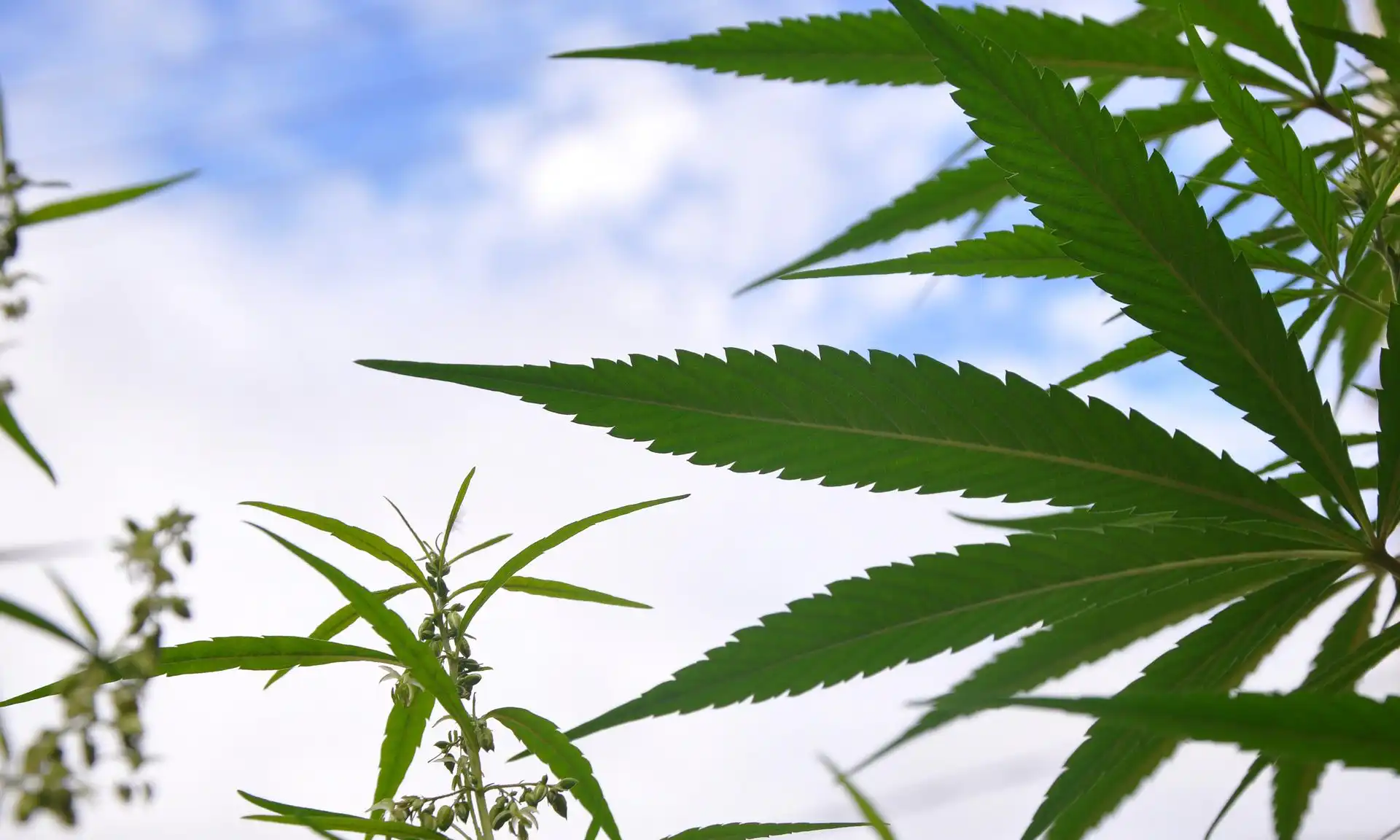
Idaho could see more than $100 million in medical marijuana sales and up to $28 million in new revenue for state coffers under a legalization measure activists are working to put on the November ballot, according to a new economic analysis released by the campaign.
The Natural Medicine Alliance of Idaho (NMAI) announced this last week collected enough signatures for an initiative to legalize medical cannabis To pass the statewide threshold for ballot qualification, it commissioned the firm Younger Associates to do two fiscal projections of the proposal, using Utah’s medical marijuana program as a model.
“Based on Utah’s participation trajectory, Idaho supports approximately 63,000 active patients and $108.5 million in annual retail sales by Year 6,” the analysis states.
Under the first revenue scenario, a 6 percent state sales tax would be applied to marijuana sales and there would also be a $100 annual patient registration fee, which would generate about $6.5 million in sales tax revenue and $6.3 million by the program’s sixth year.
The second revenue scenario includes the same patient registration cost and sales tax, but also adds an additional 14 percent fee collected at the point of sale. It would generate about $21.7 million a year in tax and fee revenue, in addition to about $6.3 million in annual patient card fees, to bring in $28 million a year from the state.
“Actual revenue will ultimately depend on the final program design and implementation decisions made by the State.” the report he says
In addition to the economic analysis, the NMAI also released a new short video this month saying the measure proposes “strictly regulated market access” for cannabis and treats patients “with dignity rather than fear or stigma.”
The video also features medical marijuana as an “alternative to the devastating effects of opioids” and the initiative “supports local jobs, Idaho agriculture and generates tax revenue while maintaining strong enforcement standards to prevent misuse.”
“This is not about recreation, it’s about care,” he said he says. “The law provides medical freedom to patients to consult with their physician about their health conditions and assert their right to make choices about their own care.”
But since it’s unclear how many signatures the campaign has collected so far and whether activists have met another requirement for petitions to be distributed regionally, NMAI continues to hold signature-gathering events across the state to expand its coalition of supporters ahead of the May 1 submission deadline.
Amanda Watson, communications manager for NMAI, told Marijuana Moment on Wednesday that organizers “feel very confident that we will qualify for the ballot in November.”
As of this week, NMAI has collected more than 73,000 total signatures — surpassing the statewide requirement of 70,725 for valid petitions — according to the campaign’s website.
To be certified on the ballot, the group must also submit the signatures of at least 6 percent of registered voters in at least 18 of the state’s 35 legislatures. Marihuana Moment reached out to NMAI for a status update on progress toward that goal, but a representative was not immediately available.
Meanwhile, groups of paid and volunteer applicants they are expanding across the state to high-traffic areas to collect signatures, and the NMAI website has a map showing where registered voters can go to sign.
The Idaho Medical Cannabis Act, introduced by NMAI last October, would provide patients with access to marijuana from a limited number of dispensaries and provide a regulatory framework for the market.
Here are the main provisions Idaho Medical Cannabis Law:
- Healthcare practitioners may recommend medical cannabis to patients with conditions including cancer, anxiety and acute pain.
- Medical marijuana patients or designated caregivers can purchase up to 113 grams of cannabis for smoking or 20 grams of THC extract for vaporization per month.
- The state would issue three vertically-integrated cannabis business licenses, and then potentially six licenses in total.
- Marijuana would be reclassified under state law, Title II.
- State and local law enforcement would be prohibited from assisting in drug enforcement activities related to the state’s illegal cannabis program.
- There would be anti-discrimination protections for those who use or sell marijuana in compliance with state laws, preventing adverse actions by employers, landlords and educational institutions.
- There does not seem to be any equity-based reform, nor will the initiative be given the opportunity to grow at home.
“We believe Idahoans deserve access to legal, compassionate and natural care right at home,” NMAI’s website states. “Our mission is to provide patients with a legal path to natural medicine to relieve suffering and restore dignity without the fear of addiction.”
“The Idaho Medical Cannabis Act is our first step. It creates a safe and strictly regulated medical program that allows qualified Idahoans to seek medical treatment for cannabis with a valid diagnosis from a health care provider.” he says. “It supports Idaho agriculture, generates tax revenue to reinvest locally and ensures patients can find natural relief.”
Last month, the campaign also released the results of a statewide poll shows that 83 percent of likely voters support the legalization of medical cannabisincluding 74% of Republicans, 95% of Democrats and 92% of independents.
When asked how they would vote if the current legalization of cannabis appears on the November ballot, 76% of respondents said “yes”. Of that cohort, 50 percent said they would “definitely” vote yes, while only 21 percent said they would vote “no.”
After introducing the medical cannabis initiative last year, a separate 2024 campaign, Kind Idaho, told supporters it would cancel its signature drive. ballot initiative to legalize the personal possession and cultivation of marijuana the adults
Pleasant Idaho previously put medical marijuana ballot measures before voters Both in the 2022 and 2024 elections, but the efforts were unsuccessful.
Meanwhile, this year voters will see a different type of proposal on the ballot: the constitutional amendment approved by the legislature to make it so. only members of the legislature can legalize marijuana or other controlled substances.
—
It’s Marijuana Time tracking hundreds of cannabis, psychedelic and drug policy bills in state legislatures and Congress this year. Patreon supporters by pledging at least $25/month, you’ll get access to our interactive maps, charts, and audio calendars so you never miss a development.
Learn more about our marijuana bill tracking and become a Patreon supporter to gain access
—
Lawmakers held a separate hearing last March to discuss it bill to legalize medical cannabisbut in the following months there has been no significant action on the matter.
Separately, it would be a bill from last year by Rep. Bruce Skaug (R). set a mandatory minimum fine of $420 for possession of cannabisremoving judges’ discretion to apply lower sentences. Skaug said the bill, which ultimately stalled in committee, would send a message that Idaho is tough on marijuana.
Members of the House of Representatives were also admitted bill to ban marijuana adsalthough the Senate later defeated the measure.
user photo Max Pixel.
Marijuana Moment is made possible with the help of readers. If you rely on our pro-cannabis journalism to stay informed, consider a monthly Patreon pledge.









Entourage Health Corp. has entered creditor protection. The company and six related entities filed on June 17 under the Companies’ Creditors’ Arrangement Act owed approximately $240.1 million to the sole affiliate of the LiUNA Pension Fund, its owner, its secured creditor and the lender that is now funding the money (First Report pp. 3-6-9
That affiliate, 2437653 Ontario Inc. No. 1 company, Entourage, secured a 2024 deal that took the former WeedMD private and off the TSX Venture Exchange (December 2024 PR). Shareholders were paid half a Canadian cent per share, or C$0.005, and the board recommended a sale in December 2024 (December 2024 PR).
Jason Alexander, head of the special committee of independent directors, recommended to shareholders. “The transaction ensures that shareholders will receive immediate tangible value while positioning the Company for future growth and flexibility,” Alexander said (December 2024 PR). The company took on $167.6 million in debt in that sale, having already breached the covenant with the same guarantee (December 2024 PR). Eighteen months later that debt was $240.1 million when it was filed, and the growth promised by the sale is a settlement (First Report 6-18 p.

Adult use is off, medical is still running
The leisure business is closing, not saving. Entourage laid off about 53 workers in early June before the order, and 22 remain (First Report p. 6 Adult use inventory is being cleared, finished products are shipped to provincial distributors, and flowers are sold in bulk to the market to other licensed growers (First Report p. 12 Color Cannabis, Dime Bag and Saturday Cannabis are the brands going down with it (First Report p. 5
What remains open is the doctor’s arm as the exclusive supplier of cannabis under the Starseed brand to local residents of the Workers International Union of North America (First Report p. 5 The pension fund that funds the procedure is tied to the same union that the medical brand serves, and the part of Entourage that serves union members is the part that is kept alive while the rest is sold for parts.
At the end of July the money runs out with no new money (First Report p. 11 The money comes again from the pension fund affiliate, a $1.1 million debtor-in-possession facility at 5% per annum, no commitment fee, no exit fee (First Report pp. 10-11). The monitor, Ernst & Young, checked terms against other DIP loans in the cannabis sector from January 2024 and concluded that a third-party lender would not lend on better terms given the state of the business (First Report p. 11 The lender, which already owed $240 million, is the only one willing to advance another million to keep the lights on through the sale.
Health Canada is the largest unsecured creditor, owed $494,505, ahead of all suppliers and competitors on the company’s books (List of Creditors p. 1 Supreme Cannabis is owed $262,133, medical platform HelloMD is owed $169,564, the Town of Aylmer is owed $144,815, the Independent Retail Cannabis Board is owed $137,098 and High Tide is owed $124,583 (List of Creditors p. 1 Unsecured claims total $3,288,333 in more than 100 names, many of which have yet-to-be-determined amounts by medical clinics (List of Creditors 1-5 p. Against $240 million guaranteed, none of them will see much.
In the June 29 return, the lender asks the judge to extend the stay until August 28, approve the DIP facility, and double the Administrative and Directors fees to $500,000 each (First Report 4-8-12. p. The directorship is rising as directors face payroll, holiday pay and excise duties over a longer period of time, and the company’s directors and officers insurance expires at the start of July (First Report p. 12
The sales process starts on the same day, based on a marketing effort that started around May and was presented before the deal that sparked interest but no one could make a deal (First Report p. 13 Insiders and affiliates have until July 6th to say they intend to bid, the bid deadline is July 30th, the successful bid must be received by August 7th, and the outside deadline is August 28th (First Report p. 15 The affiliate of the pension fund has written to the Monitor that it will not make an offer (First Report p. 16), and any other affiliate that does so must be removed from the process (First Report p. 16 The settlement request for non-cannabis equipment and the sale of the Aylmer facility, a 26,000-square-foot extraction and processing facility that has been the company’s production base at 250 Elm St.
For more information:
Neighborhood Health
1.844.933.3636
(email protected)
entouragehealthcorp.com
Cannabis News
DEA And FDA Highlight How Marijuana Is Safer Than Alcohol And Opioids During Rescheduling Hearing’s Opening Day
cbdMD welcomes the Administration’s call for Congress to ensure fair treatment of hemp-derived products under federal law and calls for immediate action to revise hemp regulations to ensure fair treatment of hemp products under federal law.
In a letter to congressional leadership this week, the White House Office of Management and Budget identified hemp reform as a priority strongly supported by the Administration. The petition calls on Congress to ensure fair treatment of hemp-derived products by maintaining access to appropriate full-spectrum CBD products, and by maintaining Congress’ intent to reduce products that pose health risks. The administration also urged Congress to pass a responsible federal framework or at least extend the current implementation period to give lawmakers time to get policy right. The request builds on the president’s previous public statements urging lawmakers to protect access to full-spectrum CBD products that millions of Americans rely on.
“We are encouraged to see the administration so clearly championing the responsible, scientific hemp products that consumers depend on every day,” said Ronan Kennedy, CEO of cbdMD. “cbdMD has always believed that the future of this category is built on quality, transparency, and clear rules that separate them from bad actors. A federal framework that protects consumer access, promotes safety, and provides certainty to companies that provide certainty is what this industry and the people it serves deserve. We applaud the policymakers who are working to achieve this outcome.”
“We believe CbdMD is purpose-built for this next phase of the market,” added Kennedy. “Our focus remains on serving our customers with reliable and effective products, supporting responsible regulation and building long-term value for our shareholders as the category continues to evolve. Along the way, we will continue to evaluate the opportunities this evolving environment holds.”
For more information:
cbdMD 
cbdmd.com/

Marijuana Retail Report

Entourage Health, formerly WeedMD, enters creditor protection

DEA And FDA Highlight How Marijuana Is Safer Than Alcohol And Opioids During Rescheduling Hearing’s Opening Day

Cannabis Cultivation Workers at Ascend Wellness Strike In Illinois Over Unfair Labor Practices

Weed Talk News Special Report & Interview Redefining Hemp Throws Industry into Turmoil

INVESTING IN CANNABIS | EMILY PAXHIA

cbdMD welcomes White House call for fair treatment of hemp-derived products

Industry Sentiment vs Reality – Could The Hemp Ban Be Extended?

Applications For Missouri Marijuana Microbusiness Licenses Will Open Next Month

Half of Gen Z Diagnosed with Depression Report Using Cannabis

“Our system can manage equipment across 10,000+ m² using just a few wires”

Florida Workshop to Discuss What Constitutes a ‘Cartoon’ in Hemp Packaging

Mazar-i-Sharif Hash Wednesday

Afghan Black Hash Wednesday

Weak Michigan Cannabis Sales Again in July – New Cannabis Ventures

From Finance to Wellness: Brad Zerman’s Impactful Pivot

DEA’s Cole Reverses His “priorities” ; Prohibitionists Dig In; Dead & Co Celebrates 60 years in SF

Re-release of the full show of Cannabis Coast to Coast news. Republican Texas DA Fires Up vs. laws;

Curaleaf Q2 Revenue Falls 8% – New Cannabis Ventures

Your Cannabis Business: Consistent Filings Are Critical
-
 Cannabis News10 months ago
“Our system can manage equipment across 10,000+ m² using just a few wires”
-
 Florida11 months ago
Florida Workshop to Discuss What Constitutes a ‘Cartoon’ in Hemp Packaging
-
 Video9 months ago
Mazar-i-Sharif Hash Wednesday
-
 Video9 months ago
Afghan Black Hash Wednesday
-
 aawh11 months ago
Weak Michigan Cannabis Sales Again in July – New Cannabis Ventures
-
 Video11 months ago
From Finance to Wellness: Brad Zerman’s Impactful Pivot
-
 Video10 months ago
DEA’s Cole Reverses His “priorities” ; Prohibitionists Dig In; Dead & Co Celebrates 60 years in SF
-
 Video11 months ago
Re-release of the full show of Cannabis Coast to Coast news. Republican Texas DA Fires Up vs. laws;