Connect with us

Cannabis News

White House Raises Alarm About ‘High-Potency’ Marijuana And Its Marketing In New National Drug Strategy

Published

on

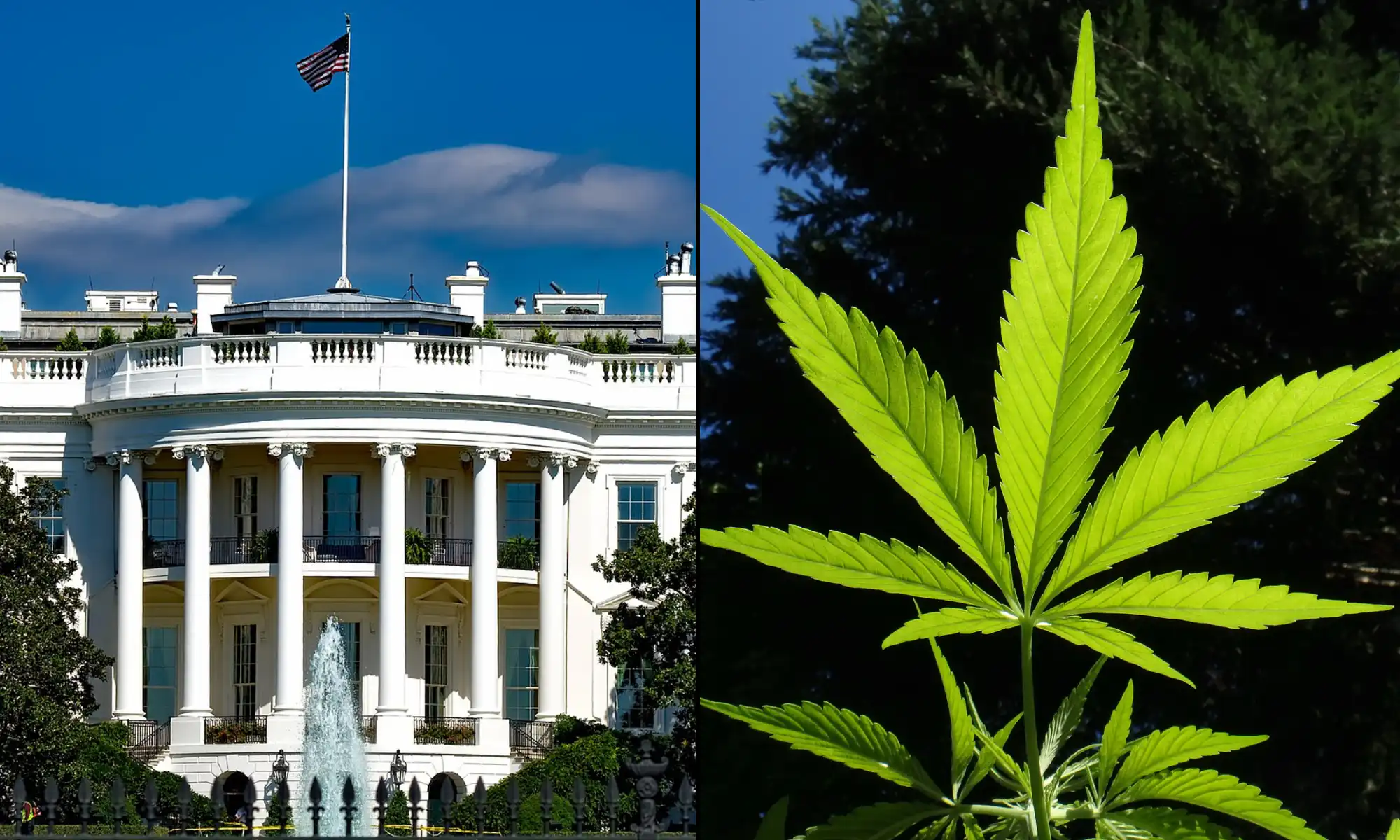
The White House released a new National Drug Control Strategy on Monday that raises the alarm about “high-potency” marijuana and expresses concern that international cartels and criminal groups are “exploiting” state cannabis laws. It also discusses the federal recriminalization of THC hemp products, which is planned for later this year under a law signed by President Donald Trump.

The publication of the new 195-page document by the White House’s Office of National Drug Control Policy (ONDCP) comes after a few weeks. The Trump administration announced that it is moving forward with a plan to reschedule marijuana according to the federal law, it does not mention this reform.

Instead, sections on cannabis focus largely on concerns about health effects and commercialization as more states implement legalization.

“The marketing of addictive substances poses a significant threat to the health of young people. Legal does not mean safe, and the industries that sell nicotine, alcohol, marijuana and psychedelics have adopted strategies similar to Big Tobacco’s historical targeting of young audiences,” the ONDCP strategy states.

“The commercialization of marijuana plays a role in normalizing use, increasing access and reducing the perception of harm risk among young people,” he says. “Marijuana products today are of unprecedented potency, often highly processed, aggressively advertised and often packaged to appeal to minors.”

The White House document also states that “converging evidence from multiple sources suggests that cannabis exposure increases the risk of psychosis, and that preventing marijuana use may serve to reduce the prevalence of psychosis, in addition to reducing cannabis use disorder and other consequences.”

It also “talks about young adults with great potential whose futures were stolen by drug-induced psychosis and high-potency marijuana-related suicides.”

“Despite the different legal status of marijuana in the United States, there are still Americans who suffer from addiction and side effects of marijuana and related products, such as psychoactive hemp derivatives or other high-THC products, and they deserve help. People who are addicted to marijuana may not realize that withdrawal can cause insomnia and anxiety, rather than treating drug-induced symptoms effectively. Psychosis, if diagnosed and treated early, schizophrenia or mitigates the potential impact on the progression of another serious mental illness, also known as scromiting, due to screaming and vomiting, is a common condition related to long-term marijuana and addiction and currently there are no drugs approved by the FDA such as marijuana addiction or withdrawal However, there is help for those who want it, and the tools to quit marijuana addiction should be made more accessible.

“While all drugs carry some degree of risk, marijuana has the highest conversion rate from psychosis to schizophrenia and bipolar disorder,” says Trump’s ONDCP. “Drug use is also associated with suicide, and marijuana was the number one drug found in toxicology reports of people who died by suicide under the age of 25 in Colorado and San Diego, more than alcohol or any other drug.”

“It is important that consumers are made aware of the health risks associated with marijuana use, including damage to heart health, cognition, and cancer. In a California study, from 2005 to 2019, cannabis-related diagnoses in emergency department visits increased by 1,800% for seniors 65 and older. Additionally, research indicates that marijuana can contain fungi that cause serious and often fatal infections and immunosuppressants. in people with conditions such as cancer, transplantation or HIV infection.

The document states that “marijuana smoking rates in the United States have surpassed tobacco use” and that “marijuana addiction or cannabis use disorder affected 20.6 million, or 7.1 percent, of Americans age 12 and older in 2024, and is the leading reason for seeking addiction treatment for those under 20.”

“According to the 2024 National Survey on Drug Use and Health (NSDUH), in 2024, for the first time, the number of Americans suffering from a drug use disorder exceeded the number suffering from an alcohol use disorder. This change has been driven primarily by the increase in marijuana use and addiction rates. We need to ensure that Americans who want marijuana are a tool and addiction. Withdrawals.”

Although Trump approved an initiative to legalize marijuana that appeared on the ballot in Florida in 2024, the administration’s document raises the alarm about “transnational criminal gangs that transport, store and sell illegal drugs in American communities, including interstate distribution of illegal drugs.”

Of particular concern are China-linked groups that “exploit state marijuana laws to establish large networks of illegal cultivation and interstate distribution,” the ONDCP said.

“The marijuana trade in the U.S. is no longer a low-level, scattered problem; it has been co-opted and industrialized by sophisticated, transnational criminal organizations, especially those with ties to China. These groups systematically exploit states where marijuana has been legalized under state law, taking advantage of these lax markets and regulations to establish a massive, unlicensed Oklahoma cultivation operation. Chinese criminal gangs operate more than 80% of the state’s thousands of marijuana and hemp farms. Scale it is terrible: in 2023, the state’s marijuana production exceeded the authorized medical requirement by at least 32 times, and 85.5 million plants remain unconsumed. These operations to supply the national black market for local marijuana consumption are not only the focus of agricultural crime, the trafficking of exploited workers, sophisticated money laundering and the use of dangerous pesticides that threaten public health and the environment.

The White House drug strategy also discusses hemp products at length.

Hemp derivatives with less than 0.3 percent delta-9 THC by dry weight were made federally legal under the 2018 Farm Bill signed by Trump during his first term. But late last year, the president signed new legislation containing provisions that will redefine hemp so that only products with a total of 0.4 milligrams of THC per container will be legal starting November 12th.

“The administration has been given new legislative authority to address certain psychoactive hemp-derived cannabidiol substances through the “hemp loophole closure” passed as part of the Agriculture, Rural Development, Food and Drug Administration, and Adopted Agencies Act funding bill for fiscal year (FY) 2026,” ONDCP said. the document says, “Closing these domestic sources of harmful substances is critical to degrading the overall availability of illegal drugs in our communities.”

“Psychoactive derivatives of hemp are a growing concern. Although the hemp plant itself contains small amounts of cannabinoids, such as delta-8 THC, delta-10 THC, THC-O-acetate, THCP, and other THC analogs, they are often produced in laboratories, and the latest products in the 2018 Farm Bill have proliferated. Containing these chemicals will be considered controlled chemicals under the Hemp Restriction Regulations, which take effect in November 2026. these are often sold in smoke shops and gas stations, are not regulated and may contain dangerous chemicals or psychoactive substances. In many cases of psychosis and suicide attempts, according to international conventions, cannabinoids are considered Schedule I drugs, and some states have banned these potentially dangerous products.

They say law enforcement will “increase efforts to prosecute the illegal production and distribution of dangerous substances originating in the United States,” including “targeting retail operations, such as vape and smoke shops, that illegally market harmful products, particularly to minors.”

In the meantime Trump recently asked Congress to take action to change the language of the hemp cannabinoid ban signed the law to allow sales of full-spectrum CBD products to continue, it is unclear how much he wants to reduce the scope of the scheduled federal restrictions and what kind of revised THC rules and limits he would prefer to sign into law.

Meanwhile, the ONDCP says the administration will “work to improve drug testing in clinical settings,” noting that “currently used hospital tests do not detect nitazene, psilocybin, or psychoactive hemp products such as delta-8 THC, and may not detect all fentanyl analogs.”

ONDCP Director Sara Carter Bailey has before expressed his support for medical cannabis, while stating that he has “no problem” with legalizationeven if you may not personally agree with the policy.

“I have no problem if it is legalized and controlled,” he said in 2024. “I mean, I may have my own issues about how I feel about it, but I think it’s a great way to treat cannabis for medicinal and medical reasons – especially for people with cancer and other diseases, you know – to treat the side effects of those diseases and illnesses and not the medicine. Saying we should make it illegal.”

Marijuana Moment is made possible with the help of readers. If you rely on our pro-cannabis journalism to stay informed, consider a monthly Patreon pledge.

Cannabis News

Guido de Buijn (Agrofair) consolidates his leading position, whilst fruit and vegetable lawyer Hans Borsboom enters the top five
Published

on

By


FreshPublishers 2026 World Cup Group Stage


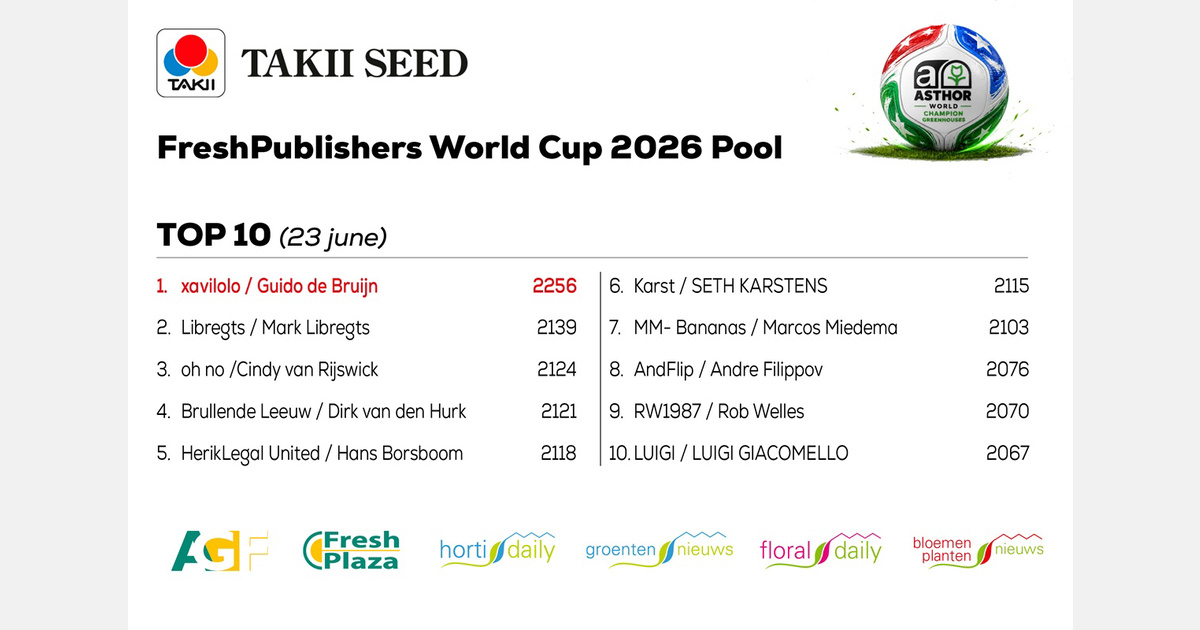
Today, it is the Dutch who are making their mark in the Fresh Publishers’ World Cup rankings. Guido de Bruijn, Agrofair’s account manager, correctly predicted the results of the Argentina – Austria and France – Iraq matches, thus consolidating his leadership. He is followed by quality controller Mark Libregts of JNV Produce, while food and agriculture specialist Cindy van Rijswick of Rabobank has once again rounded out the top three. In fourth place is Dirk van den Hurk, aaff’s relationship manager. He has a three-point lead over fruit and vegetable lawyer Hans Borsboom, who is competing under the name HerikLegal United. Interestingly, the main contestants predict very different winners. Guido supports Portugal, Mark supports France, Cindy supports Germany and Dirk and Hans support Spain.

In sixth place is Seth Karstens, who manages retail sales for Gerbera United. Marcos Miedema – again from Agrofair – is seventh, ahead of Andre Filippov from the German company Global Fruit Point. Rob Welles of plant grower Ovata and Italian potato and vegetable trader Luigi Giacomello have slipped a little further up the table and are in ninth and tenth place. However, there is still a long way to go to win the 1,000 euros. Starting with the next four matches: Portugal – Uzbekistan, England – Ghana, Panama – Croatia and Colombia – Congo.

© FreshPublishers


Publication date:


Continue Reading

Cannabis News

Marijuana Moment Asks DEA Judge To Allow Livestreaming Of Rescheduling Hearing For Transparent Public Access
Published

on

By

Marijuana Moments is asking a Drug Enforcement Administration (DEA) judge to reconsider his decision hearings on the Trump administration’s cannabis deregulation proposal begin next week and features only the opponents of the reform as invited participants.

Chief Administrative Law Judge Derek Julis last week issued a preliminary order setting out the rules and timelines for the marijuana reorganization proceeding, recognizing at the same time that “the national public interest in this matter favors a policy of transparency” and, at the same time, specifying that “the hearing will not be televised, live or otherwise.”

As a result, people who want to see the historic cannabis reform process must go directly to Arlington, Virginia, by court order.

In a letter to Julius on Tuesday, Marijuana Moment counsel Joseph Bondy noted that the DEA had previously authorized, then canceled the hearing process, the Biden administration’s proposal to move cannabis from Schedule I to the Controlled Substances (CSA) Schedule III.

“That prior decision was correct. The public interest rationale for contemporary access has not diminished,” Bondy wrote. “If the DEA believes that security, witness management, or operational concerns require a more restrictive access regime, those concerns should be identified and addressed through narrow requirements rather than a categorical ban.”

“Arlington’s limited physical seating is not a meaningful substitute for a live broadcast. Marijuana Moments, like much of the press and public following federal cannabis policy nationally, cannot rely on the few available seats as a practical way to observe and report on the hearing. This is precisely why the DEA’s advance live broadcast was important: it allowed them to follow these directives without physically obstructing the venue. burdening security, or making anyone a party.”

“In a proceeding of this public importance, and in light of the DEA’s prior direct directive, the public hearing is not publicly accessible if the case is based on limited physical attendance,” Marijuana Moment’s attorney wrote to the DEA judge. “Delayed access to transcripts is no substitute for timely observation. The press reports events as they unfold. The public evaluates government action in real time. And in a proceeding of this magnitude, transparency is not a courtesy. It’s a guarantee.”

“For a large public audience seeking serious coverage of federal cannabis policy, Marihuana Moment is an important channel through which the public can understand these proceedings.”

The letter makes clear that Marihuana Moments “does not seek to participate as a party, present evidence, examine witnesses, present proposed findings, or alter the schedule of merits” and “seeks only temporary public and press access to an administrative hearing of recognized national public interest.”

Bondy asked Julius for an answer by Thursday.


Marijuana Moment’s journalism is made possible by readers like you, who value this work enough to support us monthly pledges on Patreon. If you rely on our reports to stay informed of important developments in cannabis, please help us do this becoming a permanent subscriber today.

Backing us at the $25/month level, you’ll have access to our Bill Tracker so you don’t miss any important marijuana legislation in your state.

Meanwhile, he is also a lawyer A representative of a major cannabis reform organization is calling for the DEA to reconsider decision to participate in the hearing as an interested party.

The National Organization for Reform of Marijuana Laws (NORML), which represents the interests of people who use cannabis, filed an “emergency petition for reconsideration” through Bondy on Friday, saying “the public interest will be significantly harmed if the registry ignores the consumer perspective.”

The DEA made the announcement last week Only select participants—and opponents of reform—have been invited to the marijuana redistricting hearing to participate, and some of them have filed a lawsuit trying to block the reform. Supporters of the reform who expressed their intention to participate were not invited.

“NORML’s rejection, if not addressed immediately, will deprive NORML and the cannabis consumers it represents of meaningful participation in hearing proceedings, the presentation of witnesses, the designation of exhibits, cross-examination, legal briefs, and any other proceedings necessary to complete a complete record,” wrote Bondy, NORML director Terrance as chairman of the DEA’s board of directors. “Prejudice is immediate. It cannot be cured after the hearing is closed.”

According to several rejection letters seen by Marijuana Moment from cannabis reform advocates, the DEA said they do not meet the definition of “interested person” to participate because they “would not be harmed or harmed by any rule or proposed rule that may be issued.”

NORML said in its request for reconsideration, however, that “DEA’s denial is based on a flawed premise: that NORML has not been harmed or prejudiced by the proposed rule because NORML allows marihuana to be removed from Schedule I and Schedule III.

“That is not NORML’s position. NORML supports delisting from schedule I. But NORML does not support schedule III as the final correct federal treatment of marijuana,” Bondy wrote. “NORML’s position is that marijuana should be removed from the CSA schedules and regulated under a specific federal framework that addresses public health, consumer safety, product integrity, youth prevention, truthful labeling, testing, access to research, impaired driving policy, diversion, state-regulated market realities, and illegal displacement.”

The lawyer wrote that the injury to marijuana’s Schedule III status “is not a mere ideological desperation.”

“NORML members would remain subject to federal controlled substance status and the legal consequences that flow from it. Adult consumers who legally participate in state-regulated markets would be excluded from consistent federal recognition,” Bondy said. “Schedule III would keep illegal federal cannabis activity outside of federally authorized medical, research, or registrar channels. It would continue to cause federal-state conflict, public confusion, stigma, side effects, and harm to consumer safety.”

The hearing it will start on June 29 and end before July 15.

Acting Attorney General Todd Blanche in April He issued an order that immediately reclassified the state’s licensed medical cannabisas well as marijuana products approved by the Food and Drug Administration (FDA) under Schedule I through Schedule III of the Controlled Substances Act (CSA).

According to a separate order signed by the acting attorney general, the upcoming hearing will include Class III marijuana.

In order to be considered for participation in the hearing, the parties had to submit requests, indicating their interest in the procedure, the claims or issues they want to hear and their position on these issues.

“The purpose of the hearing is to ‘receive factual evidence and expert opinion’ on whether marijuana should be transferred to Schedule III of the controlled substance list,” Blanche’s initial statement in April said.

The attorney general also selected an administrative law judge (ALJ) to oversee the proceedings.

“The ALJ’s authority includes the power to hold conferences to simplify or determine the issues at the hearing or to consider other matters that may assist in the expeditious resolution of the hearing; to require the parties to state their position in writing; to sign and issue subpoenas; to compel the production of documents and materials to the extent necessary to conduct the hearing; to examine witnesses; to direct, exclude, or testify; the Rule on Procedural Matters and the President’s DEA Hearing Procedures and Administrative Procedure Actions allowed under the law, Blanch wrote.

Preliminary hearing process on the marijuana redistricting process initiated by the Biden administration It was halted last year amid allegations of improper communications and witness selection.

the current The marijuana redistricting process is being challenged in several ways which have been upheld by a federal Court of Appeals. those pieces of State attorneys general have filed lawsuits against cannabis reform, Opponents of marijuana legalization and a a cannabis-based biopharmaceutical corporation.

Meanwhile, the reorganization of state-licensed medical cannabis is already having a major impact.

The Congressional Research Service published a report on the current rescheduling of cannabis Certified patients with medical marijuana from state licensed dispensaries are now eligible for Class III. “The order appears to allow end users to use marijuana medically without a CSA prescription,” he says.

The Bureau of Alcohol, Tobacco, Firearms and Explosives (ATF) has published a Draft update to a gun purchase form to recognize the legal status of medical marijuana in the reprogramming. The revised section of the question states that only the “recreational use or possession of marijuana” is federally prohibited, omitting the prior form’s mention of medical cannabis.

The US Treasury and Internal Revenue Service (IRS) said they plan to issued new tax guidelines for the marijuana industry after reprogramming. The reform will benefit state-licensed marijuana businesses by allowing them to take federal tax deductions that are currently prohibited under IRS Code Section III, known as Section 280E.

Even the DEA, which has long opposed cannabis legalization and accused the Biden administration of stalling the initiative in the reorganization process, has done so. It launched a registration process for legal marijuana businesses in the state to take advantage of the federal benefits that come with the reform.

The Department of Transport, on the other hand, issued guidelines stating this use Legal medical cannabis in the state is still no excuse for truck drivers to test positive for drugspilots and other safety-sensitive personnel.

A congressional committee recently Federal officials voted to block further steps to reschedule cannabis.

read it the letter Marijuana Moment’s attorney to the DEA judge below:

Marihuana Moment is made possible with the help of readers. If you rely on our pro-cannabis journalism to stay informed, consider a monthly Patreon pledge.

Continue Reading

Cannabis News

Judge declines to block New Jersey cannabis Labor Peace Agreement requirement in Curaleaf case
Published

on

By


U.S. District Judge Michael A. Shipp, for the District of New Jersey, ruled against Curaleaf Holdings Inc.’s request for emergency relief to block the requirement that New Jersey cannabis companies sign Labor Peace Agreements (LPAs) to keep the rule in place while the underlying case continues.

Under Bloomberg Law, Judge Shipp issued an unpublished opinion that Curaleaf failed to demonstrate the “irreparable harm” courts require before issuing a preliminary injunction. That rule requires a party to prove that it will later suffer irreparable injury if the judge waits for full proceedings. Judge Shipp concluded that Curaleaf did not meet that threshold.

The resolution is not a decision on the substance of the regulation. Judge Shipp expressed skepticism that the LPA’s requirement is supported under federal law, although he declined to block it. A court may find that a challenger has failed to meet the standard of emergency assistance without adopting the challenged rule.

The New Jersey Cannabis Regulatory Enforcement Assistance and Market Modernization Act, known as CREAMMA, was signed into law by then-governor Phil Murphy in February 2021. It set up a 2020 legalization referendum and established the state’s adult cannabis market. Under CREAMMA, cannabis operators must sign an LPA and engage in collective bargaining with organized labour. These are two different obligations, both licensing requirements, not optional practices.

Curaleaf is opposing this dual mechanism. For New Jersey cannabis operators, the immediate consequence is that compliance remains mandatory while the case moves forward. The question of whether the LPA’s mandate is compatible with federal law remains unanswered.

Source: HeadyNJ


Opening photo: © Curaleaf

Publication date:


Continue Reading
Advertisement

Trending

Copyright © 2021 The Art of MaryJane Media