
Cannabis News
Portugal’s GMP export hub status under pressure as Czech Republic moves to fill the gap

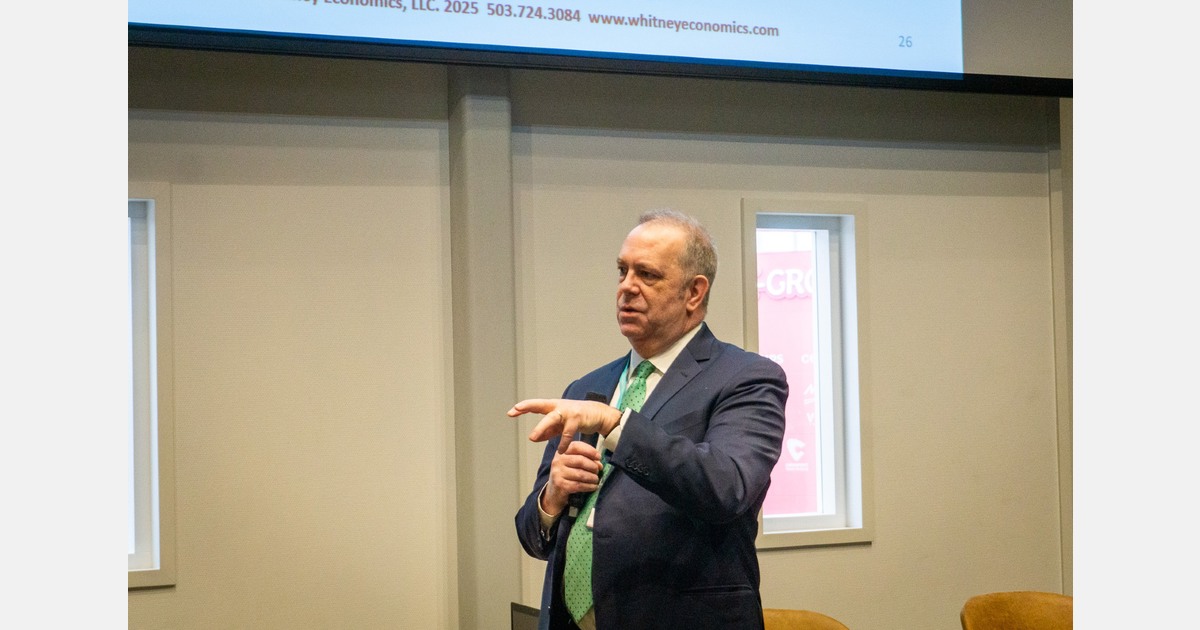
The latest Whitney Economics report The dynamics of the EU cannabis market sees Portugal’s role as the bloc’s main GMP export hub under pressure from enforcement, increasing competition and the Czech Republic moving quickly to absorb processing activity that Portugal can no longer reliably handle.
A disproportionate share of the prescription flower reaching German and British pharmacies comes from or passes through Portuguese GMP facilities. Rebecca Allen Tapp, managing director of RT Consulting Solutions, produced the Portugal section of the report. “Operation Erva Daninha made it clear that there were bad actors at work in the Portuguese cannabis industry, and the consequences have been widely felt,” he says.
Infarmed’s response to the enforcement action went beyond targeting the specific operators involved. Administrative steps that would have previously elicited a warning now risk temporary license suspensions, and high scrutiny is reaching operators as much as bad actors. “Many operators who have made every effort to comply are finding themselves caught in the crossfire of an industry narrative shaped by the actions of a few,” says Rebecca.

More operators are bringing GMP capabilities in-house rather than relying on third-party service providers, and some are beginning to outsource these capabilities. “As the number of service providers continues to grow, consolidation is likely to continue. Vertically integrated operators will be better positioned to maintain margin and remain nimble as prices fall and the number of SKUs in the market continues to rise,” says Rebecca.
With prescription flowers available in Germany for €2.59 and flowers in the UK starting at around £3.50, they mark the commercial reality these operators are navigating. A half-gram vape cartridge in the UK, once out of reach for private patients due to costs, now starts at around £22, which is close to what recreational consumers pay in the US legal states. In other words, margin compression is already structural.
The Czech Republic enters the picture
Portugal also faces a competitive supply that was not part of the original model: Latin America, South Africa, Canada and the ANZ region are serving the same export markets. The country’s export figures hide the extent to which it operates as a processing center for internationally sourced material rather than a mere cultivation hub.
Lukas Hurt, editor-in-chief and publisher of Konopí magazine, the only cannabis print publication in the Czech Republic, contributed to the Czech section of the report. “Portugal absorbed much of this activity, but difficulties there have pushed producers and importers to look elsewhere,” he says.
At ICBC Spring 2026 in Berlin, there were multiple representatives from the new Czech GMP processing facilities. Domestic Czech consumption cannot support a single producer on a significant scale, which means that all serious Czech growers are focused on export, mainly to the EU. “The fundamental challenge is that the current domestic consumption, half a ton of dried flowers and extracts in 2025, cannot support even a single producer on a significant scale,” says Lukas.
Home cultivation of up to three plants was legalized in the Czech Republic from January 1, 2026. Retailers and distributors of plant supplies and seeds have seen a significant increase in sales since the legislation was passed. Konopí magazine’s spring 2026 revenue is forecast to be up more than 100% over the same period last year. “I expect the market to follow the German model, an initial wave of enthusiastic first growers, followed by a consolidation, as many do not grow a second crop. The structural change is real, but the initial spike will correct it,” says Lukas.
There are currently around 15,000 registered patients in a country of 10.5 million, below the realistic potential, with a target population estimated at around 250,000 for chronic pain and neurological conditions alone. Between 2013 and 2024, fewer than 250 doctors were licensed to prescribe, keeping the market artificially limited. April 2025 regulatory reforms allow doctors to prescribe chronic pain; the number of active prescribers has grown significantly since then, and the Czech cannabis market grew by 46% in 2025, the strongest performance since 2021.
Between 2013 and 2022, only one licensed producer operated in the country. About ten are currently operating according to SÚKL requirements, and the volume being built is mainly outside the Czech borders. “The more difficult question is whether they can sustain themselves as lower-cost suppliers from Thailand and Latin America continue to scale,” says Lukas.
What about Spain?
Spain’s position in the same supply network goes in the opposite direction. The country is one of the world’s leading producers of medicinal cannabis, almost entirely for export. Royal Decree 903/2025 established the first clear legal framework for the use of medicinal cannabis internally, covering severe refractory epilepsy, chronic refractory pain, spasticity due to MS and chemotherapy-induced nausea. Patients admitted through the public hospital system pay only the standard pharmacy copayment.
Carola Pérez, founder of Dosemociones and the Spanish Observatory for Medical Cannabis, and founder of We, The Patients, produced the Spanish section of the report. “The decree is a floor, not a ceiling,” he says. “We’ve built one of the largest production bases in Europe, and we’ve built it for someone else’s patients,” says Carola.
AEMPS authorized companies spent years optimizing for demand in Germany, Portugal, Poland and the UK. Commercial infrastructure continues to be export oriented. The implementation of the decree depends on whether each autonomous community chooses to finance the model, and it will depend on the budget and training of specialists of individual hospitals, conditions that vary enough in the regions of Spain to have uneven access. “What is not fulfilled is uniform access. The decree creates a national framework, but the implementation depends on how each autonomous community chooses to finance the model,” says Carola.

Flower is excluded from the decree, as are lozenges and suppositories, formats that are therapeutically appropriate for a portion of the patient population that the decree seeks to serve. AEMPS still operates through manual licensing processes, with no public record of permits. Eleven thousand Spanish patients are still in the gray channels. “Transparency is not pretty governance; it’s market infrastructure. Investors and patients need to see the rules,” says Carola.
“If the model doesn’t work, patients will go back to the illegal market. If doctors aren’t trained, they won’t be able to give prescriptions. If hospitals don’t dispense, all our efforts will be for naught,” he says. Medium-term forecasts place the Spanish health system functioning within two or three years, if implementation is maintained.
For more information:
Whitney Economics
Beau Whitney
(503) 724-3084
www.whitneyeconomics.com









Well, it’s not 2026 photos, but with around 600 photos, we definitely did our best. For the past two days, the Netherlands has been the place to be for the global greenhouse industry. From Flower Trials for the horticulture sector, company visits to growers and technical suppliers, as well as dinners, get-togethers, drinks, knowledge sessions and much more. And of course with GreenTech Amsterdam.
The event brought together professionals from around the world to connect, network, share knowledge and do business.
Next week, we’ll be sharing more information on market developments, trends, what’s on display, news, business news, innovations and whatever else you can think of, but for now we’ll stick to photo reporting.
Click here for the photo report.
 © Arlette Sijmonsma | MMJDaily.com
Cannabis News
Illinois Governor Signs Bill To Double Marijuana Possession Limit, Restrict Hemp THC Products And Reform Rules For Businesses


On May 29, 2026, global cannabis technology company CannBro was invited to the Cannabis Expo in Johannesburg to share insights on emerging cannabis-related medical applications and supply chain strategies in the cannabis markets.
At the event, CannBro highlighted its partnership with the CHEEBA Cannabis Academy to promote industry education, compliance awareness and the development of regulatory standards in emerging cannabis markets. The company highlighted the importance of establishing strong regulatory and compliance frameworks for the sustainable growth of the industry.
 © CannBro
As a company certified with ISO 13485 and GMP, CannBro actively explores medical cannabis applications and collaborates with health organizations to discuss potential clinical research and CBD product applications.
 © CannBro
CannBro also introduced the “Factory Pricing + Local Stock” strategy, combining manufacturing capabilities in China with warehouses located overseas, enabling efficient delivery of local inventory. The company currently operates warehouses in the United States, Canada, Germany and South Africa and has helped more than 150 customers with local stock delivery solutions that reduce costs and improve inventory turnover.
In addition, CannBro visited local cannabis cultivation facilities to learn about the evolution of the South African market and explore potential partnerships for cultivation, medical applications and product development.
 © CannBro
Andy Zhao, CEO of CannBro, said: “As the global cannabis market matures, fulfillment and medical applications will become key drivers of sustainable growth. CannBro remains committed to advancing the industry through education, medical research and supply chain innovation.”
For more information:
CannBro Technology
Email: (email protected)
www.cannbro.com

Marijuana Retail Report

GreenTech Amsterdam 2026 in 2026 photos

Why Pharma Is Taking Cannabis Seriously

Illinois Governor Signs Bill To Double Marijuana Possession Limit, Restrict Hemp THC Products And Reform Rules For Businesses

Pennsylvania Senate Rejects Bill to Create Cannabis Control Board

ANOTHER STEP TO LEGALIZATION? NORMALIZATION? MD GOVERNOR MOORE HISTORIC PARDONS OF THOUSANDS;

REDMAN GETS BLUNT WITH MONTEL

Anti-Rescheduling Parties Ask Court To Stay Schedule III Cannabis Order

Shining a spotlight on compliance and innovation at Cannabis Expo Johannesburg 2026

Village Farms CEO Explains $15 M Raise + The CMS CBD Pilot

“Our system can manage equipment across 10,000+ m² using just a few wires”

Florida Workshop to Discuss What Constitutes a ‘Cartoon’ in Hemp Packaging

Mazar-i-Sharif Hash Wednesday

Afghan Black Hash Wednesday

Weak Michigan Cannabis Sales Again in July – New Cannabis Ventures

From Finance to Wellness: Brad Zerman’s Impactful Pivot

DEA’s Cole Reverses His “priorities” ; Prohibitionists Dig In; Dead & Co Celebrates 60 years in SF

Re-release of the full show of Cannabis Coast to Coast news. Republican Texas DA Fires Up vs. laws;

Your Cannabis Business: Consistent Filings Are Critical

Curaleaf Q2 Revenue Falls 8% – New Cannabis Ventures
-
 Cannabis News10 months ago
“Our system can manage equipment across 10,000+ m² using just a few wires”
-
 Florida10 months ago
Florida Workshop to Discuss What Constitutes a ‘Cartoon’ in Hemp Packaging
-
 Video8 months ago
Mazar-i-Sharif Hash Wednesday
-
 Video8 months ago
Afghan Black Hash Wednesday
-
 aawh10 months ago
Weak Michigan Cannabis Sales Again in July – New Cannabis Ventures
-
 Video10 months ago
From Finance to Wellness: Brad Zerman’s Impactful Pivot
-
 Video10 months ago
DEA’s Cole Reverses His “priorities” ; Prohibitionists Dig In; Dead & Co Celebrates 60 years in SF
-
 Video10 months ago
Re-release of the full show of Cannabis Coast to Coast news. Republican Texas DA Fires Up vs. laws;