Connect with us

Cannabis Industry News

Vermont House Committee Removes Language to Cut THC Caps from Senate-Approved Cannabis Regulations Bill 

Published

on

Vermont House Committee Removes Language to Cut THC Caps from Senate-Approved Cannabis Regulations Bill 

A Vermont House committee removed provisions from a bill to update the state’s cannabis regulations that would have raised THC limits and cut the excise tax on cannabis products. Compass Vermont reports. The House Government Operations Committee removed language from the bill that would have removed the 30% THC cap on flower entirely, raised the THC cap on concentrates from 60% to 70%, and lowered the excise tax from 14% to 10%.

The committee held provisions to double the per-package THC limit for edibles from 100 milligrams to 200 milligrams; increase the personal possession and retail transaction limit from one ounce to two ounces and the hash possession limit from 5 grams to 10 grams; cut outdoor grower license fees by roughly half; establish a two-year pilot program for cannabis event permits; the conversion of industrial worker licenses from annual to biennial; cancellation of the built-in license type; and authorizing the governor to enter into interstate cannabis commercial compacts if federal law changes.

Eliminating the THC cap was included in the bill passed by the Senate in March.

The legislation goes before the Appropriations Committee of the House of Representatives. If approved, the proposal would move to the full House, but would have to be re-approved by the Senate due to House amendments.

TG joined Ganjapreneur in 2014 as a news writer and began hosting the Ganjapreneur podcast in 2016. He is based in upstate New York, where he also teaches media at a local university.

Continue Reading
Click to comment

Leave a Reply

Your email address will not be published. Required fields are marked *

Cannabis Industry News

FundCanna Secures $60M Credit Line to Expand Cannabis Lending

Published

on

By

Report: Indiana Residents Spend About $2B on Cannabis Annually Despite Prohibition  

Cannabis industry lending and financing solutions firm FundCanna announced this week that the company has approximately $75 million in equity, with $35 million immediately available, after securing a $60 million credit line from an institutional investment firm.

FundCanna’s new partner manages about $40 billion in assets, the company said in a press release.

“I’ve been lending to businesses for over 20 years, and cannabis has proven to be a stronger credit market than many expect. But it’s also one of the hardest markets to get right. The data is fragmented, the laws are inconsistent, and most lenders underestimate how diverse the cannabis industry can be. We’ve spent five thousand years building a space. That’s not easily replicated, and it’s a major reason that institutional capital has chosen to partner with FundCanna.” — Adam Stettner, founder and CEO of FundCanna, in a statement

Some of the capital will go toward scaling the company’s ReadyPaid service, a loan program that helps wholesalers get paid in advance while bulk buyers can get extended terms.

FundCanna says it has distributed more than $250 million in more than 5,000 transactions and is approaching $100 million in annual lending.

Based in Portland, Oregon, Graham is the editor-in-chief of Ganjapreneur. He has been writing about the legalization landscape since 2012 and has contributed to Ganjapreneur since our official launch in…

Continue Reading

adult use

Minnesota Regulators Freeze Cannabis Testing Lab’s License

Published

on

By

Minnesota Regulators Freeze Cannabis Testing Lab’s License

The Minnesota Office of Cannabis Management (OCM) has suspended the license of cannabis testing lab Legend Technical Services for failing to address “safety and testing requirements.” Star Tribune reports.

Legend was originally licensed to test cannabis products under the state’s medical program. However, to help facilitate the launch of adult sales, regulators approved the lab in September 2025 to begin testing products for both markets. The lab was also allowed to continue using its testing methodologies for adult-use products despite different requirements under the new regime — regulators sent a letter this week notifying Legend and its customers that the lab’s special approval had expired.

“Our commitment to public health and safety requires that we hold all licensees to the same standards, and there are steps Legend must take to address the issues identified in the noncompliance. These requirements are no different than what is required of all licensed testing facilities.” – OCM spokesman Josh Collins, in the report

Tom Barrett, vice president of Legend Technical Services, told the Tribune that the company has provided most of the information requested by OCM. The rest of the information should be sent by the end of the week, Barrett said, though it’s unclear when the lab will be able to resume testing. Meanwhile, the company is returning over 400 samples to its customers as it is unable to meet the demands.

There are currently only four state-licensed testing labs to test cannabis products, including Legend.

In OCM’s letter to affected businesses, officials wrote: “We understand this is unwelcome news and will cause a disruption to your business operations.”

Meanwhile, in March, Gov. Tim Walz (D) signed a law allowing manufacturers of hemp products to continue to use overseas testing laboratories until next spring due to the limited number of laboratories licensed to operate in Minnesota.

Continue Reading

adult use

Virginia Gov. Vetoes Adult-Use Cannabis Sales Bill Despite Campaign Promise

Published

on

By

Virginia Gov. Vetoes Adult-Use Cannabis Sales Bill Despite Campaign Promise

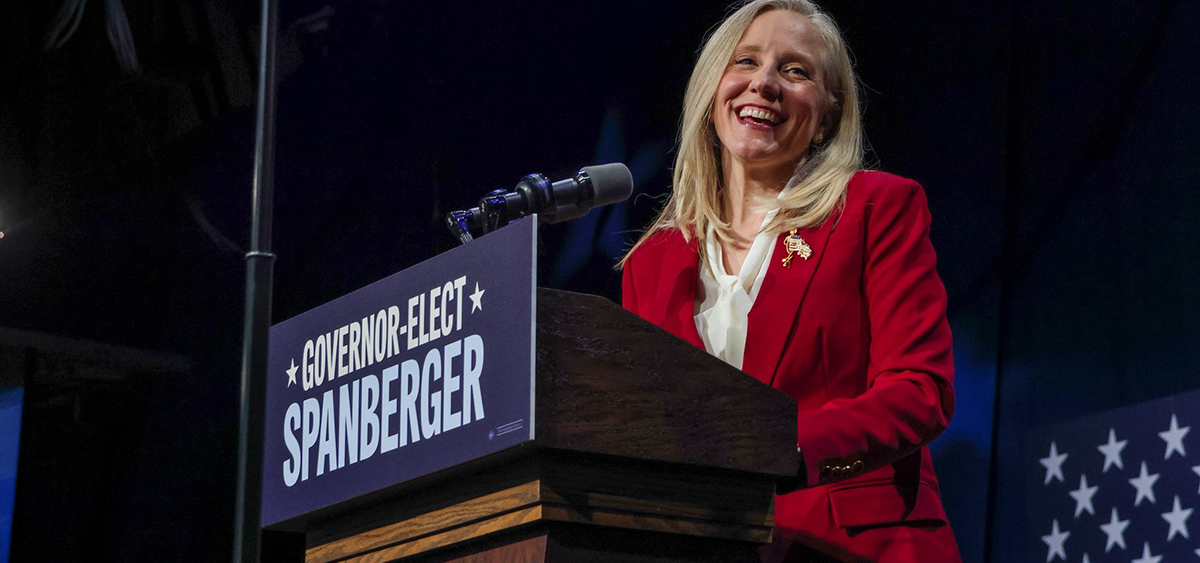
Virginia Gov. Abigail Spanberger (D) vetoed a bill on Tuesday to create an adult cannabis market after lawmakers rejected its replacement proposal last month.

Although she said during the campaign that she would sign a cannabis sales proposal, Spanberger’s veto continues a three-year precedent set by her predecessor, Republican Gov. Glenn Youngkin, who vetoed two measures to sell cannabis in 2024 and 2025. The measure does not guarantee further progress until the next legislative session207.

Of the governor the veto message claims the legislation “will create a retail market for cannabis products without the timeline, structure or resources to successfully implement it”.

Her replacement proposal sought to push back the market’s launch date from January 1, 2027, to July 1, 2027, reduce the number of retailers at launch, and increase penalties for criminal conduct.

Spanberger noted in a statement that she still shares the General Assembly’s “goal to create a safe, legal and well-regulated retail cannabis market in the Commonwealth,” but suggested the proposal sent by lawmakers lacked a “regulatory framework … fully prepared to provide strong oversight from day one.”

Sponsors of the legislation, Del. Paul Krizek (D) and Sen. Lashresce Aird (D), said that the veto only perpetuates the unusual situation in Virginia, where it is legal to possess and consume cannabis, but it cannot be traded commercially.

“Once again, Virginia’s efforts to create a safe, regulated and equitable adult-use cannabis market have stalled despite years of work, public input and widespread recognition that the status quo is failing Virginians.” – Aird, via the Virginia Mercury

The move follows Spanberger last week signed a bill establishing a sentencing process for certain convictions for cannabis-related crimes.

“Governor Spanberger’s veto of adult-use cannabis legislation is a serious mistake,” said Stephanie Shepard, executive director of The Last Prisoners Projectan organization that advocates for the release of individuals incarcerated for cannabis-related convictions. “It makes no sense for Virginia to recognize the harms of cannabis prohibition by signing marijuana back into law while continuing to block a regulated market for the same substance,” Shepard said in a statement. “Without legal adult sales, consumers are left vulnerable, small businesses are left on hold, and communities most affected by prohibition are denied a fair opportunity to participate in the legal cannabis economy.”

JM Pedini, Development Director of NORML and Executive Director of Virginia’s NORML chapter, also issued a statement condemning the veto:

“Governor Spanberger’s veto is a deep disappointment to the many Virginia voters who believed her when she said on the campaign trail that she supported creating a regulated adult-use cannabis market. It’s also a slap in the face to years of serious work undertaken by lawmakers, policy experts, advocates, public health experts, half public health stakeholders than half interest groups. while carefully debating and crafting this legislation, rather than building on that work, the Governor scrapped it in favor of unprecedented proposals to recriminalize cannabis users, proposals that lawmakers rightly rejected.

Continue Reading
Advertisement

Trending

Copyright © 2021 The Art of MaryJane Media