
Cannabis News
Greenhouse hygiene programs emphasize deep-penetration sanitation during cleanouts


During winter clean-ups, greenhouse operators prepare facilities for the next production cycle, with hygiene remaining a critical focus. Effective sanitation during crop transition plays a key role in reducing pathogen pressure and promoting long-term crop health, particularly in operations that manage virus risks such as Tomato brown rugose fruit virus (ToBRFV).
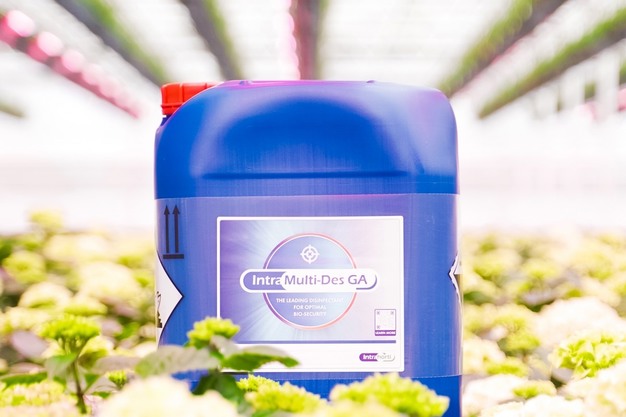
Disinfectants commonly included in greenhouse hygiene programs include Intra Multi Des GA, supplied in North America by Houweling Americas. “This product is widely used by vegetable and ornamental growers as part of comprehensive cleaning and routine sanitation strategies, especially where deep penetration is required on complex surfaces,” says the Houweling Americas team.
 © Houweling Americas
Getting under the surface
Biofilms and organic debris continue to limit the effectiveness of many disinfectants, harboring microorganisms in cracks, crevices, and porous materials. According to the Multi Des GA technical team, the formulation is designed to address this challenge through penetration rather than surface activity.
“Intra Multi Des GA has five active ingredients that work together to provide strong penetration properties, allowing the product to reach microorganisms hiding in difficult access areas,” the team explained. While not positioned as a dedicated biofilm remover, the formulation is intended to reveal and eliminate pathogens sheltered beneath biofilm layers.
For best results, a two-step sanitation approach is recommended: deep cleaning to remove organic matter and biofilm, followed by disinfection. “Skip the cleaning step increases the risk of completely eliminating pathogens,” the team noted, highlighting the continued opportunity for farmer education around proper hygiene sequencing.
The role of cleaning before disinfection
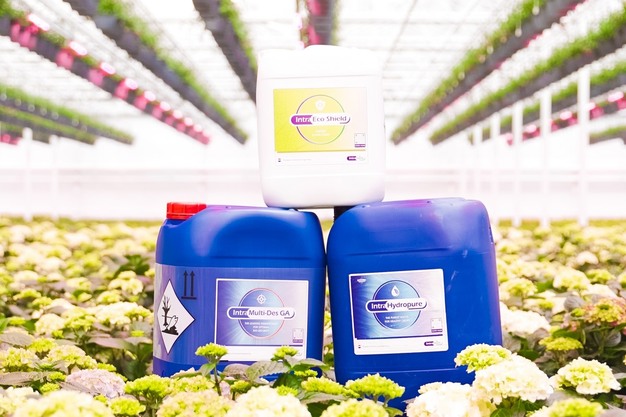
As part of the Intracare product portfolio, Houweling Americas also supplies Intra Foam Organics, a cleaner designed to remove organic material prior to disinfection. Organic debris can significantly reduce disinfectant performance if not completely removed, especially on high-traffic or porous surfaces. When used as a first step, cleaners like Intra Foam Organics help ensure that disinfectants can come into direct contact with target pathogens.
Performance on porous and uneven surfaces
Concrete floors, block walls and other porous greenhouse materials remain among the most difficult areas to sanitize. According to internal tests, Intra Multi Des GA works reliably on these surfaces, moving into the micro-cracks where pathogens can persist.
“When applied to porous materials such as concrete blocks, the formulation moves significantly across the substrate,” the team explained. “This behavior is different from traditional disinfectants that remain on the surface and do not reach the embedded microorganisms.”
 © Houweling Americas
Broad spectrum pathogen control
Growers of all types of crops rely on Intra Multi Des GA to manage a wide range of pathogens, including fungal, bacterial and viral threats. The reported efficacy against ToBRFV has made it an essential component of hygiene protocols in tomato production.
“Intra Multi Des GA has shown excellent efficacy against ToBRFV and has proven effective in eliminating the virus on contact when used appropriately,” the team reported. Beyond viral control, growers also use the product against pathogens such as Fusarium and Pythium in crop and ornamental systems.
Waste behavior and crop turnover
Unlike non-residue disinfectants, Intra Multi Des GA is designed to leave a residual effect on treated surfaces during cleaning, providing extensive protection between crops. This waste is not intended to come into contact with the collected products, but is used to maintain sanitation during downtime.
Operational efficiency is another matter. The product is applied at a low concentration of use, requires a short contact time and usually requires only one application, allowing rapid crop rotations without compromising hygiene standards.
Long-term sanitation results
Growers who consistently incorporate Intra Multi Des GA have reported cumulative improvements in crop rotation hygiene programs over multiple seasons. In one documented case, a Dutch tomato operation managing ToBRFV reported no subsequent infections after integrating the product into the cleaning protocol.
“Starting clean remains one of the most effective ways to reduce the risk of early cycle infection,” the team emphasizes.
Supporting North American producers
Houweling Americas supplies Intra Multi Des GA and other Intracare solutions through established distribution partners and provides technical support to assist with implementation. In addition to hygiene products, the company’s portfolio includes nutrient solutions, growing substrates, LED lighting, water treatment technologies and biostimulants such as Intra Eco Shield, with Intra Boost, a next-generation willow bark-derived biostimulant, scheduled for a North American launch in early 2026.
Based in British Columbia and Ontario, Houweling Americas works closely with growers to develop integrated solution programs that support yield, plant health and resilience. The company is part of Royal Houweling, a Dutch family business founded in 1925 and recently recognized with royal status for its long-term commitment to horticulture and sustainability.
For growers seeking technical guidance on hygiene protocols or product performance, the Houweling Americas team encourages direct engagement for further assistance.
For more information:
Houweling America
1-800-252-5824
houwelingamericas.com










Wyoming Attorney General Keith Kautz announced on July 7 that he would keep all marijuana products in Schedule I of Wyoming’s Controlled Substances Act, refusing to align the state’s cannabis policy with the federal reorganization order issued earlier this year.
Kautz, who also serves as Wyoming’s drug and substance abuse commissioner, held a public hearing on June 18 after filing an objection to aligning the state’s cannabis schedule with a federal amendment on May 27. State law requires the commissioner to give interested parties an opportunity to be heard after that objection, but only nine people responded. Four email comments supported leaving cannabis as a Schedule I drug, four as Schedule III. It was approved for use and one person attended the hearing to request that cannabis remain in Schedule I.
His decision follows an April 2026 order signed by U.S. Attorney General Todd Blanche that bans state-licensed medical cannabis, FDA-approved cannabis products, cannabis extracts and naturally derived delta-9 THC III.
Kautz’s office says: “After consideration of all stakeholder comments, the commissioner has determined that all marijuana products, including marijuana subject to the state’s medical marijuana license, will remain in Schedule I of the Wyoming Controlled Substances Act.”
His announcement adds, “The decision to reschedule medical marijuana and marijuana products is an important policy decision that is best left to the Wyoming Legislature and should not be made through administrative rule.”
Wyoming remains one of eight states without a medical cannabis program. A December 2020 poll by the University of Wyoming’s Wyoming Center for Polling and Analysis found that 85 percent of state residents support legalizing medical cannabis, despite a failed 2024 ballot initiative effort. Possession of three ounces or less carries up to 12 months in prison under current state law, and selling any amount is punishable by up to 10 years in prison and a $10,000 fine.
Kautz says his office will “properly schedule products approved by the United States Food and Drug Administration once that agency has approved the product,” pointing to the Schedules II and III listings of Cesamet and Dronabinol as evidence that the state complies with federal cannabinoid drug law.
Cannabis News
Massachusetts Initiative To Roll Back Marijuana Legalization Officially Qualifies For November Ballot
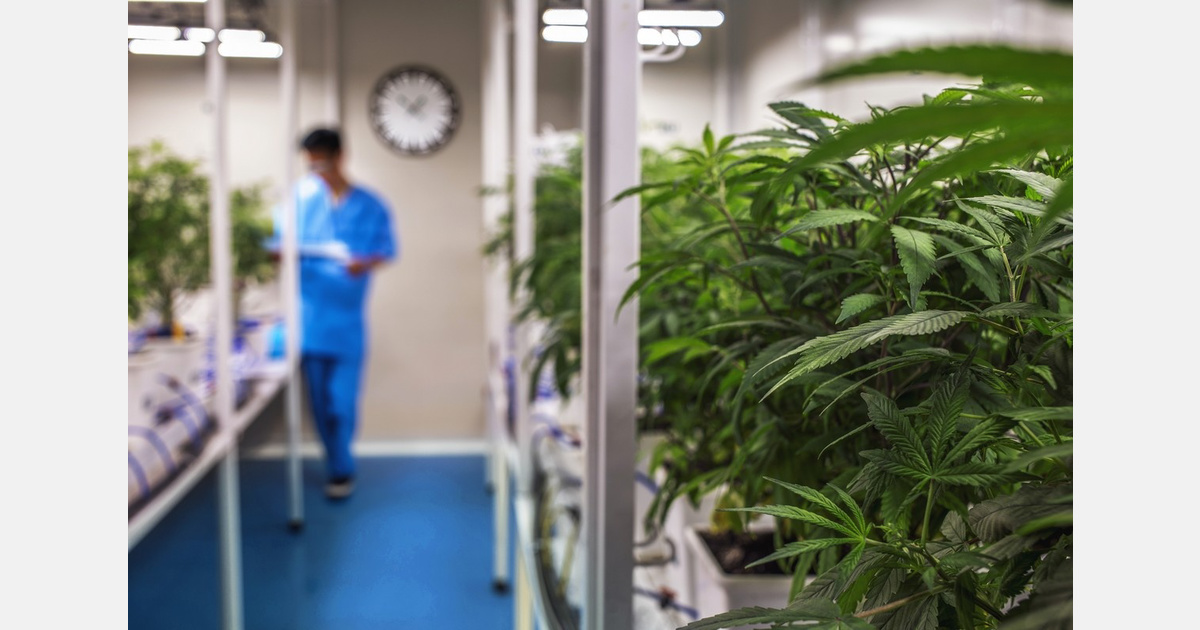
Entourage Health Corp., an Aylmer, Ont.-based cannabis grower, laid off 53 workers on June 8 without notice, offering only two weeks’ pay in lieu of notice rather than layoffs. More than 40 former employees have since filed complaints with Ontario’s Ministry of Labor, alleging the company violated the province’s Employment Standards Act, which entitles workers with more than five years of service at companies with payrolls of more than $2.5 million to receive 26 weeks of severance pay.
The company is owned by the pension fund of LiUNA, a major private sector union, which became Entourage’s largest lender and shareholder following a series of investments beginning in 2017. Entourage was taken private by an entity related to LiUNA in April 2025. After struggling with debt and unprofitability, the company laid off most of its leisure workers, and lost most of its bank employees to CCAA. protection at the end of June 2026. Its medical cannabis division continues to operate with 22 employees.
Court filings show Entourage owes LiUNA’s pension fund about $240 million. Efforts to sell the company generated little industry interest, leading to a bankruptcy filing. Former employees, including Benjamin Hessel and Gabriela Ayee, say they were blindsided by the sudden layoffs and worry they won’t get back the severance they were owed in the restructuring. A labor attorney noted that workers laid off in bankruptcy typically become unsecured creditors with limited recourse because secured lenders and government creditors are prioritized. The federal Wage Protection Program offers affected workers a one-time payment of up to $9,275. Neither Entourage nor the LiUNA Pension Fund responded to requests for comment.

Marijuana Retail Report

Wyoming AG keeps cannabis on Schedule I, rejects federal reclassification

Massachusetts Initiative To Roll Back Marijuana Legalization Officially Qualifies For November Ballot

More Than 85% of U.S. Healthcare Professionals Believe Cannabis Has Medical Utility

BREAKING NEWS President Joe Biden announces cannabis is moving to schedule 3 of the CSA

CRAFT CANNABIS & WEIGHT LOSS | DANNY MURR-SLOAT

Marijuana Retail Report

Entourage Health faces severance claims from dismissed employees

ALJ Hearing Shows Medical Use + AI Enters Cannabis Industry

Wyoming Attorney General Blocks State Marijuana Rescheduling That Would Be Triggered By Trump’s Federal Reform

“Our system can manage equipment across 10,000+ m² using just a few wires”

Florida Workshop to Discuss What Constitutes a ‘Cartoon’ in Hemp Packaging

Mazar-i-Sharif Hash Wednesday

Afghan Black Hash Wednesday

Weak Michigan Cannabis Sales Again in July – New Cannabis Ventures

From Finance to Wellness: Brad Zerman’s Impactful Pivot

Re-release of the full show of Cannabis Coast to Coast news. Republican Texas DA Fires Up vs. laws;

DEA’s Cole Reverses His “priorities” ; Prohibitionists Dig In; Dead & Co Celebrates 60 years in SF

Curaleaf Q2 Revenue Falls 8% – New Cannabis Ventures

Your Cannabis Business: Consistent Filings Are Critical
-
 Cannabis News11 months ago
“Our system can manage equipment across 10,000+ m² using just a few wires”
-
 Florida11 months ago
Florida Workshop to Discuss What Constitutes a ‘Cartoon’ in Hemp Packaging
-
 Video9 months ago
Mazar-i-Sharif Hash Wednesday
-
 Video9 months ago
Afghan Black Hash Wednesday
-
 aawh11 months ago
Weak Michigan Cannabis Sales Again in July – New Cannabis Ventures
-
 Video11 months ago
From Finance to Wellness: Brad Zerman’s Impactful Pivot
-
 Video11 months ago
Re-release of the full show of Cannabis Coast to Coast news. Republican Texas DA Fires Up vs. laws;
-
 Video11 months ago
DEA’s Cole Reverses His “priorities” ; Prohibitionists Dig In; Dead & Co Celebrates 60 years in SF